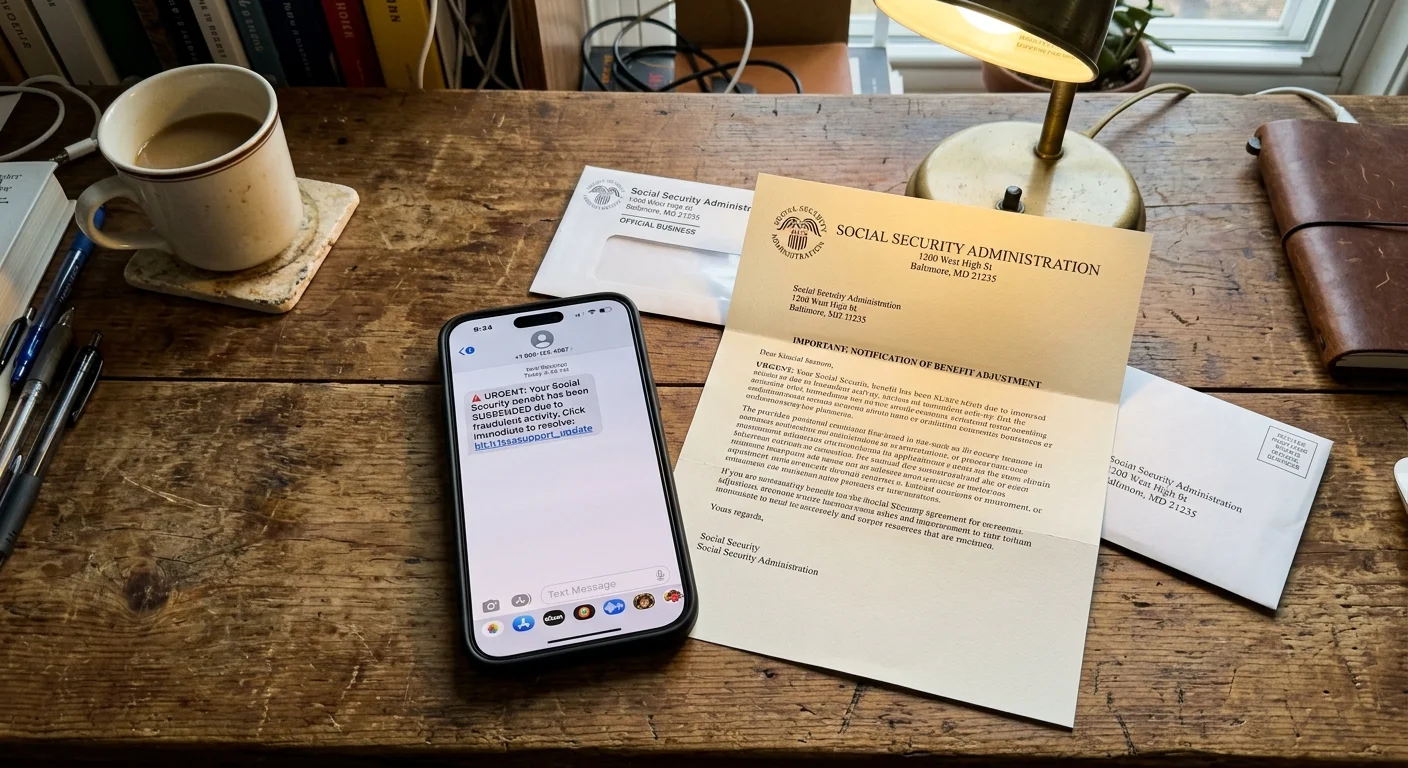
Red Flags and Scam Prevention: Distinguishing Real Notices from Fraud
The emotional urgency caused by a potential benefit loss makes retirees prime targets for sophisticated criminal scams. Impostors frequently contact older adults through phone calls, text messages, or emails, claiming that their social security number has been frozen or that legal arrest warrants exist due to benefit fraud. These bad actors attempt to exploit panic to steal sensitive personal information, banking credentials, or immediate cash payments.
Legitimate communications regarding benefit adjustments, suspensions, or overpayments arrive exclusively through official U.S. Mail delivered directly to your home address. The government will never contact you demanding immediate payment over the telephone, nor will agency employees threaten law enforcement arrest or asset seizure. Furthermore, legitimate government representatives will never request payment through gift cards, prepaid debit cards, wire transfers, or cryptocurrency. If you receive a suspicious call or message threatening immediate suspension, hang up immediately and report the fraudulent activity to the official Social Security Office of the Inspector General. Verify all correspondence independently by logging into your official online account or calling the verified national phone number.
Frequently Asked Questions About Benefit Suspensions
Can I voluntarily suspend my benefits if I decided to return to work?
Yes, provided you have reached your Full Retirement Age. If you are between your full retirement age—age sixty-seven for those born in 1960 or later—and age seventy, you can request a voluntary suspension of your monthly retirement payments at any time. This strategy stops your monthly check while allowing your future benefit amount to grow by two-thirds of one percent for each month suspended, totaling an eight percent annual increase until you reach age seventy.
What happens to my Medicare Part B coverage if my monthly check stops?
If your benefits are suspended, automatic premium deductions will cease, and you will receive a direct bill from Medicare, typically on Form CMS-500. You must pay these invoices directly by check, credit card, or automatic bank transfer to prevent the cancellation of your healthcare coverage and avoid lifelong late enrollment penalties.
How can I prove that an overpayment was not my fault?
To qualify for an overpayment waiver using Form SSA-632, you must demonstrate that the error resulted from government miscalculation or incorrect administrative processing rather than intentional misrepresentation on your part. You must provide detailed financial records showing that paying back the money would create severe financial hardship by preventing you from paying for basic living expenses like housing, food, utilities, and necessary medical care.
What options do I have if I missed the sixty-day appeal deadline?
If you fail to file your Request for Reconsideration within sixty days, you can request an extension by submitting Form SSA-561 along with a written statement explaining your good cause for missing the timeline. Acceptable reasons for missing the deadline include severe medical illness, hospitalization, physical disability, a death in your immediate family, or catastrophic mail destruction verified by local authorities.
Taking Your Next Step: An Action Plan for the Next 48 Hours
Handling a benefit suspension notice requires structured action rather than panic. Over the next forty-eight hours, commit to taking one concrete step to secure your financial standing. Locate your recent suspension notice, identify the exact print date on the top right corner, and mark your calendar sixty days out to establish your firm appeal deadline. Next, log into your personal online account to confirm your mailing address, review recent earnings records, and download the necessary appeal forms. Taking immediate, systematic control today restores your peace of mind and guarantees that your retirement journey remains secure, stable, and firmly in your hands.