
Entering your 70s shifts your financial focus from building wealth to preserving assets, minimizing taxes, and enjoying your life. You can take specific, practical actions right now to protect your hard-earned savings.
Recent legislative changes have rewritten distribution rules, tax deductions, and gifting limits for American retirees. Navigating these changes correctly ensures you keep more money in your own pocket.
This comprehensive checklist guides you through every critical financial milestone in your 70s. Review these proven steps to secure your healthcare, lower your tax burden, and safeguard your family legacy.
Claiming Social Security and Maximizing Monthly Income
Your 70th birthday marks the definitive end of delayed retirement credits for Social Security. If you have not claimed your benefits yet, file immediately.
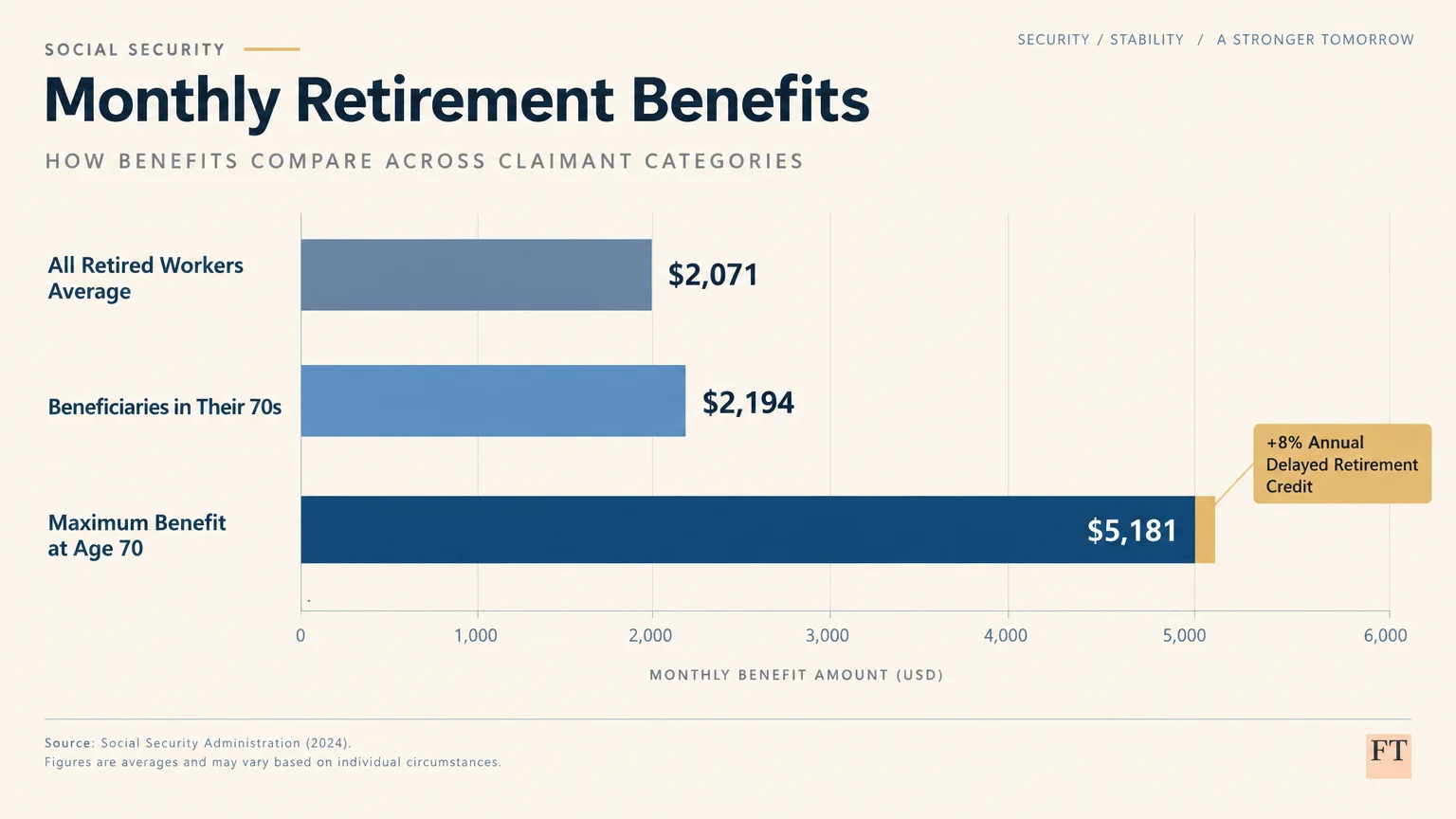
Delayed retirement credits increase your monthly payment by 8% each year past your full retirement age until you turn 70. Waiting past age 70 provides no additional benefit and leaves earned money behind.
A retiree claiming at age 70 can receive a maximum benefit of $5,181 per month. For comparison, the overall average monthly benefit across all retired workers sits at $2,071.
Data from the Social Security Administration shows that beneficiaries in their 70s receive an average payment of $2,194 per month. Maximizing this guaranteed income stream creates a reliable foundation for your remaining retirement years.
Review your earnings history and benefit estimates directly through your online account. Ensuring accurate records prevents administrative errors from shrinking your monthly checks.
If you are married, coordinate claiming strategies with your spouse to maximize survivor protections. The higher earner’s benefit dictates the payment amount surviving spouses receive later in life.
Consider whether receiving retroactive payments makes financial sense if you missed your 70th birthday deadline. You can request up to six months of retroactive lump-sum payments upon filing.
Mastering Required Minimum Distributions at Age 73
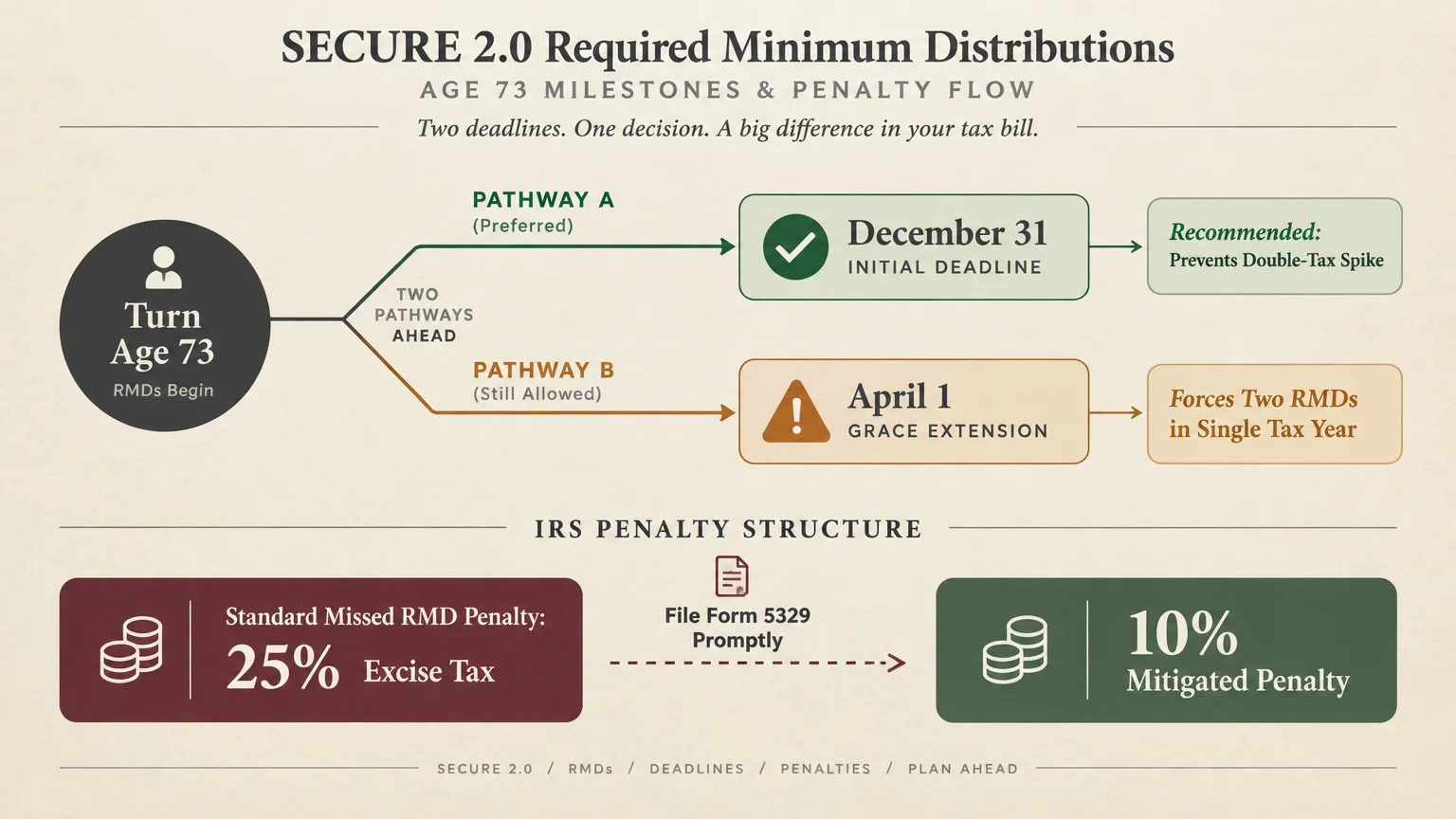
The SECURE 2.0 Act established age 73 as the mandatory starting point for Required Minimum Distributions, or RMDs. Anyone born before 1960 must calculate and withdraw these distributions from traditional retirement accounts.
These mandatory withdrawals apply to traditional IRAs, SEP IRAs, SIMPLE IRAs, and employer plans such as 401(k) accounts. Individuals born in 1960 or later will see their RMD age rise to 75 in 2033.
You can delay your very first RMD until April 1 of the calendar year following the year you turn 73. However, exercising this delay forces you to take two RMDs in that single tax year.
Taking two distributions in twelve months can unintentionally propel your household into a higher income tax bracket. Most financial planners recommend taking your initial RMD by December 31 of the year you turn 73.
All subsequent RMDs must occur by December 31 annually without exception. Failing to withdraw your full distribution brings steep IRS penalties.
The excise tax penalty for a missed distribution equals 25% of the amount you failed to withdraw. You can reduce this penalty to 10% by promptly withdrawing the funds and filing Form 5329 within two years.
SECURE 2.0 introduced welcome relief for company-sponsored Roth accounts. Roth 401(k) and Roth 403(b) accounts are now completely exempt from lifetime RMDs, matching the long-standing rule for Roth IRAs.
Contact your account custodians early each autumn to calculate your exact distribution requirements. Processing withdrawals well before the December deadline prevents holiday processing delays from triggering unnecessary penalties.

Leveraging Qualified Charitable Distributions to Slash Taxes
If you support philanthropic causes, Qualified Charitable Distributions represent one of the most powerful tax tools available. You can execute these distributions directly from your traditional IRA once you reach age 70½.
Notice that the eligibility age for charitable distributions begins earlier than the mandatory RMD age of 73. You can utilize this strategy early to draw down large IRA balances before forced distributions begin.
Once you reach age 73, your charitable distributions satisfy your mandatory RMD obligations dollar for dollar. This direct transfer allows you to meet IRS requirements without increasing your taxable adjusted gross income.
The annual giving limit allows an individual to donate up to $111,000 per calendar year through this method. A married couple filing jointly can each contribute up to $111,000 from their separate IRAs, totaling $222,000.
Current tax law also permits a one-time lifetime distribution of up to $55,000 to fund split-interest entities. You can direct this one-time transfer into a Charitable Remainder Trust or a Charitable Gift Annuity.
To qualify, the IRA custodian must issue the payment directly to an eligible 501(c)(3) nonprofit organization. Withdrawing the money into your personal bank account first disqualifies the transaction from tax-free treatment.
Lowering your adjusted gross income through charitable transfers creates compounding benefits across your tax return. It helps keep your income below threshold limits that trigger higher taxes on Social Security benefits.

Navigating Medicare Costs and the IRMAA Surcharge Cliff
Managing healthcare expenses becomes increasingly critical during your 70s as routine appointments and specialized treatments multiply. Planning ahead prevents unexpected medical bills from eroding your monthly discretionary budget.
Standard Medicare Part B coverage carries a monthly base premium of $202.90. In addition, Medicare Part A features an inpatient hospital deductible of $1,736 for each separate benefit period.
Skilled nursing care coverage under Part A requires careful attention during rehabilitation stays. Beneficiaries pay a $0 copayment for days 1 through 20, but the daily copayment increases to $217 for days 21 through 100.
Higher-income retirees must also navigate the Income-Related Monthly Adjustment Amount, commonly known as IRMAA. This surcharge adds an extra monthly fee to your Part B and Part D premiums if your income exceeds federal thresholds.
The income brackets begin when modified adjusted gross income exceeds $109,000 for single filers or $218,000 for married couples filing jointly. The federal government calculates these surcharges using tax returns from two years prior.
Large mandatory IRA distributions can inadvertently trigger these surcharges two years down the road. Coordinating IRA withdrawals with charitable giving helps keep your modified adjusted gross income below the surcharge thresholds.
Review your supplemental coverage annually during the open enrollment period each autumn. Switching Medicare Advantage or Part D prescription drug plans can save hundreds of dollars in out-of-pocket medication costs.
Unlocking Enhanced Senior Tax Deductions
Recent tax legislation introduces significant tax-saving opportunities specifically designed for American seniors. Understanding the current deduction schedule ensures you do not overpay the Internal Revenue Service on your annual return.
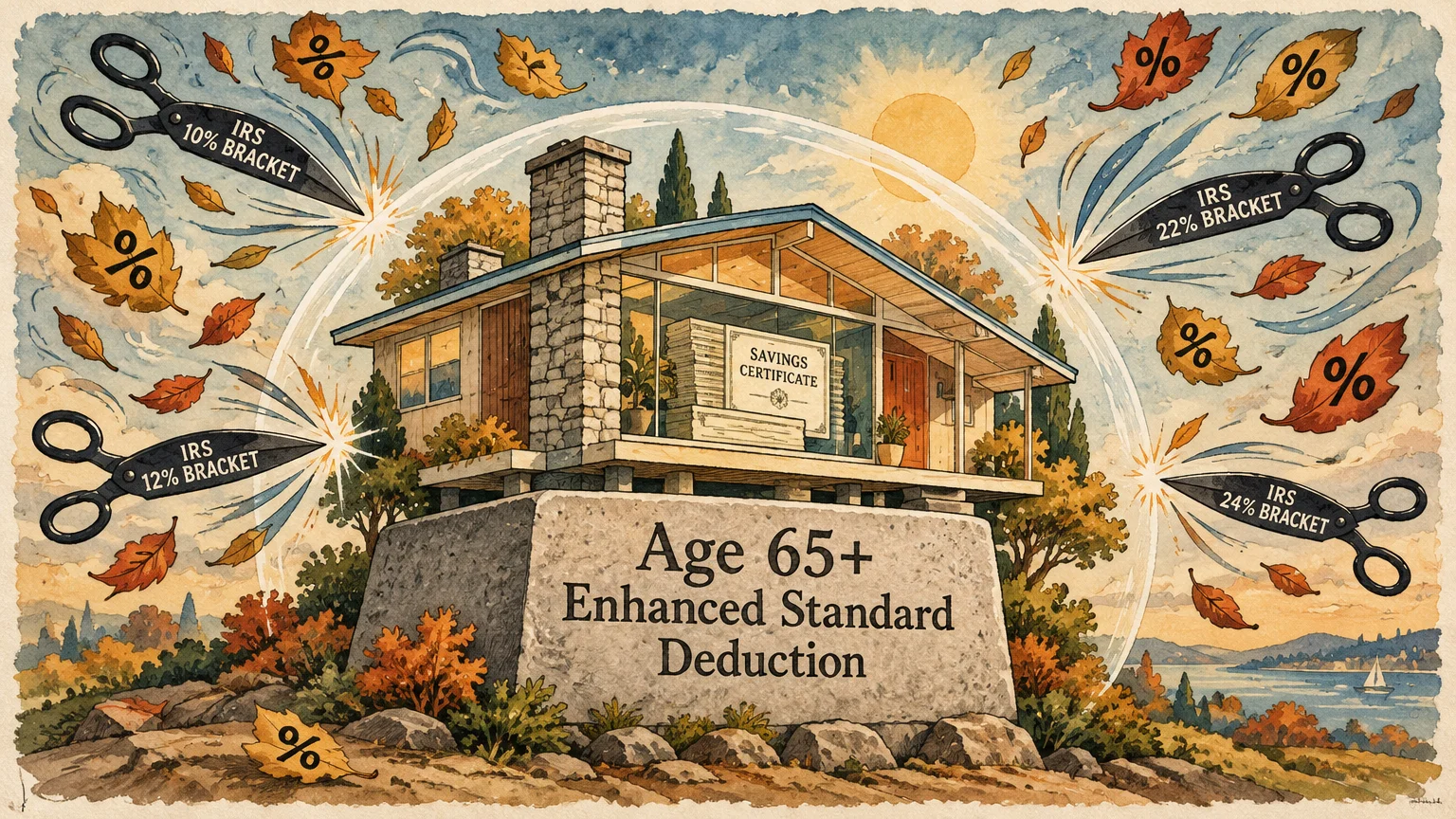
The standard tax deduction provides a baseline exemption of $16,100 for single tax filers and $32,200 for married couples filing jointly. Seniors age 65 and older receive an additional traditional deduction on top of that base.
This traditional age-based deduction adds $2,050 for unmarried seniors and $1,650 per qualifying spouse on a joint return. In recent years, additional relief expanded these deductions further.
Under the Working Families Tax Cuts Act, seniors age 65 and older can claim an enhanced $6,000 deduction per person. Qualifying married couples where both spouses meet the age threshold receive an extra $12,000 deduction.
This enhanced deduction begins phasing out at a 6% rate for single filers earning over $75,000 in modified adjusted gross income. For married couples filing jointly, the phaseout threshold starts at $150,000.
When you combine the base deduction, the traditional senior addition, and the enhanced deduction, the total shelter is substantial. A single senior can shield up to $24,150 from federal income taxes.
Qualifying married couples can claim a maximum cumulative deduction of up to $47,500. Work with a qualified tax professional to evaluate whether itemizing deductions or claiming the standard deduction yields the highest return.

Modernizing Estate Planning, Gifting, and Account Beneficiaries
Your 70s are the ideal decade to refine your estate plan and simplify account management for your heirs. Outdated legal documents create costly probate delays and unnecessary emotional stress for surviving family members.
You can reduce the overall size of your taxable estate right now using annual gift tax exclusions. Current rules allow you to gift up to $19,000 per recipient annually without filing Form 709.
Married couples splitting gifts can transfer up to $38,000 per recipient every year tax-free. These gifts remove assets from your estate while providing immediate financial support to children or grandchildren.
For high-net-worth households, the lifetime federal estate and gift tax exemption stands at $15 million per individual. A married couple can shield up to $30 million from federal estate taxes under current statutory limits.
Reviewing beneficiary designations on retirement accounts and life insurance policies represents an essential task. Account designations supersede instructions written inside your will, making direct beneficiary updates crucial.
Keep the SECURE Act rules in mind when naming non-spouse beneficiaries on traditional retirement accounts. Most non-spouse heirs, including adult children, must fully withdraw all inherited account funds within ten years of your death.
These forced withdrawals can push your heirs into their highest earning tax brackets during their peak career years. Consider partial Roth conversions or life insurance trusts if you wish to mitigate your heirs’ future tax burdens.
Confirm that your financial and medical powers of attorney reflect your current wishes and trusted relationships. Appointing capable healthcare proxies ensures seamless medical decision-making if unexpected illness or cognitive decline occurs.

Defending Your Wealth Against Fraud and Exploitation
Financial exploitation of seniors continues to rise across the United States, targeting retirees through digital and phone scams. Criminal syndicates increasingly deploy sophisticated imposter schemes, fraudulent investments, and artificial intelligence voice cloning.
Research from AARP highlights that older adults lose billions of dollars annually to financial deception. Establishing structural safeguards around your banking and brokerage accounts prevents predatory access to your lifetime savings.
Add a trusted contact person to every major investment account and bank profile you maintain. Financial institutions can alert this individual if they notice unusual wire transfers or suspect cognitive exploitation.
Importantly, designating a trusted contact does not grant that individual authority to execute transactions or view account balances. It simply establishes an emergency communication channel when financial professionals suspect fraudulent behavior.
Place a permanent credit freeze on your files at all three major credit bureaus: Experian, Equifax, and TransUnion. Freezing your credit prevents identity thieves from opening credit cards, mortgages, or personal loans in your name.
You can temporarily lift the credit freeze online within minutes whenever you legitimately apply for new credit lines. This simple barrier stops identity theft without hindering your normal financial transactions.
Never provide sensitive banking credentials, social security numbers, or verification codes in response to unexpected calls or emails. Legitimate government agencies and financial firms never demand immediate payments through gift cards, cryptocurrency, or wire transfers.

Aligning Housing, Mobility, and Long-Term Care Strategies
Housing decisions in your 70s directly influence your physical safety, financial security, and personal independence. Evaluating your living situation today allows you to make deliberate choices before a health crisis forces sudden changes.
Evaluate whether your current home accommodates potential mobility limitations over the coming decade. Modest investments in walk-in showers, reinforced handrails, and zero-step entryways allow you to age in place safely.
If home maintenance, property taxes, and utility costs consume excessive energy and cash flow, consider downsizing. Relocating to a single-story home or an active adult community can unlock home equity while lowering maintenance obligations.
Examine how you plan to finance potential long-term care needs down the road. Traditional health insurance and standard Medicare policies do not cover non-skilled daily custodial care assistance.
If you lack private long-term care insurance, establish a dedicated liquid reserve within your investment portfolio for home healthcare aides. Self-funding care costs requires clear allocation guidelines so withdrawals do not prematurely deplete core income streams.
Discuss your housing and care preferences openly with your adult children or designated personal representatives. Clarifying your wishes in advance prevents family friction and ensures your personal values guide all future caregiving decisions.
Frequently Asked Questions About Finances in Your 70s
What happens if I miss my RMD deadline at age 73?
Failing to withdraw your full RMD subjects you to a 25% federal excise tax penalty on the shortfall. You can reduce this penalty to 10% by withdrawing the required amount and submitting Form 5329 within two years.
You can also request a complete penalty waiver from the IRS if your failure resulted from reasonable error. You must demonstrate that you took diligent steps to remedy the shortfall as soon as you discovered the mistake.
Can I still contribute to an IRA in my 70s if I work part-time?
Yes, you can contribute to a traditional or Roth IRA at any age as long as you have earned income from work. The SECURE Act eliminated the previous age cap that prohibited contributions after age 70½.
Your total contributions cannot exceed your earned compensation for the tax year or the annual statutory contribution limits. Passive income from pensions, Social Security, and investment dividends does not count as earned income for IRA contributions.
How does taking an RMD affect my Medicare premiums?
Mandatory distributions increase your adjusted gross income, which can trigger Medicare IRMAA surcharges two years later. These surcharges apply when modified adjusted gross income exceeds $109,000 for single filers or $218,000 for joint filers.
Executing Qualified Charitable Distributions directly from your IRA avoids this problem by satisfying your distribution without raising your adjusted gross income. Careful tax bracket planning keeps healthcare premiums predictable throughout retirement.
Should I convert my traditional IRA to a Roth IRA after turning 70?
Roth conversions can make sense in your 70s if you wish to reduce future RMD sizes or pass tax-free assets to heirs. However, you cannot convert your mandatory RMD amount; you must satisfy your annual RMD before executing any conversions.
You must also prepare to pay ordinary income taxes on the converted sum during the calendar year of the conversion. Evaluate whether the upfront tax bill and potential IRMAA surcharges outweigh the long-term benefits for your estate plan.
Your 48-Hour Financial Action Plan
Managing your finances during retirement requires decisive action rather than passive observation. You do not need to tackle every item on this checklist at the same time.
Choose one tangible task to complete within the next 48 hours to protect your assets and build momentum. Log into your primary investment accounts right now to verify that your beneficiary designations remain completely accurate and current.
Next, contact your financial institution to register a trusted emergency contact person on your profiles. This simple five-minute step provides vital protection against elder fraud and unauthorized account activity.
If you are approaching age 73, schedule a mid-year consultation with your tax advisor to coordinate your distribution plan. Proactive planning ensures you keep control of your money, minimize taxes, and enjoy the peace of mind you have earned.