
Receiving a notice that your Medicare Advantage plan is ending can disrupt your retirement routine immediately. Fortunately, you hold powerful special rights that protect your medical access and budget.
Federal rules grant you guaranteed enrollment periods to switch plans or return to Original Medicare without penalty. You can easily safeguard your care by understanding your legal timelines and coverage options right now.
Taking control of this transition today ensures that you never experience an unexpected gap in doctor visits or prescription refills.
Why Your Medicare Advantage Plan Is Leaving Your Area
Health insurance carriers modify their service footprints every year based on regulatory benchmarks, clinical costs, and financial calculations. When costs exceed projections, companies withdraw specific plans from regional markets.
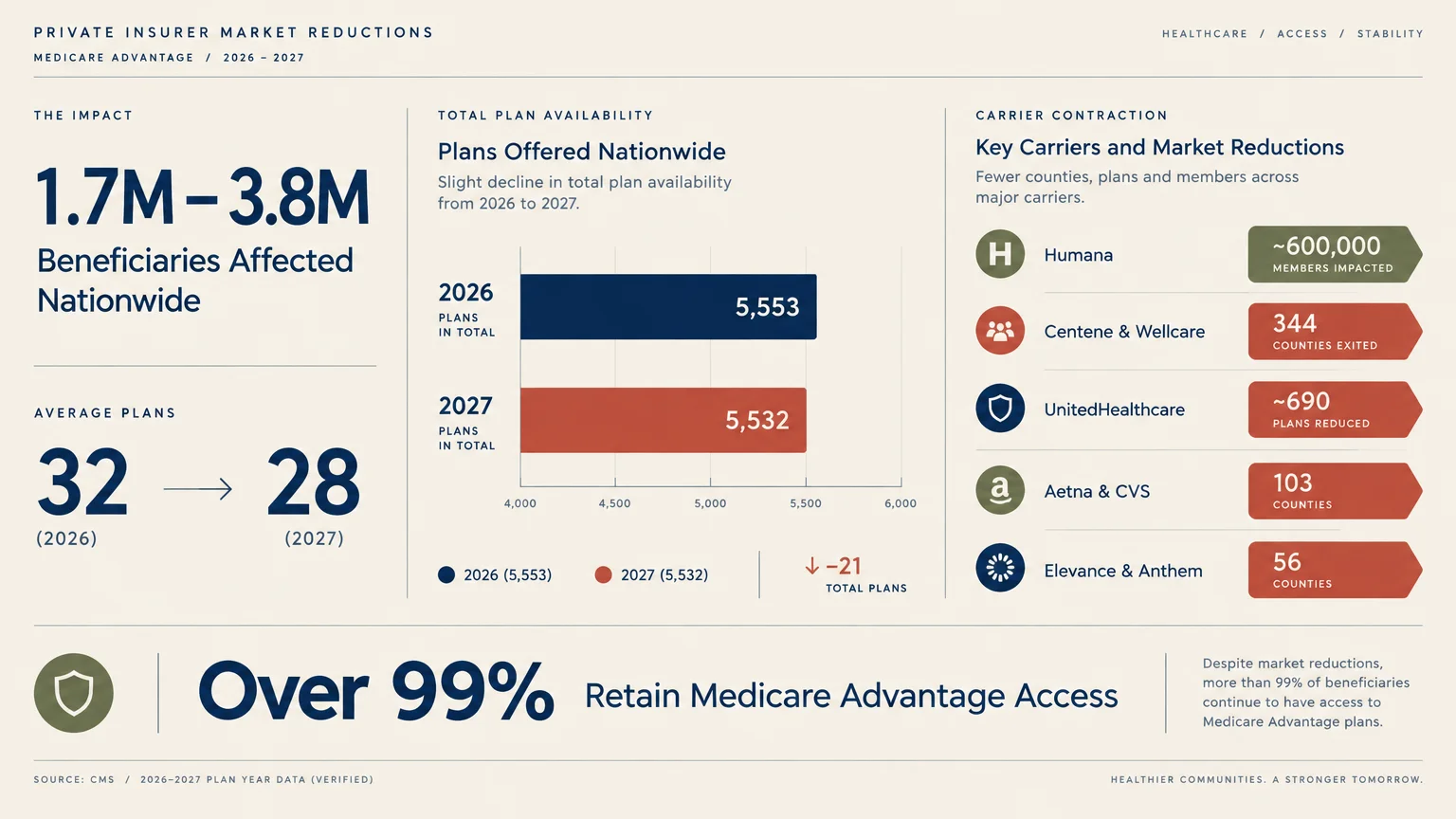
Between 1.7 million and 3.8 million beneficiaries nationwide face plan terminations or service-area exits for the 2027 plan year. This transition requires individuals across the country to make active coverage selections.
The current cycle follows a sharp disruption in 2026, when forced disenrollments surged to roughly 10% of all enrollees. That shift affected approximately 2.9 million people across multiple regions.
By comparison, plan non-renewals averaged only 1% annually between 2018 and 2024. The recent increase marks a significant adjustment in how private insurers manage their geographic footprints.
According to federal data published by the Centers for Medicare & Medicaid Services, total Medicare Advantage plan availability edged down from 5,553 in 2026 to 5,532 in 2027.
Because of these corporate decisions, the average beneficiary can choose from 28 Medicare Advantage prescription drug plans in 2027. That total represents a decrease from 32 plans available in 2026.
Major carriers have announced substantial reductions across regional markets. Humana is trimming plan offerings that impact roughly 600,000 enrolled members nationwide.
Centene and Wellcare are exiting approximately 344 counties. UnitedHealthcare is cutting roughly 690 plans across dozens of regional markets.
Aetna and CVS are discontinuing operations across roughly 103 counties. Meanwhile, Elevance and Anthem are withdrawing from approximately 56 counties.
Despite these market contractions, over 99% of Medicare beneficiaries retain access to at least one Medicare Advantage plan. You still possess robust healthcare choices in your local area.

Critical Deadlines: What Happens on December 31
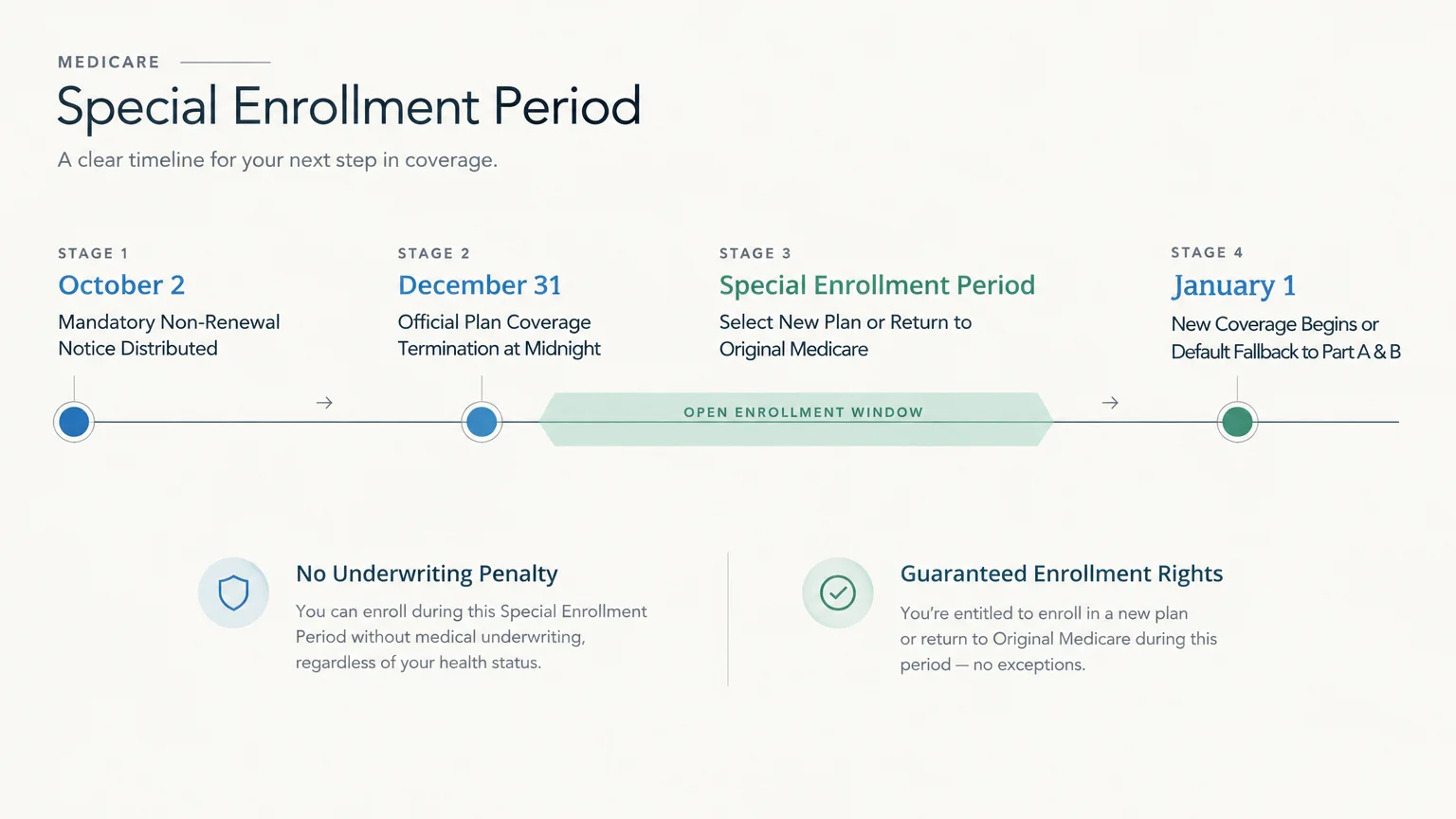
Insurers terminating plan options for the 2027 calendar year faced a mandatory deadline of October 2, 2026, to distribute Plan Non-Renewal Notices. Federal regulations require companies to deliver this written notice at least 90 days before coverage expires.
Your current plan coverage officially ends at midnight on December 31, 2026. After that moment, your existing card will no longer work at pharmacies, hospitals, or doctor offices.
If you take no action before December 31, Medicare automatically reassigns you to Original Medicare on January 1, 2027. This default fallback protects your baseline hospital and outpatient benefits.
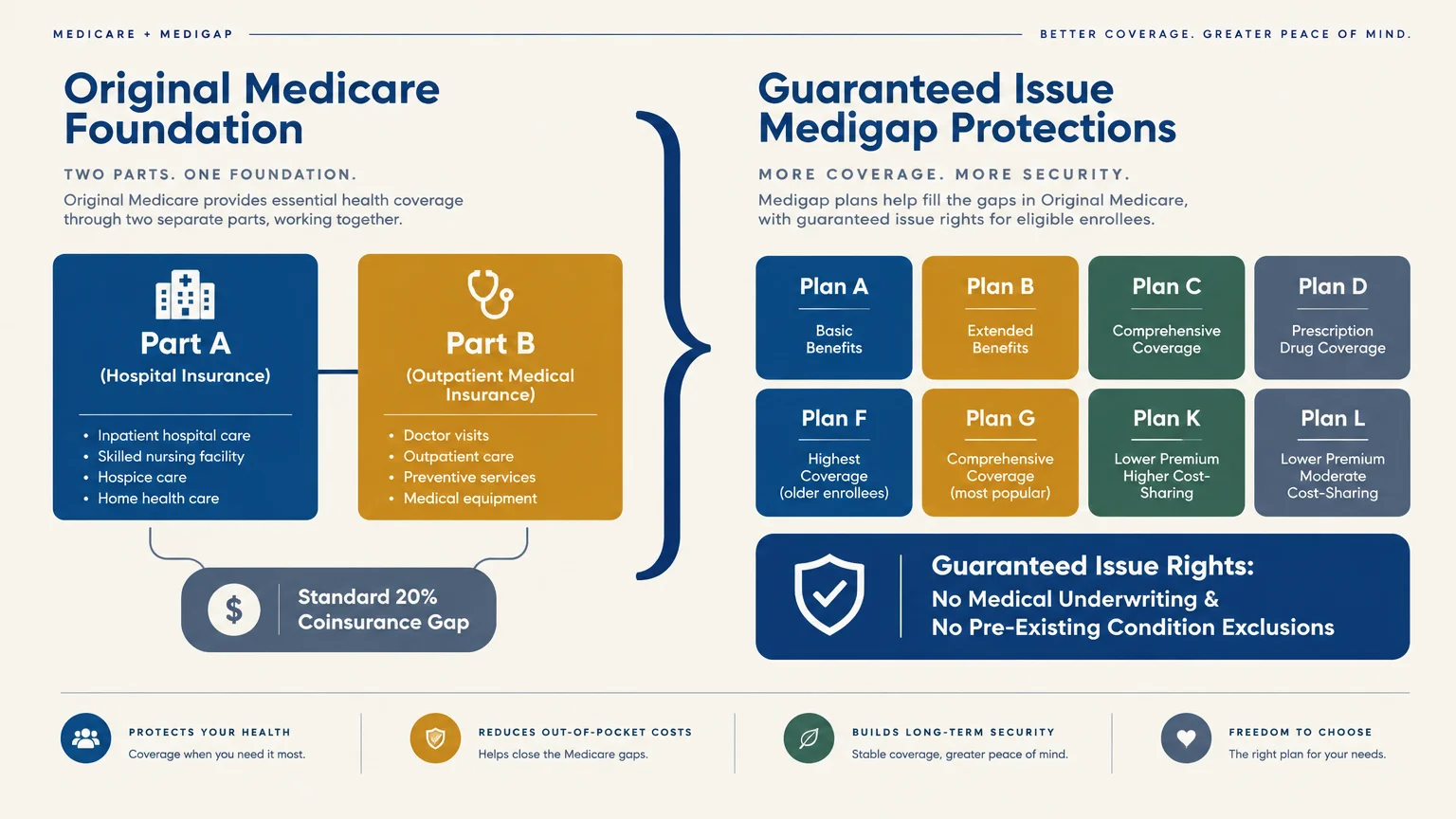
Original Medicare includes Part A hospital insurance and Part B outpatient medical insurance. However, Original Medicare does not include prescription drug coverage under Part D.
If you default into Original Medicare without enrolling in a standalone Part D policy, you will lose outpatient medication coverage. A lapse in drug coverage leaves you responsible for the full retail price of your prescriptions.
Some insurers automatically reassign members to an alternative plan through a process known as crosswalking. You must review your termination notice carefully to confirm whether your insurer reassigned you or eliminated your policy entirely.
Mastering Your Special Enrollment Window
You do not need to feel rushed by standard enrollment restrictions. Federal guidelines grant you distinct enrollment opportunities designed specifically for individuals losing their health plan.
The standard Annual Enrollment Period runs from October 15 through December 7, 2026. Any enrollment election submitted during this window takes effect on January 1, 2027.
Because your plan is leaving your area, you also receive an extended Plan Non-Renewal Special Enrollment Period. This window runs from December 8, 2026, through February 28, 2027.
This special enrollment period provides crucial protection if you need extra time to research doctor networks or drug formularies. However, your effective start date depends directly on when you submit your application.
If you submit your application between October 15 and December 31, your new coverage starts on January 1, 2027. This path prevents any gap in your supplemental insurance or drug benefits.
If you submit an application during January, your coverage starts on February 1, 2027. You will rely on Original Medicare throughout January for hospital and medical care.
If you submit an application in February, your new policy takes effect on March 1, 2027. Selecting a plan before December 31 remains the most reliable strategy to maintain uninterrupted care.

Option 1: Switch to Another Medicare Advantage Plan
Staying within the Medicare Advantage framework allows you to retain an integrated care structure. Medicare Advantage plans combine hospital care, doctor visits, and prescription drug benefits under a single insurance card.
Many plans offer affordable monthly costs. CMS projects the average Medicare Advantage monthly premium will drop 16.5%, decreasing from $14.37 in 2026 to $12.00 in 2027.
Approximately 70% of available Medicare Advantage prescription drug plans continue to offer a $0 plan premium. You must continue paying your monthly Part B premium to maintain enrollment.
While average monthly premiums are dropping, out-of-pocket maximums are increasing. You must review financial maximums to protect your retirement savings from unexpected hospital costs.
The federal ceiling for in-network medical and hospital expenses in a Medicare Advantage plan rises to $9,850 in 2027. This change reflects an increase from the $9,250 limit enforced in 2026.
For preferred provider organization plans that include out-of-network benefits, the combined out-of-pocket limit climbs to $14,800. The previous ceiling stood at $13,900.
Across all available plans, the median in-network out-of-pocket limit rose from $6,500 to $7,100. A low monthly premium can prove costly if you require extensive medical care during the year.
You can evaluate replacement policies using the official plan finder at Medicare.gov. Check whether your doctors belong to the new network before finalizing your choice.
Confirm that your preferred pharmacies participate in the plan as preferred network locations. Preferred pharmacies offer lower copayments on routine medications, which helps preserve your monthly budget.
Option 2: Return to Original Medicare with Guaranteed Issue Medigap
Losing your Medicare Advantage plan triggers federal Medigap Guaranteed Issue Rights. This protection represents one of the strongest statutory safeguards available to Medicare beneficiaries.
Under guaranteed issue rules, private insurance companies cannot deny you a Medicare Supplement policy. Insurers cannot reject your application or charge higher premiums based on existing medical diagnoses.
Your guaranteed issue period began the day your insurer mailed your official non-renewal notice. This protection lasts for 63 days after your coverage ends on December 31, closing on March 4, 2027.
Federal guaranteed issue rules entitle you to purchase Medigap Plans A, B, C, F, K, or L. These policies pay for coinsurance and deductibles that Original Medicare leaves behind.
Plans C and F remain available only to individuals who became eligible for Medicare prior to January 1, 2020. Beneficiaries who became eligible after that date cannot purchase plans covering the Part B deductible.
Certain states grant broader consumer protections that include access to Plans D and G under guaranteed issue provisions. Check your local state insurance commissioner guidelines to explore every plan option.
Original Medicare does not restrict you to regional provider networks. You can schedule appointments with any physician or medical facility in the United States that accepts Medicare assignment.
You never need a referral from a primary care doctor to consult an oncologist, cardiologist, or orthopedist. This flexibility offers invaluable reassurance if you manage complicated health conditions.
Understanding the 12-Month Trial Right Exception
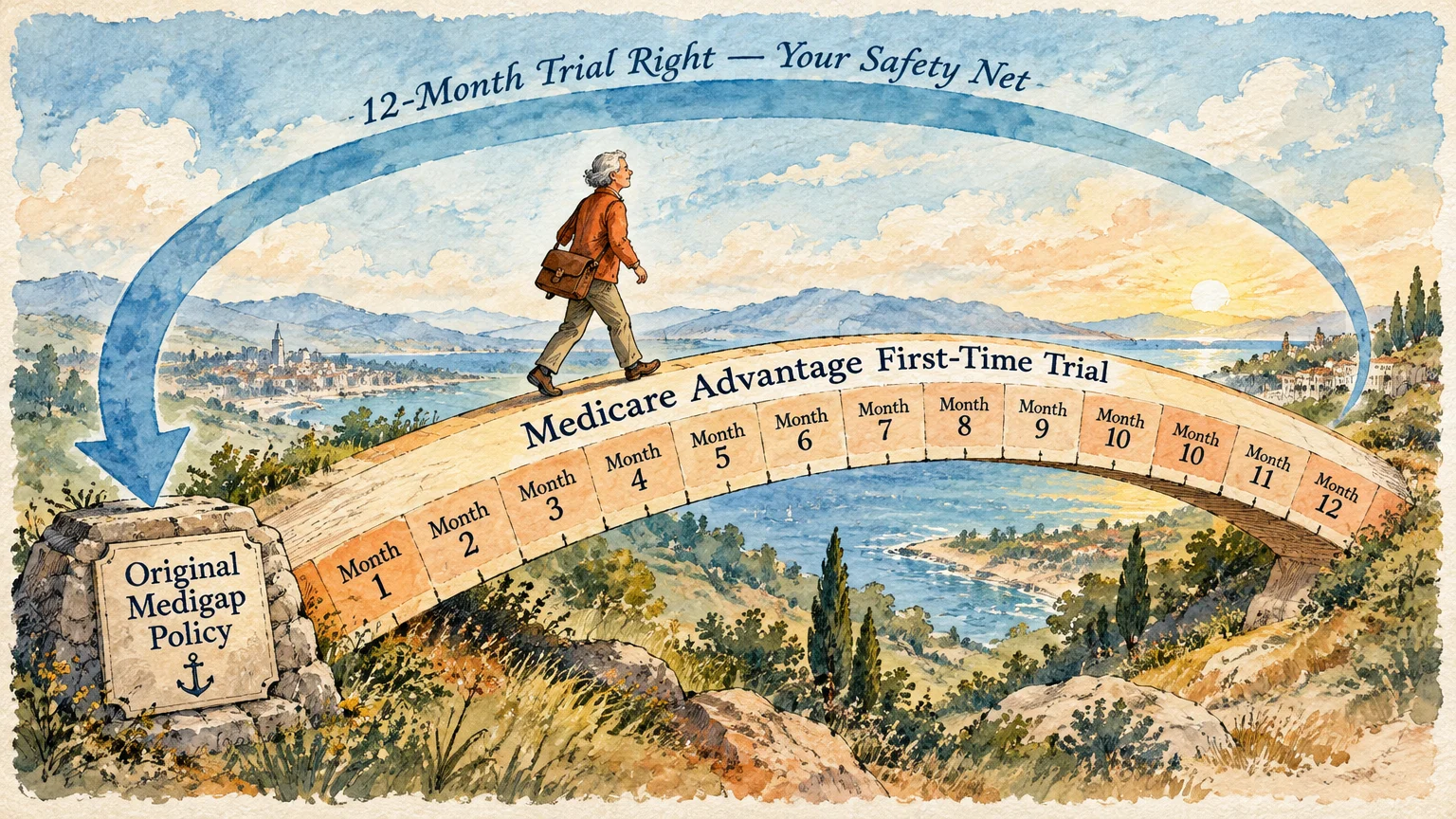
Federal law provides an additional safeguard known as a trial right for newer Medicare Advantage enrollees. This protection applies if your ending plan was the very first Medicare Advantage plan you ever joined.
The trial right protects you if you chose Medicare Advantage when you first turned 65 and have been enrolled for under 12 months. It also applies if you dropped a Medigap policy to try Medicare Advantage for the first time.
If you dropped a previous Medigap policy, the law allows you to return to that exact policy if the insurer still sells it. If that policy is unavailable, you can purchase Medigap Plan A, B, C, F, K, or L.
You do not need to answer health history questions or submit to medical underwriting under this provision. You simply exercise your statutory trial right to restore comprehensive supplemental coverage.

Strategy Pillar 1: Health and Wellness Continuity
Maintaining access to your medical team requires direct communication with your healthcare providers. Provider directories can contain outdated details during periods of significant market turnover.
Contact your primary care clinic and key specialists directly. Ask the billing department which Medicare Advantage plans they plan to accept for the upcoming benefit year.
Verify network participation for regional hospital systems and outpatient diagnostic centers. Hospital network disputes can leave you responsible for hefty out-of-network bills if emergencies arise.
Investigate prior authorization rules if you decide to enroll in a new Medicare Advantage policy. Insurers frequently require clinical approvals before covering physical therapy, advanced scans, or specialist consultations.
Original Medicare eliminates most prior authorization requirements for medically necessary care. This administrative freedom reduces treatment delays and eases stress for patients managing chronic conditions.
Request 90-day medication refills from your pharmacy before your current coverage terminates on December 31. Having extra medication at home provides security while your new insurance card processes.
Obtain printed or digital copies of your complete medical history from your current physician. Carrying your treatment summaries simplifies your transition if you must establish care with a new provider.

Strategy Pillar 2: Income Planning and Prescription Drug Management
Prescription medication expenses can disrupt your retirement budget without proactive planning. Major federal reforms alter the financial structure of Part D prescription coverage for 2027.
The annual out-of-pocket prescription drug spending cap rises to $2,400 in 2027. This adjustment represents an increase from the $2,100 spending ceiling established in 2026.
Once your out-of-pocket medication expenses reach $2,400, your plan covers 100% of your covered prescription costs for the rest of the year. This cap protects retirees against devastating specialty medication expenses.
The statutory maximum Part D deductible rises to $700 in 2027, up from $615 in 2026. Plans can charge this full deductible before providing cost-sharing on brand-name medications.
If you choose Original Medicare and a Medigap plan, you must purchase a standalone Part D plan for drug coverage. CMS projects the enrollment-weighted average standalone Part D premium at $36 per month in 2027.
There will be no $0-premium standalone Part D plans available in 2027 for beneficiaries who do not receive low-income assistance. You must incorporate this premium into your monthly budget.
Retirees with limited incomes can apply for Extra Help through the Social Security Administration. The Extra Help program pays Part D premiums and limits copayments on covered medications.
Enter your exact prescription list into the online Medicare portal to identify the plan with the lowest overall annual cost. Comparing total annual out-of-pocket costs provides a clearer financial picture than reviewing premiums alone.

Strategy Pillar 3: Lifestyle Design and Geographic Flexibility
Your healthcare insurance should complement your lifestyle goals and daily activities throughout retirement. Many retirees prioritize traveling, visiting family, or splitting time between different states.
Medicare Advantage plans typically restrict non-emergency care to providers located within your home service area. If you spend winters in the Sunbelt, an HMO policy may not cover routine appointments there.
Original Medicare paired with a Medigap policy allows you to travel freely throughout the United States. You can access top medical facilities across state lines without seeking out-of-network authorizations.
Retirees living in rural communities face distinct network challenges. As rural hospitals consolidate, narrow Medicare Advantage networks can force patients to drive long distances for care.
Examine whether local rural clinics and critical-access hospitals participate in any prospective Advantage plan network. Choosing Original Medicare often proves more practical in rural areas with limited provider choices.
Consider language resources and culturally competent care when reviewing insurance plan materials. Many insurers provide multilingual support lines and translated benefit summaries to assist diverse communities.
Caregivers assisting aging relatives should review pharmacy home-delivery options. Mail-order pharmacy programs reduce transportation burdens and ensure reliable medication delivery for individuals with limited mobility.

Expert Perspectives on Navigating Plan Non-Renewals
Financial planners urge retirees to look beyond marketing brochures when evaluating replacement coverage. Certified Financial Planner™ professionals stress the importance of stress-testing healthcare costs against your retirement income.
A $0 premium policy can become expensive if you experience an unexpected hospitalization with an out-of-pocket limit near $9,850. Factoring maximum financial exposure into your cash reserve ensures stability.
Gerontologists emphasize that provider continuity supports better long-term cognitive and physical health. Maintaining long-term relationships with trusted doctors leads to earlier disease detection and better treatment compliance.
When insurance changes force you to switch physicians, schedule an initial consultation early in the year. Establishing rapport with a new doctor before an acute illness occurs prevents administrative delays.
Experienced retirees recommend maintaining a dedicated binder for insurance paperwork. Keep copies of your non-renewal notice, application confirmations, and written notes from customer service calls.
Document the date, time, and representative name whenever you speak with an insurance carrier. Written documentation helps resolve billing disputes or coverage denials quickly.

Safeguards: Navigating Scams and Coverage Traps
Disruptions in regional insurance markets often lead to an influx of predatory sales tactics. Unscrupulous brokers take advantage of consumer confusion during plan termination cycles.
Federal regulations strictly prohibit insurance agents from making unsolicited phone calls to Medicare beneficiaries. Hang up immediately if someone calls claiming to represent Medicare or offering unsolicited plan enrollments.
Government agencies will never call you to demand banking details, your Social Security number, or your Medicare number. Guard your personal identification numbers carefully against identity theft.
Be skeptical of promotional advertisements advertising generous grocery cards or utility allowances. These supplemental benefits often feature strict financial qualifications that exclude the vast majority of applicants.
Review the comprehensive consumer guides published by AARP to identify deceptive marketing trends. Education serves as your best defense against misleading sales campaigns.
Watch out for automatic crosswalk assignments from your current insurer. An insurer might move you into a plan with higher copayments or a different doctor network.
You can seek confidential, one-on-one counseling through your local State Health Insurance Assistance Program. SHIP counselors provide unbiased, free guidance without financial incentives to sell policies.
Frequently Asked Questions
What happens if I miss the December 31 deadline?
If you miss the December 31 deadline, Medicare automatically moves you into Original Medicare on January 1, 2027. You will have hospital and medical insurance, but you will lack prescription drug coverage.
However, your Plan Non-Renewal Special Enrollment Period remains active through February 28, 2027. You can still enroll in a Medicare Advantage plan or a standalone Part D plan during January or February.
Submitting an application in January activates your coverage on February 1. Submitting in February starts your coverage on March 1, leaving you responsible for drug costs during the interim.
Can an insurer reject my Medigap application due to health conditions?
No, private insurance companies cannot reject your Medigap application when your Medicare Advantage plan leaves your area. Your situation qualifies you for federal Medigap Guaranteed Issue Rights.
Insurers must sell you a policy without charging higher premiums for existing medical conditions. You must apply within 63 days after your plan terminates, which gives you until March 4, 2027.
Under federal guidelines, you can purchase Plans A, B, C, F, K, or L without medical questions. Some states also permit enrollment in Plans D and G under guaranteed issue rules.
Will my doctors accept my new insurance plan?
You cannot assume your doctors will accept a replacement Medicare Advantage plan. Insurance networks vary widely between carriers, even within the exact same county.
Call each of your doctors directly to ask which specific plans they accept for 2027. Provide the exact plan name and carrier to ensure accurate billing verification.
If you transition to Original Medicare, almost all doctors across the country accept that coverage. Fewer than 2% of non-pediatric physicians choose to opt out of the federal Medicare program.
Do I need to buy a standalone Part D plan if I choose Medigap?
Yes, modern Medigap policies sold today do not include outpatient prescription drug coverage. If you select Medigap, you must enroll in a standalone Part D plan to cover medications.
Failure to enroll in a Part D plan when you lack creditable drug coverage can result in lifetime late enrollment penalties. Enrolling in a standalone plan protects your health and your budget.
The average standalone Part D premium is projected at $36 per month in 2027. Compare plan formularies on Medicare.gov to choose the policy covering your specific prescriptions.
Your 48-Hour Action Plan
Take charge of your healthcare transition by completing one productive task within the next 48 hours. Early preparation transforms an unexpected plan termination into a smooth transition.
Locate your official Plan Non-Renewal Notice and confirm whether your carrier offered an automatic crosswalk plan. Highlight your termination date and store the letter in a safe file.
Write down your complete medication list, including precise dosages, brand names, and daily frequencies. Add the names and office addresses of all doctors you visit regularly.
Log into your personal account at Medicare.gov to review the plans available in your zip code. Enter your doctors and medications to generate customized plan comparisons.
If you prefer phone assistance, reach out to your local SHIP counselor for free, personalized enrollment guidance. Taking decisive action today guarantees that your health, finances, and retirement remain fully protected.