Financial Strategy: Earnings Limits and Tax Rules for Working Retirees
Before taking on paid clients or accepting a part-time payroll position, you must align your work hours with federal tax guidelines and Social Security regulations. Earning extra income can enhance your financial independence, but crossing specific earnings thresholds can temporarily suppress your monthly benefits if you claim Social Security before reaching your full retirement age.
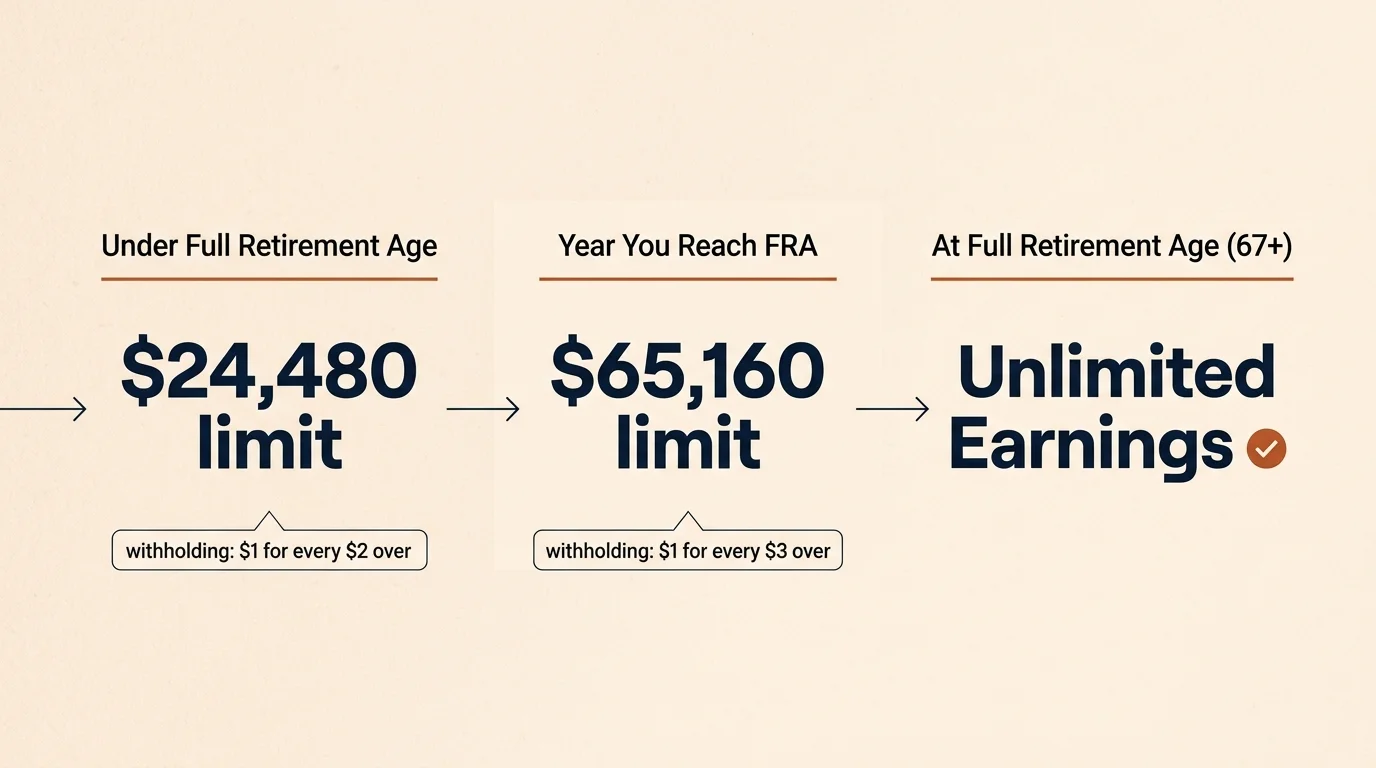
For retirees claiming benefits before reaching full retirement age (FRA), the Social Security Administration sets strict annual limits. In 2026, the early retirement earnings limit sits at $24,480. If your earnings exceed this limit, the government withholding rule reduces your benefits by $1 for every $2 earned over the limit. During the specific calendar year you reach full retirement age, the higher transition earnings limit rises to $65,160, reducing benefits by $1 for every $3 earned above the limit. Once you reach your full retirement age—which is 67 for individuals born in 1960 or later—the earnings test disappears entirely, allowing you to earn unlimited income without any benefit reduction.
Additionally, self-employment income from custom crafting, handyman tasks, or small repairs requires careful accounting. You must pay self-employment taxes (Schedule SE) on net profits exceeding $400, according to guidance from the Internal Revenue Service. Keeping detailed logs of business expenses—such as tool purchases, workshop materials, and vehicle mileage—will offset gross revenue and protect your bottom line.






Looking for job