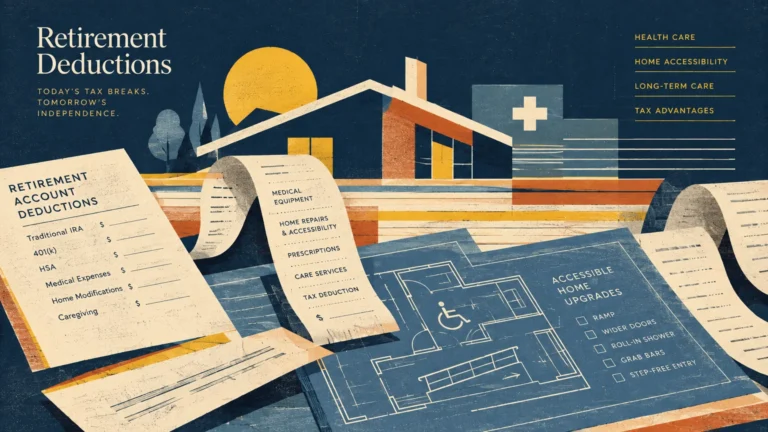
Retiring comfortably requires proactive healthcare financial management. According to industry estimates, healthcare represents one of the largest unpredictable out-of-pocket categories for aging Americans, yet millions miss out on legitimate tax deductions and budget savings simply because they do not track everyday medical items. Tracking overlooked medical expenses—ranging from transportation mileage to essential home safety retrofits—can save you thousands of dollars annually while safeguarding your long-term retirement savings. By understanding IRS guidelines and staying organized throughout the year, you ensure that every eligible dollar works directly to preserve your income, protect your health, and give you clear control over your financial future.
The Hidden Financial Toll of Unmonitored Healthcare Costs
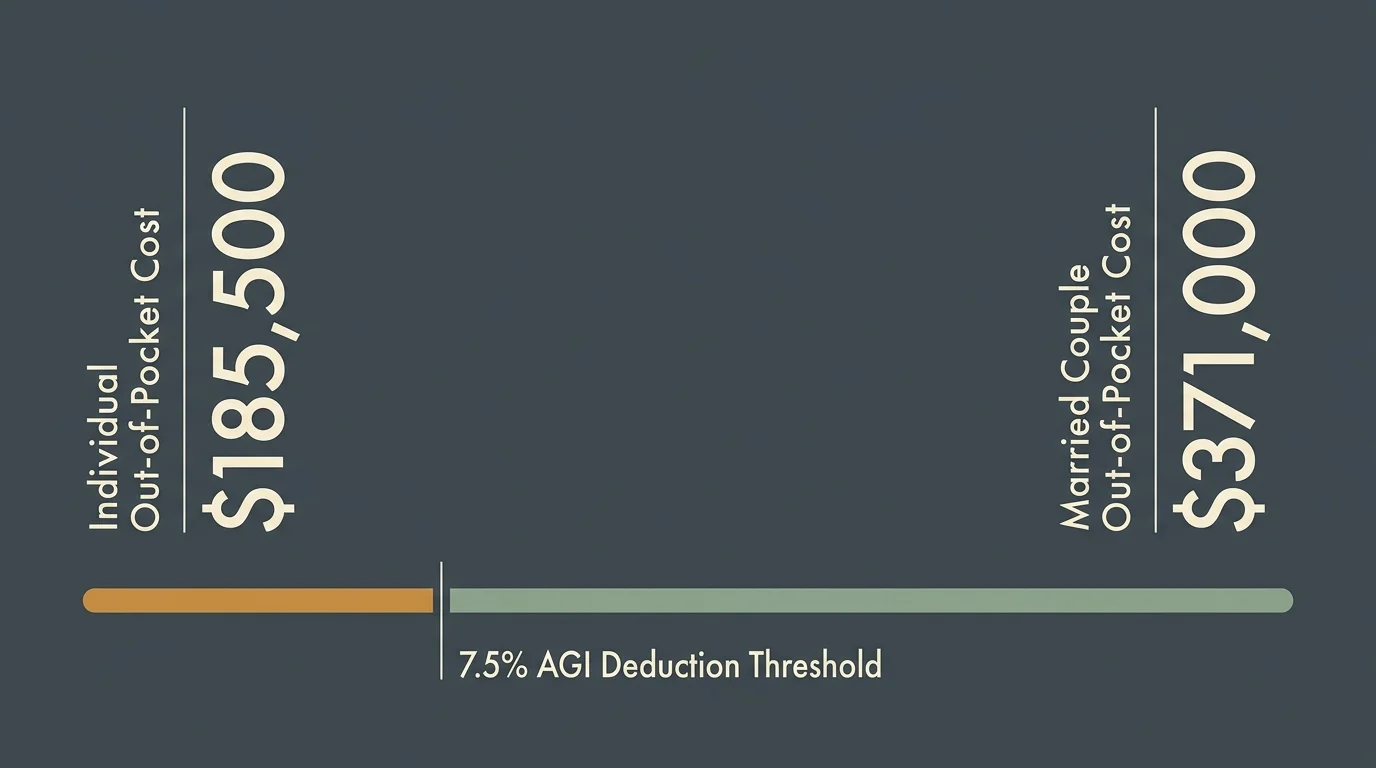
Managing healthcare costs remains one of the most complex financial challenges in retirement. Research from Fidelity Investments healthcare cost estimates indicates that a 65-year-old individual retiring in 2026 can expect to spend an average of $185,500 out-of-pocket on healthcare throughout retirement, which climbs to $371,000 for a married couple. This represents a substantial 7.5% increase over the 2025 estimate of $172,500. While most retirees budget for obvious costs like major hospital visits and prescription drugs, smaller routine expenses frequently slip through the cracks; over time, these unmonitored outlays erode your purchasing power and inflate your overall tax liability.
Under federal tax regulations, the IRS allows you to deduct qualifying unreimbursed medical expenses that exceed 7.5% of your Adjusted Gross Income (AGI) on Schedule A. For many households, reaching this 7.5% threshold seems difficult if you only count major doctor visits. However, when you systematically accumulate auxiliary costs—such as prescription eyewear, specialized home modifications, and qualified travel mileage—you can easily cross that threshold. Recognizing and logging every allowable expense turns missed tax relief into concrete cash savings for your golden years.

10 Overlooked Medical Expense Categories You Should Track
1. Home Modifications for Mobility and Accessibility
If physical limitations require you to adapt your living space, the cost of installing equipment like wheelchair ramps, grab bars, stair lifts, or widened doorways can qualify as deductible medical expenses. According to IRS Publication 502 guidelines, home improvements built primarily to provide medical care for you, your spouse, or your dependents are fully eligible. While capital improvements that increase your overall property value require an adjusting calculation, purely functional accessibility retrofits—such as lowering kitchen counters, installing roll-in showers, or adding support rails—are typically deductible in full without offsetting value gains.
2. Medical Transportation and Mileage
Driving to doctor appointments, physical therapy sessions, pharmacy drive-thrus, and outpatient diagnostic centers adds up faster than most retirees realize. The IRS establishes a standard medical mileage rate that changes periodically to reflect economic conditions. For tax year 2025, the medical travel rate stands at 21 cents per mile. For 2026, the rate is set at 20.5 cents per mile from January 1 through June 30, increasing midyear to 23.5 cents per mile effective July 1, 2026. In addition to personal vehicular mileage, you can log out-of-pocket parking fees, highway tolls, bus fares, and ride-share costs associated with medical care.
3. Travel Lodging for Out-of-Town Care
When specialized medical treatment forces you to travel away from home, lodging expenses can qualify for federal tax deductions. IRS rules allow you to deduct up to $50 per night per person for lodging while traveling for essential medical care provided by a licensed physician in a hospital or equivalent facility. If a spouse or caregiver accompanies you to assist with necessary medical support, their lodging qualifies for an additional $50 per night allowance, bringing the total deductible cap to $100 per night. Meals, however, remain explicitly non-deductible under this provision.
4. Vision Care Essentials and Corrective Hardware
While original Medicare generally excludes routine vision exams and corrective hardware, out-of-pocket payments for these items count toward your annual IRS medical expense total. You can track expenses paid for comprehensive eye exams, prescription eyeglasses, contact lenses, specialized lens cleaning solutions, and prescribed eye drops. Furthermore, non-covered specialized treatments for chronic conditions like glaucoma or out-of-pocket co-pays associated with advanced cataract surgeries represent legitimate medical expenses that protect both your sight and your financial ledger.
5. Hearing Devices, Maintenance, and Batteries
Age-related hearing loss affects millions of older adults, but hearing care remains largely unbundled from traditional Medicare coverage. Purchasing hearing aids, specialized diagnostic tests, professional fitting fees, and ongoing maintenance repairs represents a significant out-of-pocket investment. Crucially, the recurring cost of specialized hearing aid batteries, replacement cleaning components, and ear mold adjustments also qualifies as a deductible medical expense. Keeping detailed receipts for all hearing health products ensures that these essential communication tools yield substantial tax savings.
6. Comprehensive Dental Procedures and Prosthetics
Standard Medicare does not cover routine dental care or extensive restorative work, leaving retirees to cover hefty bills independently. Out-of-pocket expenditures for preventative cleanings, fillings, root canals, crowns, bridges, dentures, denture adhesives, and dental implants are fully deductible under federal tax codes. Because advanced dental treatments—such as full-mouth implants or extensive periodontal care—frequently total thousands of dollars in a single tax year, capturing these costs can easily propel you beyond the 7.5% AGI deduction floor.
7. Qualified Long-Term Care Insurance Premiums
Premiums paid for tax-qualified long-term care insurance (LTCI) policies are deductible up to annual inflation-adjusted limits governed by Internal Revenue Code Section 213(d)(10). For individuals aged 61 to 70, the maximum deductible premium limit is $4,810 in 2025 and rises to $4,960 in 2026. For those aged 71 and older, the deductible limit is $6,020 in 2025 and increases to $6,200 in 2026. If both spouses hold eligible policies, each spouse can claim these caps individually on a joint tax return.
8. Medicare Premiums Paid Out-of-Pocket or via HSA
Many retirees forget that certain Medicare premiums qualify as deductible medical expenses on Schedule A. Standard Medicare Part B monthly premiums—which are $185.00 in 2025 and rise to $202.90 in 2026—as well as Medicare Part D prescription drug premiums and Medicare Advantage premiums count toward your deductible total. Additionally, if you accumulated savings in a Health Savings Account (HSA) prior to enrolling in Medicare, you can withdraw HSA funds 100% tax-free to reimburse yourself for Part B and Part D premiums, giving you powerful tax relief.
9. Specialized Medical Equipment and Prescribed Supplies
Over-the-counter wellness purchases rarely qualify for tax deductions unless explicitly prescribed by a healthcare provider. However, durable medical equipment and prescribed health supplies are fully eligible. This includes sleep apnea CPAP machines and replacement water chambers, blood glucose monitoring test strips, compression stockings prescribed for circulatory conditions, specialized orthopedic insoles, and mobility devices like walkers or canes. Maintaining formal physician prescriptions alongside purchase receipts validates these claims if audited by tax authorities.
10. In-Home Caregiver Services and Diagnostic Testing Out-of-Pocket
Attendant care services for individuals unable to perform basic activities of daily living—such as bathing, dressing, or medication management—qualify as medical expenses when provided under a formal plan of care prescribed by a physician. Similarly, diagnostic procedures that fall outside standard coverage, such as specialized genetic risk screenings or out-of-network laboratory tests, represent allowable costs. Tracking non-reimbursed caregiving invoices and specialized testing bills ensures that essential personal care translates into legitimate tax deductions.

Strategic Action Plan: Organizing Your Healthcare Expenses
To convert potential tax deductions into active savings, you need a disciplined tracking routine that spans three key areas of retirement strategy: income planning, lifestyle design, and health management. First, coordinate with your financial advisor to review your expected Adjusted Gross Income early in the tax year. Knowing your estimated AGI helps you calculate your exact 7.5% deduction threshold so you know how close you are to claiming Schedule A deductions.
Second, establish a frictionless record-keeping system. Whether you prefer a dedicated digital folder, a mobile expense-scanning application, or a simple physical binder, log medical payments immediately alongside supporting documentation like explanation of benefits (EOB) statements. Using consumer guidance tools from organizations like AARP healthcare tracking resources can help structure your ledger effectively.
Third, optimize your liquidity by leveraging existing Health Savings Accounts. While active HSA contributions must stop once you enroll in Medicare Part A or Part B, existing balances remain fully tax-sheltered and offer tax-free withdrawals for eligible out-of-pocket care throughout your lifetime. Utilizing an HSA for Medicare Part B premiums ($185.00 in 2025; $202.90 in 2026) or annual Medicare Part B deductibles ($257 in 2025; $283 in 2026) allows you to pay critical healthcare costs with tax-free dollars.

Expert Perspectives on Protecting Your Retirement Nest Egg
Financial planners and gerontologists emphasize that failure to track medical expenses leads directly to overpaying income taxes and mismanaging retirement cash flow. Certified Financial Planner (CFP®) professionals frequently point out that retirees who track minor out-of-pocket costs routinely uncover thousands of dollars in hidden tax write-offs. This extra tax relief protects investment portfolios by reducing the need for taxable IRA or 401(k) withdrawals to pay unexpected medical bills.
Geriatric health specialists also stress that tracking healthcare expenses encourages proactive self-care. When you systematically monitor vision, dental, and mobility costs, you are far less likely to delay critical preventative treatments out of concern over cost. Ultimately, establishing a clear view of your medical ledger empowers you to maintain personal independence, enhance your physical well-being, and preserve your wealth simultaneously.
Risks, Scams, and Tax Pitfalls to Avoid
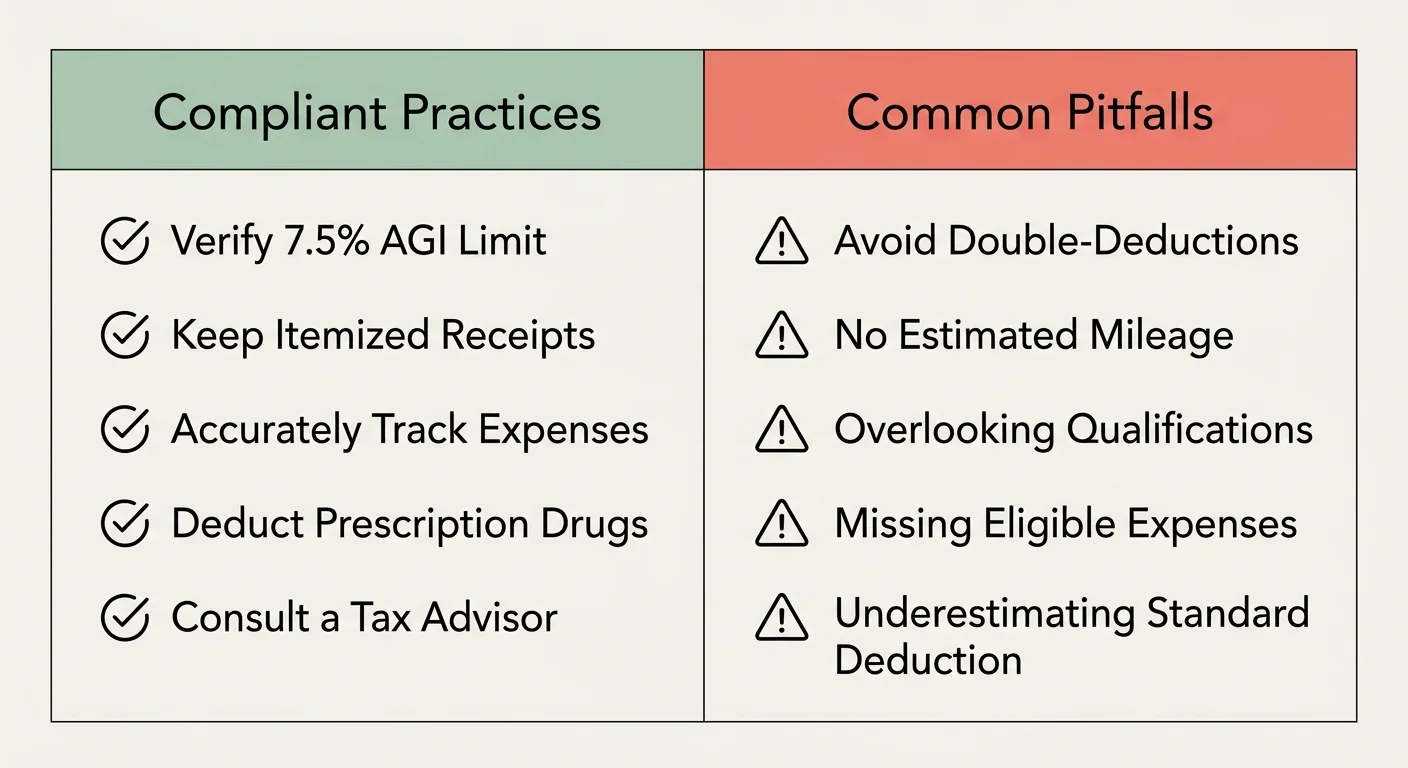
While maximizing healthcare deductions is smart financial management, navigating federal tax and healthcare regulations requires vigilance. One primary risk involves income cliffs related to Medicare Part B and Part D premiums, known as the Income-Related Monthly Adjustment Amount (IRMAA). Taking large, unmanaged withdrawals from taxable retirement accounts to cover medical bills can artificially inflate your AGI, accidentally triggering higher Medicare monthly premiums two years later according to Social Security Administration rules.
Another critical pitfall involves double-dipping or medical billing errors. You cannot deduct medical costs that were reimbursed by insurance, paid through a tax-free Flexible Spending Account (FSA), or funded via an HSA withdrawal. Additionally, billing mistakes occur frequently on complex hospital claims; failing to double-check invoices against your official Medicare Explanation of Benefits can result in paying hundreds of dollars for services you never received. Always verify that expenses are non-reimbursed and medically necessary before claiming them on tax filings.
Frequently Asked Questions About Retiree Medical Deductions
Can I deduct Medicare Part B and Part D premiums on my tax return? Yes, Medicare Part B and Part D premiums qualify as deductible medical expenses under IRS guidelines. You can include these amounts on Schedule A as long as your total unreimbursed medical expenses exceed 7.5% of your Adjusted Gross Income and you do not pay them using pre-tax dollars or tax-free HSA funds.
What happens to my Health Savings Account once I enroll in Medicare? Once you enroll in Medicare Part A or Part B, you can no longer make new contributions to an HSA. However, you retain full ownership of existing HSA funds, which you can continue to withdraw tax-free at any age to pay for qualified medical expenses, including Medicare premiums and deductible out-of-pocket services.
How do I calculate deductible medical mileage for doctors’ visits? You calculate medical mileage by tracking total driving distance to and from qualifying medical appointments. Multiply your total miles by the applicable IRS standard medical mileage rate—21 cents per mile in 2025, or 20.5 cents per mile for the first half of 2026 and 23.5 cents per mile for the second half—and add related parking fees or tolls.
Are home modifications like ramps and grab bars fully deductible? Yes, accessibility improvements like wheelchair ramps, grab bars, and widened doorways constructed for medical safety are generally fully deductible as medical expenses. If an improvement increases the market value of your home, only the portion of the expense that exceeds the increased property value is deductible under IRS Publication 502 rules.
Take Charge of Your Medical Expenses Today
Managing retirement medical costs does not have to feel overwhelming when you take consistent, proactive steps. Take 15 minutes within the next 48 hours to gather your latest medical receipts, pharmacy statements, and mileage records from this year. Check official program rules on the official Medicare coverage portal to verify your coverage details, set up a dedicated tracking folder, and start logging every dollar spent. Taking immediate control of your healthcare record-keeping will protect your hard-earned nest egg and give you total confidence in your financial security.