
Monetizing your hard-won professional expertise through independent consulting transforms your retirement into a lucrative, purpose-driven second career. Instead of walking away from decades of institutional knowledge, you can package your strategic insights into high-value advisory services on your own schedule. Research shows that business founders over age fifty are twice as likely to build enduring, successful ventures as their younger peers. By selecting an in-demand niche—ranging from fractional executive leadership to legacy technical systems—you retain absolute control over your time, protect your cognitive vitality, and generate substantial cash flow. Starting an advisory practice allows you to design work around your life.
The Rise of the Post-Career Consultant
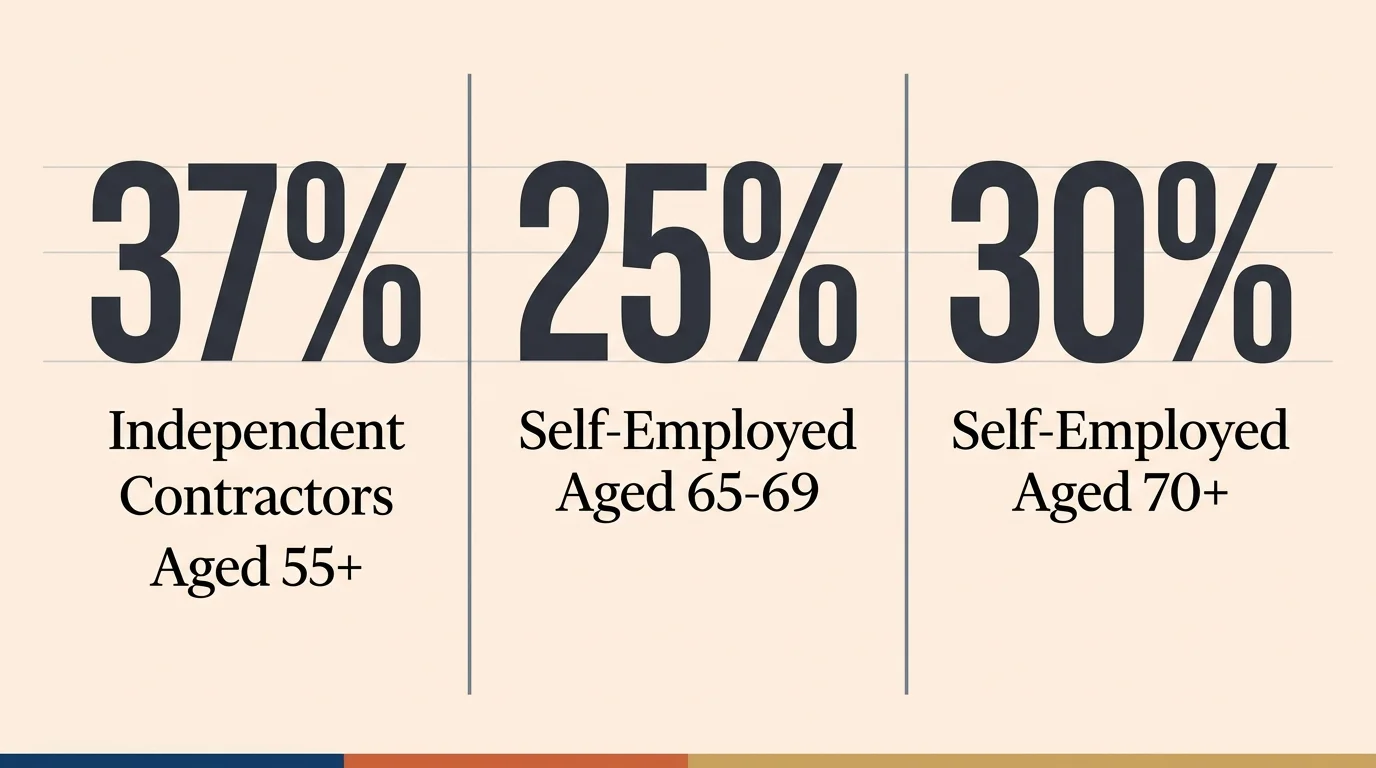
The modern retirement landscape looks radically different from past generations. Rather than embracing total leisure, today’s retirees increasingly choose flexible self-employment to maintain intellectual engagement and financial independence. Data from the National Bureau of Economic Research and AARP indicates that workers aged 55 and older represent roughly 37% of all independent contractors across the United States. Moreover, self-employment rates rise sharply with age; approximately 25% of working adults aged 65 to 69 and over 30% of working septuagenarians operate their own advisory practices.
This demographic surge reflects a profound competitive advantage. Decades of navigating economic cycles and leading diverse teams give experienced professionals unmatched perspective. While younger founders often face steep operational learning curves, seasoned consultants immediately identify structural inefficiencies and deliver proven solutions. Organizations eagerly pay a premium for experienced guidance without absorbing the expensive overhead, healthcare benefits, and equity packages associated with full-time corporate executives.
Strategic Pillars for a Sustainable Consulting Practice
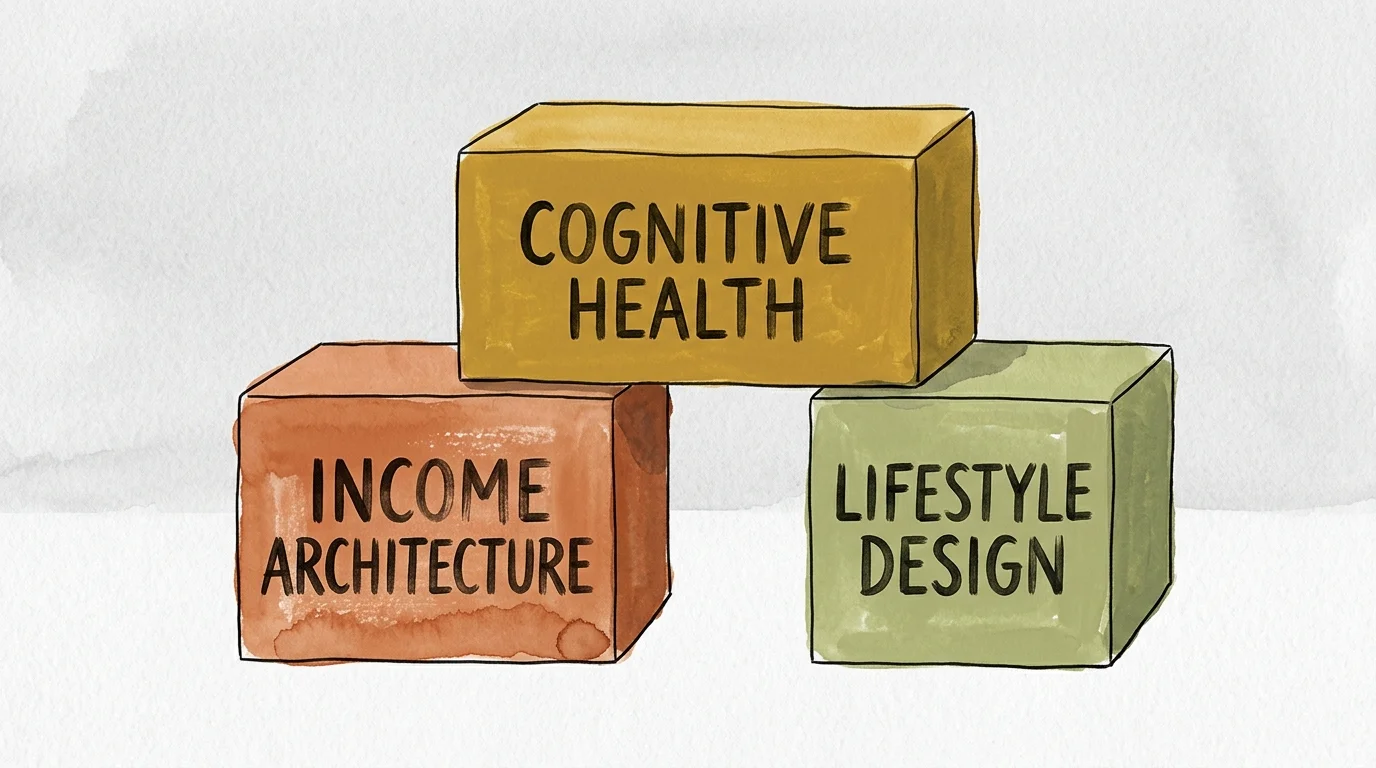
Building a thriving post-career advisory business requires deliberate alignment across three interconnected domains: income strategy, lifestyle design, and health optimization. Establishing robust foundations in each area safeguards your time while maximizing financial and personal returns.
Income Architecture and Value-Based Pricing
Avoid trading hours for dollars; hourly billing penalizes your efficiency. Seasoned corporate veterans typically bill between $150 and $350 per hour, but specialized advisory retainers generate superior predictable income. Structuring monthly retainers between $3,000 and $10,000 for high-level guidance anchors your value to client outcomes rather than the clock. This approach stabilizes cash flow and minimizes administrative overhead, allowing you to earn executive-level compensation on fractional hours.
Lifestyle Design and Boundary Architecture
Your consulting venture must serve your lifestyle, not consume it. Set clear parameters around client availability and communication channels before signing contracts. Utilizing asynchronous tools and defined project milestones allows you to advise clients from anywhere. Whether you manage physical mobility limitations or prefer traveling, structuring a project-based workflow protects the personal freedom retirement offers.
Cognitive Health and Purposeful Engagement
The human brain thrives on complexity and novelty. Gerontological studies consistently demonstrate that sustained mental stimulation and purposeful problem-solving protect cognitive reserve and slow age-related mental decline. Consulting keeps you immersed in industry trends, challenges your analytical abilities, and fosters dynamic intergenerational relationships. This intellectual vitality delivers profound psychological dividends alongside financial compensation.

7 High-Demand Consulting Niches for Retirees
The most lucrative consulting opportunities emerge where career tenure intersects with urgent corporate needs. The following seven niches offer high barrier-to-entry advantages that protect experienced professionals from downward pricing pressure.
1. Fractional Leadership and Executive Advisory
Growing startups and mid-market companies frequently need seasoned C-suite guidance but cannot justify full-time salaries. As a fractional executive or strategy advisor, you provide strategic oversight, mentor rising managers, and steer companies through inflection points. Typical engagements command $250 to $450 per hour or monthly retainers exceeding $5,000, giving founders instant credibility with lenders and board members.
2. HR Strategy, Talent Acquisition, and Succession Planning
Organizations face an unprecedented transition as millions of experienced workers retire without adequate internal successors. Human resources consultants specializing in succession planning, executive coaching, and knowledge-transfer frameworks help companies prevent critical talent drains. You can guide leadership teams through compensation restructuring and dispute resolution—tasks relying heavily on emotional intelligence honed across decades.
3. Nonprofit Governance and Grant Writing Strategy
Many charitable organizations operate with passionate frontline staff but lack administrative oversight. Experienced managers excel in nonprofit consulting by streamlining board governance, establishing compliance protocols, and building sustainable fundraising frameworks. Furthermore, mastering institutional grant proposals offers consistent work, as organizations depend on reliable grant funding to sustain community missions.
4. Legacy IT Infrastructure and Cybersecurity Advisory
While tech startups chase modern programming frameworks, critical sectors like banking, government, and aviation still rely on massive legacy mainframe architectures. Veteran technologists who understand COBOL, legacy database design, and proprietary enterprise systems command premium compensation. Additionally, advising on cybersecurity governance helps smaller businesses satisfy federal standards without hiring full-time security officers.
5. Supply Chain Resilience and Logistics Optimization
Recent disruptions forced businesses to rethink vendor dependencies, inventory models, and shipping routes. Consultants with procurement and operations experience audit supply chains, renegotiate vendor contracts, and develop contingency logistics networks. By identifying bottlenecks and eliminating operational waste, you deliver rapid return on investment that justifies substantial project fees.
6. Healthcare Administration, Compliance, and Patient Advocacy
Healthcare remains a heavily regulated industry. Retired clinical directors and practice administrators possess operational insights that private practices and regional health systems urgently need, from accreditation audit preparation to billing workflow optimization. Alternatively, private patient advocates guide families through complex medical systems, insurance denials, and eldercare decisions.
7. Small Business Financial Systems and Advisory
Countless small business owners struggle with cash flow forecasting, pricing models, and tax compliance. Retired corporate controllers, CPAs, and commercial bankers thrive as fractional chief financial officers. In this role, you assess working capital, establish internal controls, and prepare owners for debt financing or business sales, earning steady monthly advisory retainers.
Navigating Social Security, Taxes, and Benefit Safeguards
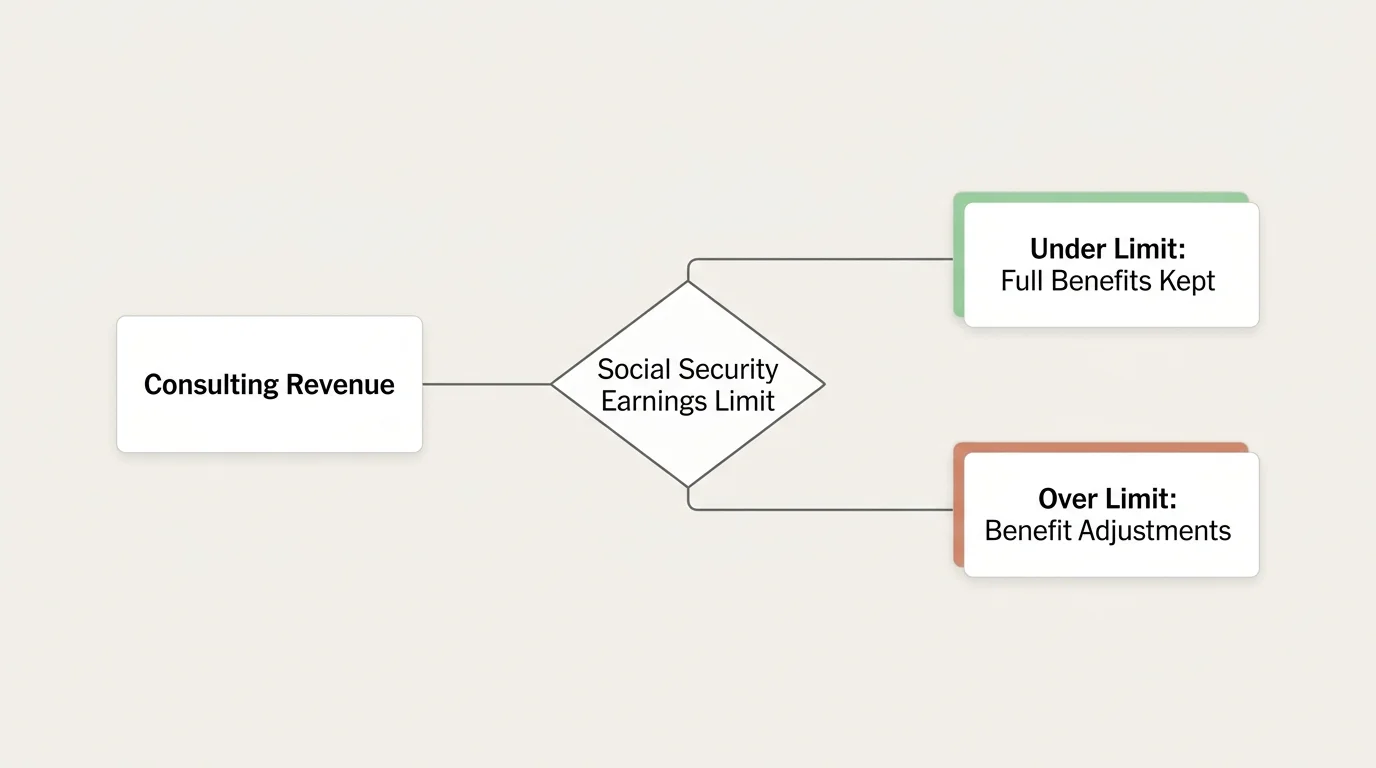
Generating consulting income during retirement requires careful tax planning to avoid unexpected financial penalties. If you collect Social Security benefits before reaching your Full Retirement Age (FRA)—which is age 67 for individuals born in 1960 or later—the Social Security Administration enforces an annual earnings limit of $23,400. The agency withholds $1 in benefits for every $2 earned above this threshold. In the year you reach FRA, the earnings limit increases to $62,160, with $1 withheld for every $3 earned prior to your birth month. Once you attain Full Retirement Age, the earnings limit disappears entirely, allowing unlimited consulting revenue without benefit reductions.
Independent consultants must also manage self-employment tax liabilities under the Self-Employment Contributions Act. The Internal Revenue Service assesses a 15.3% self-employment tax on net business earnings, comprising 12.4% for Social Security up to the annual wage cap of $176,100 and 2.9% for Medicare with no upper limit. You can deduct 50% of your self-employment tax directly on Form 1040 to reduce your adjusted gross income.
Additionally, monitor your Modified Adjusted Gross Income to avoid triggering Medicare Income-Related Monthly Adjustment Amounts. Crossing specific income thresholds increases your Part B and Part D premiums under standard Medicare premium rules. Establishing a tax-advantaged Solo 401(k) or SEP IRA enables you to shelter substantial pre-tax consulting income, reducing current tax liability while continuing to build wealth.

Mitigating Risk: Contracts, Insurance, and Business Safeguards
Operating a consulting practice requires basic legal safeguards to protect your personal assets. Establishing a formal business entity, such as a Limited Liability Company, separates personal savings and home equity from business obligations, as outlined by the Small Business Administration. Pair your business structure with a Professional Liability policy, commonly known as Errors and Omissions insurance, to protect against claims of negligence or faulty advisory guidance.
Always execute written service agreements specifying deliverable scopes, payment schedules, intellectual property ownership, and termination terms before starting client work. Clear scopes prevent project creep—a common issue where clients demand additional labor without adjusting compensation. Furthermore, remain vigilant against business opportunity scams and predatory business brokers promising guaranteed clients in exchange for steep upfront fees. Real consulting practices grow through authentic networking and documented client outcomes.
Frequently Asked Questions
How many hours a week should I expect to work as an independent consultant?
You control your workload entirely based on your financial goals and lifestyle preferences. Most post-career consultants work between 10 and 20 hours per week, balancing client deliverables with leisure. Focusing on value-based pricing and monthly advisory retainers ensures high earning potential without requiring grueling full-time schedules.
Do I need an LLC before taking on my first consulting client?
While you can legally operate as a sole proprietor immediately, forming a Limited Liability Company before accepting client payments provides essential legal separation between your personal assets and business activities. Registering an LLC also enhances your professional credibility and simplifies business banking and tax deductions.
Will consulting income increase my Medicare Part B and Part D premiums?
Yes, if your net consulting income raises your Modified Adjusted Gross Income above statutory thresholds, the Income-Related Monthly Adjustment Amount will apply two years later. You can mitigate this impact by contributing pre-tax business revenue into a Solo 401(k) or utilizing legitimate business expense deductions.
How do I transition my existing professional network into paying advisory clients?
Begin by reaching out to trusted former colleagues, vendors, and industry partners to share your advisory focus and availability. Offer to conduct an initial strategic assessment to diagnose operational bottlenecks. Genuine relationship management and demonstrated problem-solving convert former business contacts into high-value clients faster than cold outreach.
Taking Action in the Next 48 Hours
Launching your post-career consulting practice starts with decisive, incremental steps rather than exhaustive planning. Within the next 48 hours, choose one core niche that directly leverages your strongest professional accomplishments over the past decade. Write a two-sentence value proposition detailing exactly who you help and the specific operational problem you solve. Finally, reach out to three former colleagues or industry contacts to inform them of your advisory practice and schedule introductory discussions. Taking prompt action transforms your career expertise into an enduring, rewarding venture.