Sunlight filters through oak trees along a quiet lakeside trail as you adjust your hat and breathe in the crisp morning air. Choosing the right active retirement hobbies lets you savor mornings like this without worrying about aching knees or stiff hips afterward.
Movement after sixty does not require punishing workouts or expensive gym memberships. You can build strength, protect your mobility, and connect with neighbors through outdoor activities designed to support aging joints.
These seven low impact activities combine gentle exercise, fresh air, and practical ways to enjoy your retirement years at your own pace.
Why Gentle Outdoor Movement Transforms Retirement
Retirement gives you something rare—control over your daily schedule. Investing even a small portion of that freedom into joint friendly exercise pays dividends for your independence, mood, and energy.
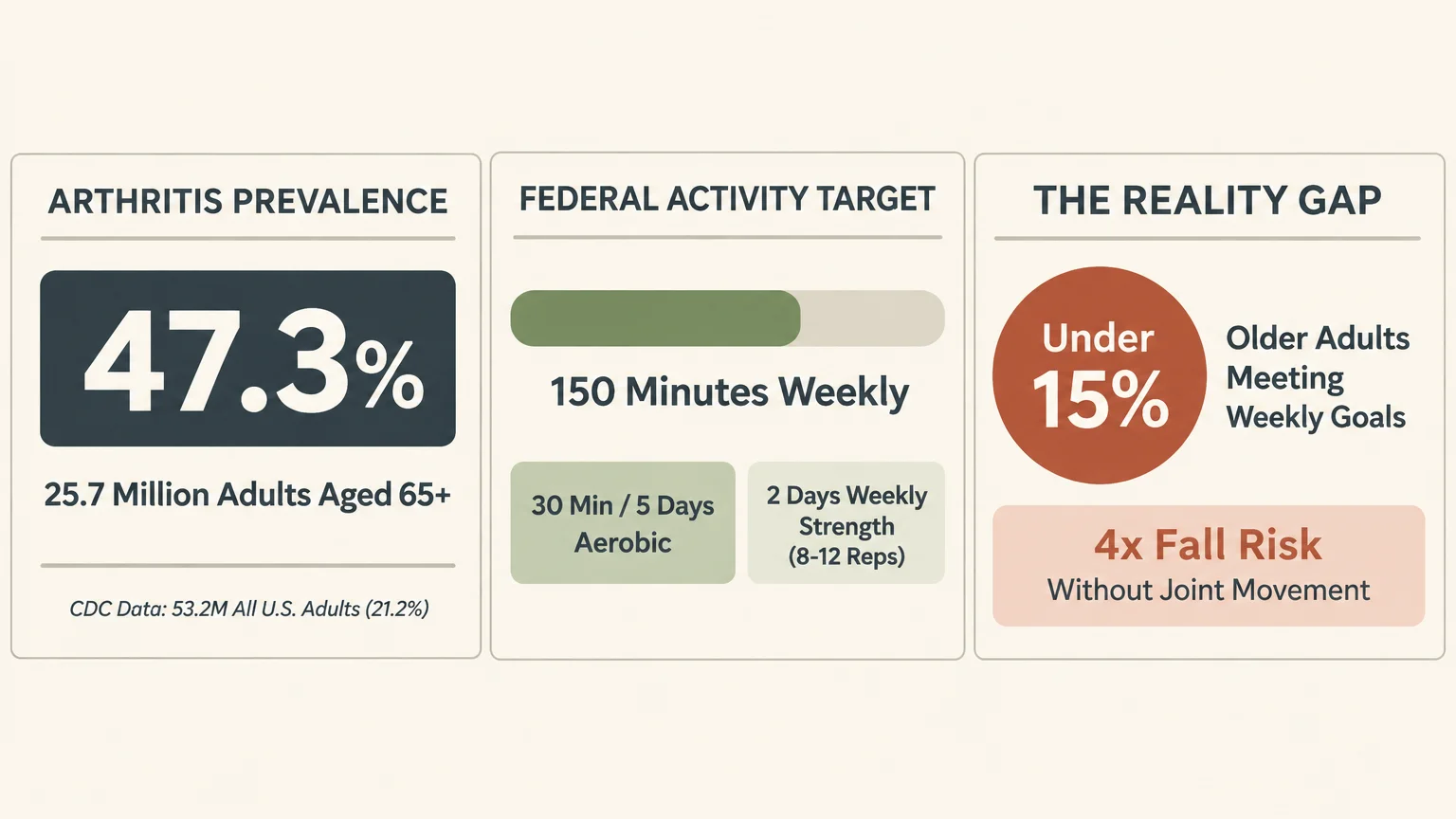
Joint discomfort affects far more retirees than most people realize. According to the Centers for Disease Control and Prevention, 53.2 million U.S. adults—roughly 21.2%—live with doctor-diagnosed arthritis.
Among adults aged 65 and older, that figure climbs to 47.3%, affecting 25.7 million Americans. Stiff knees, sore hands, or tender hips often tempt people to stay indoors on the sofa.
Unfortunately, avoiding movement backfires quickly by weakening the muscles that stabilize your skeleton. Adults aged 45 and older with arthritis are 4 times more likely to experience two or more falls and 5 times more likely to sustain a fall injury.
Federal guidelines offer a clear target for protecting your strength and balance. Adults aged 65 and older need at least 150 minutes of moderate-intensity aerobic activity each week—such as 30 minutes a day, five days a week—or 75 minutes of vigorous movement.
You also benefit from at least two days weekly of muscle-strengthening activities targeting all major muscle groups, aiming for 8 to 12 repetitions per set, alongside dedicated balance work. Yet a federal report shared through the National Institutes of Health notes that less than 15% of older adults hit those weekly goals.
Taking your movement outside makes consistency far easier than staring at a treadmill screen. Natural daylight lifts your spirits, uneven park breezes keep you alert, and neighborhood clubs turn solo exercise into meaningful social rituals.
Outdoor hobbies seniors love most share a common trait—they shift your focus away from counting minutes. When you are spotting herons, tending tomatoes, or gliding across calm water, movement feels like living rather than a chore.
The Experience Playbook: 7 Joint-Friendly Outdoor Hobbies
Every body, budget, and mobility level deserves an enjoyable way to spend time outside. Pick one or two of these outdoor activities over 60 to test over the next month.
1. Brisk Walking and Nordic Pole Walking
Walking remains the most accessible entry point into regular outdoor exercise because you already own the basic gear. Swapping hard concrete sidewalks for packed dirt trails, boardwalks, or school tracks immediately softens impact on your ankles and knees.
You do not need an exhausting daily step count to gain serious longevity protection. A 2022 meta-analysis in The Lancet Public Health examining 47,471 adults found that mortality risk for adults aged 60 and older leveled off at 6,000 to 8,000 steps per day.
Heart benefits arrive in that same sweet spot. A 2023 review in Circulation covering more than 20,000 adults showed that people over 60 walking 6,000 to 9,000 steps daily cut their risk of heart attack or stroke by 40% to 50% compared with walking 2,000 steps.
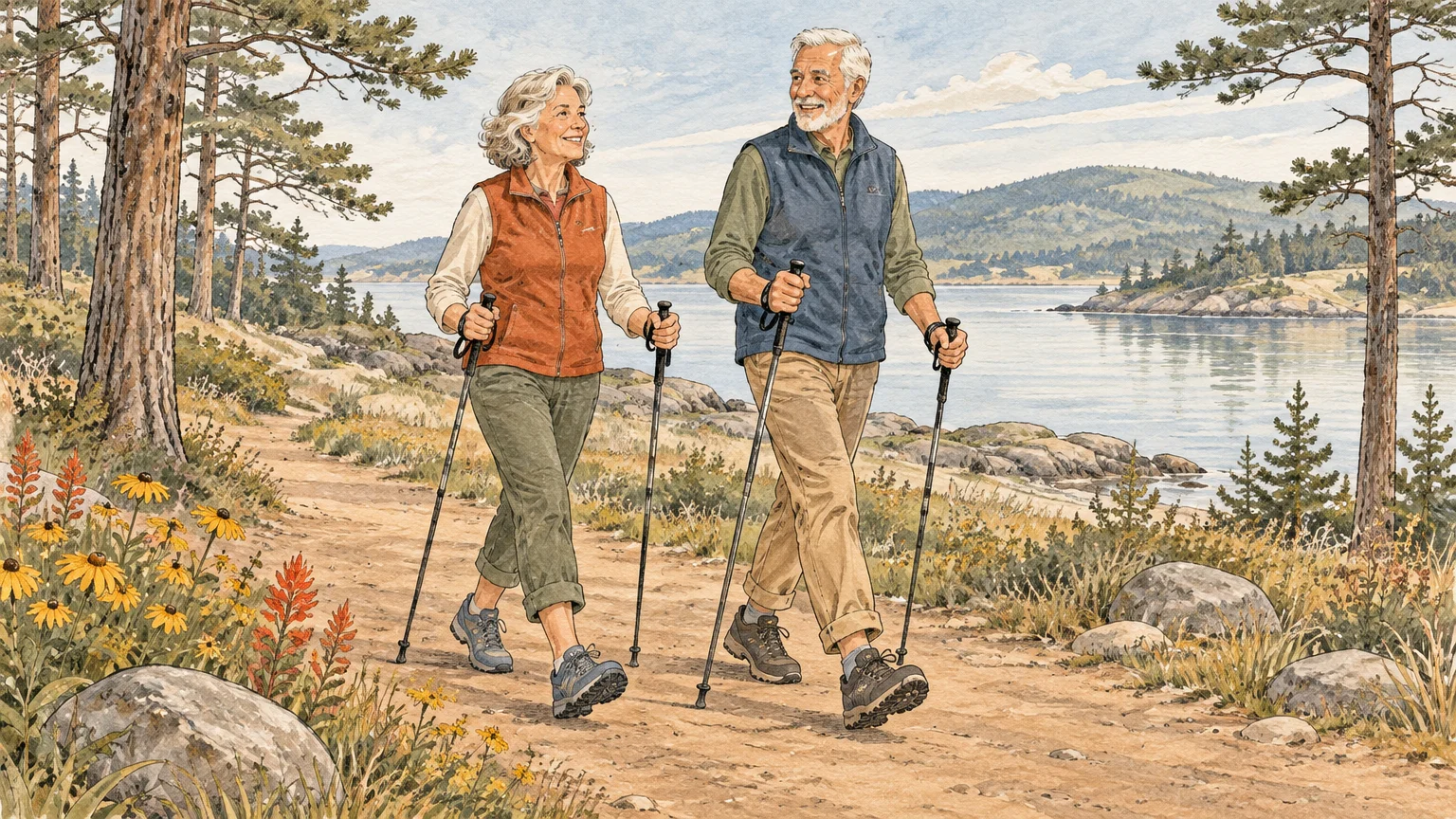
If knee soreness limits your distance, try adding lightweight Nordic walking poles. Research published in Physiotherapy Canada highlights Nordic poles as a practical way to unload the knee joint while engaging your arms, shoulders, and core.
Look for rubber-tipped poles with ergonomic wrist straps at a local sporting goods store, and ask a physical therapist or instructor to help size them properly. Joining a mall-to-park walking group or volunteering to monitor local trail conditions adds steady accountability.
2. Outdoor Swimming, Water Walking, and Aqua Aerobics
Water acts like a built-in shock absorber for sore joints and tight lower backs. Both Arthritis Australia and the Arthritis Foundation explain that standing in chest-deep water reduces the weight pressing on your legs to roughly one-third of your body weight.
Stepping into neck-deep water takes the relief even further by supporting up to 90% of your body weight. That buoyancy lets you build cardiovascular endurance and leg strength even during arthritis flares.
Temperature matters when choosing an outdoor pool. The Arthritis Foundation recommends warm-water pools kept between 83°F and 90°F, with 83°F serving as the minimum for soothing stiff muscles and joints.
You do not have to swim laps to benefit from pool time. Walking forward, sideways, and backward across the shallow end builds balance while water resistance tones your legs gently.
According to Arthritis Foundation guidance, walking backward in water recruits extra muscles around your spine, quadriceps, and shins. Municipal outdoor pools, YMCA summer programs, and community recreation centers often offer senior punch cards that keep costs low.
3. Ergonomic Raised-Bed Gardening
Tending vegetables, herbs, and pollinator flowers delivers quiet purpose alongside steady, gentle stretching. Traditional ground-level digging punishes knees and lower backs, whereas elevated planters bring the soil up to a comfortable working height.
Smart measurements prevent strain before you plant a single seed. Extension specialists at the University of Georgia, University of Missouri, and University of Arkansas recommend building beds no wider than 4 feet if you can reach from both sides.
Limit width to 3 feet if you can only reach from one side or garden from a wheelchair. Set bed heights around 24 inches for seated or wheelchair gardening, and raise them to 36 inches if you prefer standing without bending.
Plan for 6 to 12 inches of soil depth for most crops, or at least 10 inches if placing beds over a patio or driveway. Leave 18 to 24 inches between beds for walking paths, and widen aisles to 2 to 4 feet for carts or wheelchairs.
Swap heavy metal watering cans for lightweight expandable hoses or simple drip irrigation timers. If your yard lacks sun or space, rent a raised plot at a neighborhood community garden and donate extra harvests to a local food pantry.
4. Recreational Cycling and Electric Biking
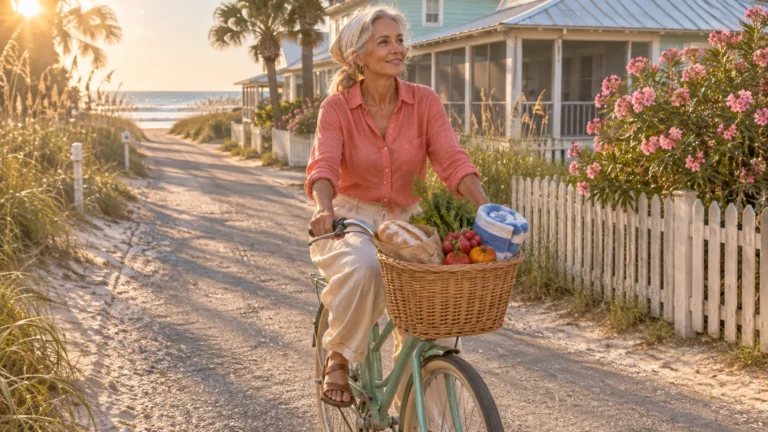
Gliding along a tree-lined greenway delivers pure joy while keeping your weight supported on a padded saddle. The Mayo Clinic notes that low-impact cycling helps ease knee osteoarthritis pain over time by lubricating the joint and strengthening surrounding leg muscles.
Choosing the right frame makes mounting and riding effortless. Step-through bicycles eliminate the need to swing a leg high over a crossbar, while recumbent tricycles offer unmatched stability and back support if balance feels uncertain.
Electric bicycles have opened hilly routes and headwinds to riders of every fitness level. Under the federal Consumer Product Safety Act, a low-speed electric bicycle features operable pedals, a motor under 750 watts, and a motor-only top speed under 20 mph.
Most states organize electric bikes into three familiar categories. Class 1 models assist only while you pedal up to 20 mph, Class 2 bikes add a throttle up to 20 mph, and Class 3 bikes assist up to 28 mph.
Before buying or traveling with an e-bike, check local rules because regulations are shifting quickly. While the National Park Service generally permits e-bikes on paved roads and bike-friendly hardened paths, individual park superintendents can limit specific classes or trails.
City and state rules also vary widely across the country. New York City capped all e-bikes at 15 mph in October 2025, while New Jersey ended its three-class system in January 2026 and instituted licensing, registration, and insurance requirements with a July 19, 2026 registration deadline.
North Carolina adopted the three-class framework effective December 1, 2026, Illinois enacted updated micromobility rules taking effect January 1, 2027, and Congress introduced the bipartisan Safe SPEEDS Act in March 2026. Renting an e-bike for a weekend rail-trail outing lets you test comfort before investing.
5. Outdoor Tai Chi in Parks and Gardens
Watching a group move in slow, synchronized arcs beneath park trees looks peaceful—and the health payoff runs deep. Tai chi blends gentle weight shifts, deep breathing, and focused posture control without jumping or sudden pivots.
Evidence from the National Center for Complementary and Integrative Health highlights a 2019 Cochrane Review showing that tai chi reduces the number of older adults who fall by 20%. The same review pointed to a 19% reduction in overall fall rates.
Structured programs show even stronger protection for high-risk seniors. A 2018 trial in JAMA Internal Medicine followed 670 adults aged 70 and older practicing twice-weekly, 60-minute sessions of Tai Ji Quan: Moving for Better Balance for 24 weeks.
Participants experienced 58% fewer falls than peers doing stretching exercises and 31% fewer falls than peers in multimodal programs. A separate 2021 review cited by the center found better walking function and posture control for knee osteoarthritis using 60-minute sessions two or three times weekly.
Tai chi requires zero special gear beyond flat, supportive sneakers and loose clothing. Many city parks, botanical gardens, and senior centers host free morning classes, and instructors can easily adapt stances for seated practice.
6. Flatwater Kayaking, Canoeing, and Paddleboarding
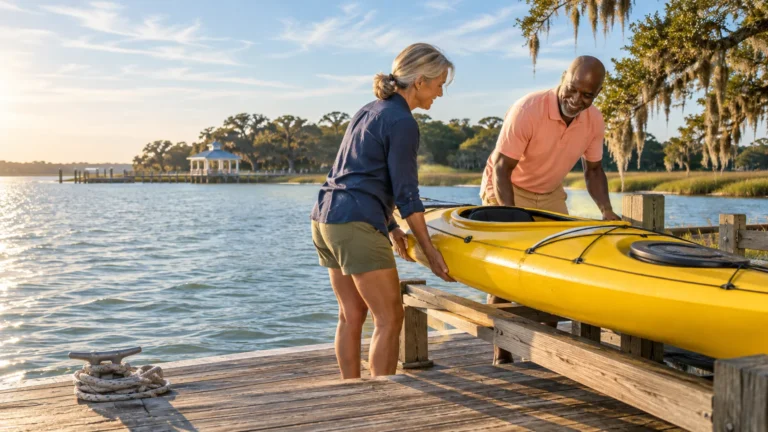
Paddling across a calm lake or slow-moving creek gives your shoulders, back, and core a satisfying workout while your hips and knees rest comfortably. Because water supports the boat, your lower joints never absorb jarring impact.
Stability starts with selecting the right craft and accessories. Wide recreational sit-on-top kayaks feel far less tippy than narrow touring models, and adding an aftermarket padded seat with firm lumbar support protects your lower back.
Respecting federal boating safety rules keeps every outing relaxed. The U.S. Coast Guard classifies canoes, kayaks, and stand-up paddleboards outside designated swim or surf areas as vessels.
Federal law requires one wearable, properly fitted, serviceable Coast Guard-approved life jacket for every person aboard. Inflatable or specialized Type V vests count only when worn as labeled, and children under 13 must wear a life jacket at all times underway.
Some states also mandate wearing life jackets during cold-weather seasons regardless of age. Always pack a whistle or horn for signaling plus a bright white flashlight if twilight could catch you on the water.
Skipping ownership at first saves money and storage headaches. Book a calm morning guided tour or rent from a lakefront outfitter until you know how often you enjoy paddling.
7. Birdwatching and Nature Photography
Not every active retirement hobby requires breaking a heavy sweat to deliver serious health rewards. Slow, attentive walks with binoculars or a camera keep you moving across gentle terrain while sharpening memory, observation skills, and curiosity.
You can tailor the terrain to match how your knees feel on any given morning. Paved wetland boardwalks, botanical gardens, and wildlife refuge auto-tour loops with frequent pullouts keep accessibility front and center.
America’s public lands offer remarkable value for seniors exploring wildlife habitats. Through the National Park Service, U.S. citizens and permanent residents aged 62 and older qualify for an America the Beautiful Senior Pass.
A Senior Annual Pass costs $20, while a Senior Lifetime Pass costs $80—and four annual passes can be traded in person toward a lifetime pass. Older Golden Age Passports remain valid and exchange free in person for the lifetime version.
That single pass covers entrance and standard day-use fees at more than 2,000 federal recreation sites managed by six agencies, including national forests and wildlife refuges. It can also cut amenity fees for camping, swimming, and boat launches by 50%.
Order a Digital Pass online for immediate access, as mailed passes take up to three weeks, and note that starting in 2026 federal fee-free entrance days apply to U.S. citizens and residents only. Connect with local Audubon chapters or bird-count volunteers to turn quiet walks into shared discoveries.
Smart Ways to Travel, Learn, and Volunteer Outdoors
Combining low impact activities with travel, lifelong learning, and service multiplies your retirement fulfillment. Rather than exercising solely for fitness, you gain fresh destinations and meaningful roles in your community.
Educational travel organizations make active exploration simple for solo travelers and couples alike. Programs offered through Road Scholar group retirees by activity pace—ranging from easy strolls to moderate national park hikes—with local experts handling logistics.
Volunteering outdoors lets you stay active while giving back to places you love. Explore conservation, park hospitality, and trail-steward roles through AmeriCorps senior service networks, botanical gardens, and municipal parks departments.
Keep budgets realistic by matching hobbies to your cash flow. Walking clubs and park tai chi cost nothing, a $20 annual park pass opens thousands of scenic trails, and local library tool-lending sheds often loan binoculars or gardening gear free.
Your Health, Stamina, and Insurance Safety Net
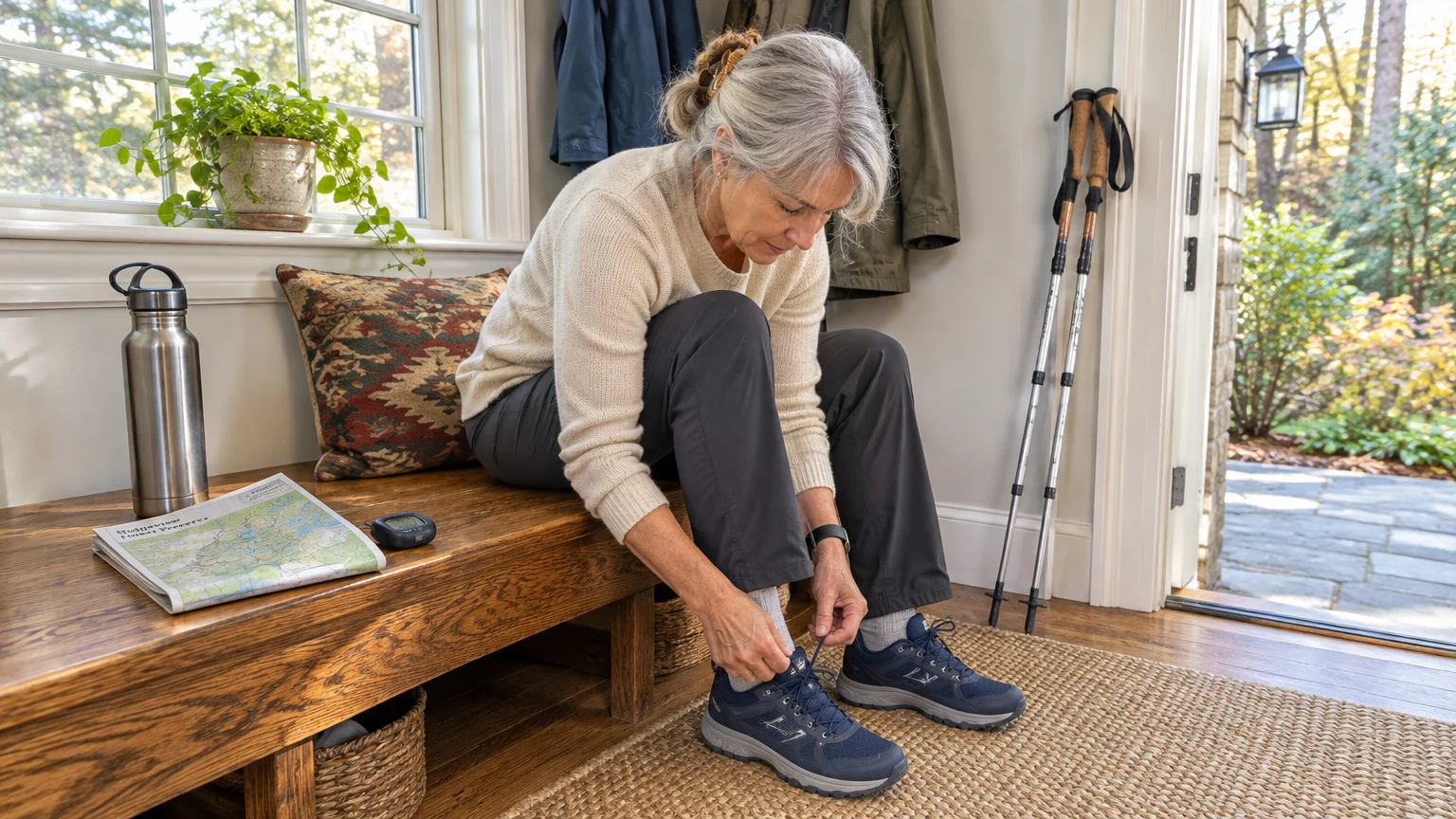
Smart preparation ensures a minor flare-up never sidelines your momentum for weeks. Start new outdoor hobbies at half the duration you think you can manage, then add five or ten minutes each week as your stamina adapts.
Warm up indoors for five minutes with gentle ankle circles, shoulder rolls, and marching in place before stepping onto cool morning trails. Carry water even in mild weather, wear polarized sunglasses, and apply broad-spectrum sunscreen before heading out.
Review your health and personal liability coverage before investing in new equipment or trips. Many Medicare Advantage plans include fitness stipends or community pool memberships that cover outdoor aqua classes at no extra cost.
If you ride an electric bicycle, verify whether your homeowners or renters policy covers theft and liability—especially in states requiring dedicated registration and insurance. For multi-day outdoor trips, check whether travel medical coverage includes emergency trail evacuation.
Build simple weather and joint contingency plans so your routine stays intact year-round. Swap icy winter walks for heated indoor pools or indoor botanical conservatories, share your route with a friend, and carry identification plus a charged phone.
Frequently Asked Questions About Active Retirement Hobbies
How can I try outdoor hobbies safely if I travel solo?
Join ranger-led walks, local bike shop group rides, or guided flatwater kayak tours instead of heading into unfamiliar backcountry alone. Sharing your daily itinerary with family or hotel staff and sticking to well-marked trails keeps solo adventures relaxed.
How do I stay active outdoors while balancing caregiving duties?
Break activity into short 10- to 15-minute outdoor sessions close to home, such as tending raised garden beds or walking around the block. When respite care opens a two-hour window, prioritize nearby park tai chi or pool time that restores your own energy.
What aging-in-place outdoor upgrades make hobbies easier at home?
Add sturdy handrails along porch steps, widen garden paths to accommodate carts or walkers, and install motion-activated path lighting for dusk arrivals. Installing a frost-free outdoor faucet near raised beds eliminates hauling heavy watering cans across the yard.
How can I budget for new outdoor activities on a fixed income?
Rent equipment before buying, borrow guides or binoculars from public libraries, and use your Senior Pass for half-price federal campground fees. Community centers, park districts, and neighborhood clubs provide low-cost instruction without locking you into expensive annual contracts.
Put Your Next Outdoor Experience on the Calendar
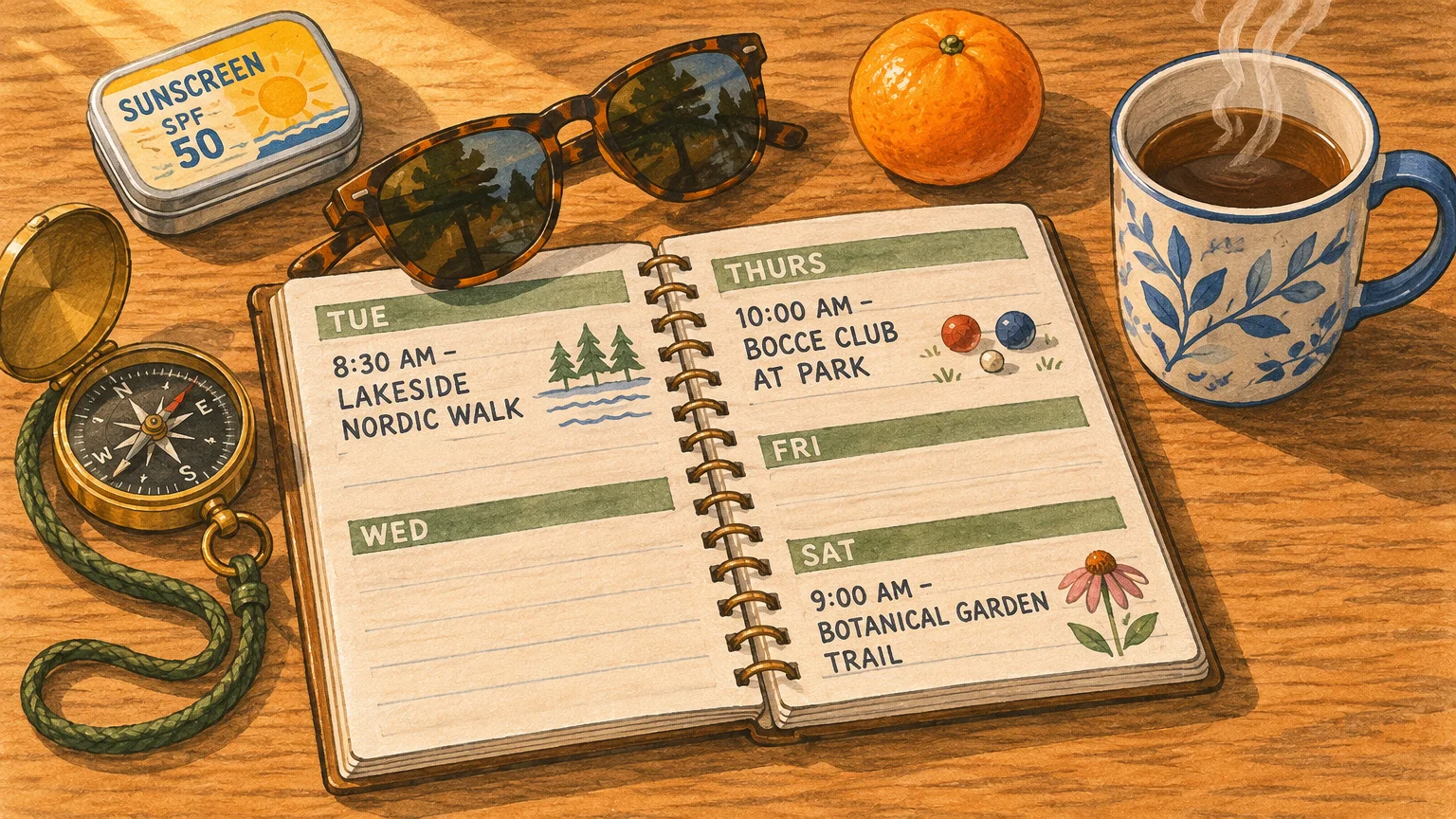
Good intentions rarely survive an empty calendar, whereas a specific date turns curiosity into action. Choose just one hobby from this list that genuinely sparks your interest rather than trying to overhaul your entire week at once.
Look at next week’s forecast today, invite a friend or neighbor along, and block out thirty minutes on your schedule. Your joints, your mood, and your future adventures will thank you for stepping outside.