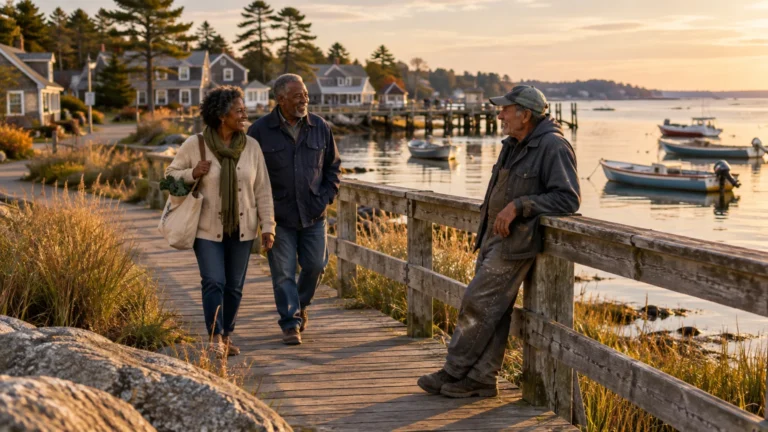
Picture a Tuesday morning filled with ceramic kilns, brisk walking clubs, and warm coffee shared with neighbors who know your name. Finding the right community hub turns ordinary retirement years into deeply connected days.
Across the country, modern municipal centers offer fitness rooms, lifelong learning, and social circles at remarkably low costs. You do not need a luxury budget to enjoy active senior living.
This guide spotlights nine standout places to retire, breaks down exact membership fees and insurance perks, and gives you a practical plan to test-drive your next favorite community.
Why Your Local Senior Center Shapes Active Senior Living
Daily purpose and face-to-face belonging do more than fill an empty calendar; they actively protect your longevity and mental sharpness. Stepping into a welcoming neighborhood hub replaces isolation with shared momentum.
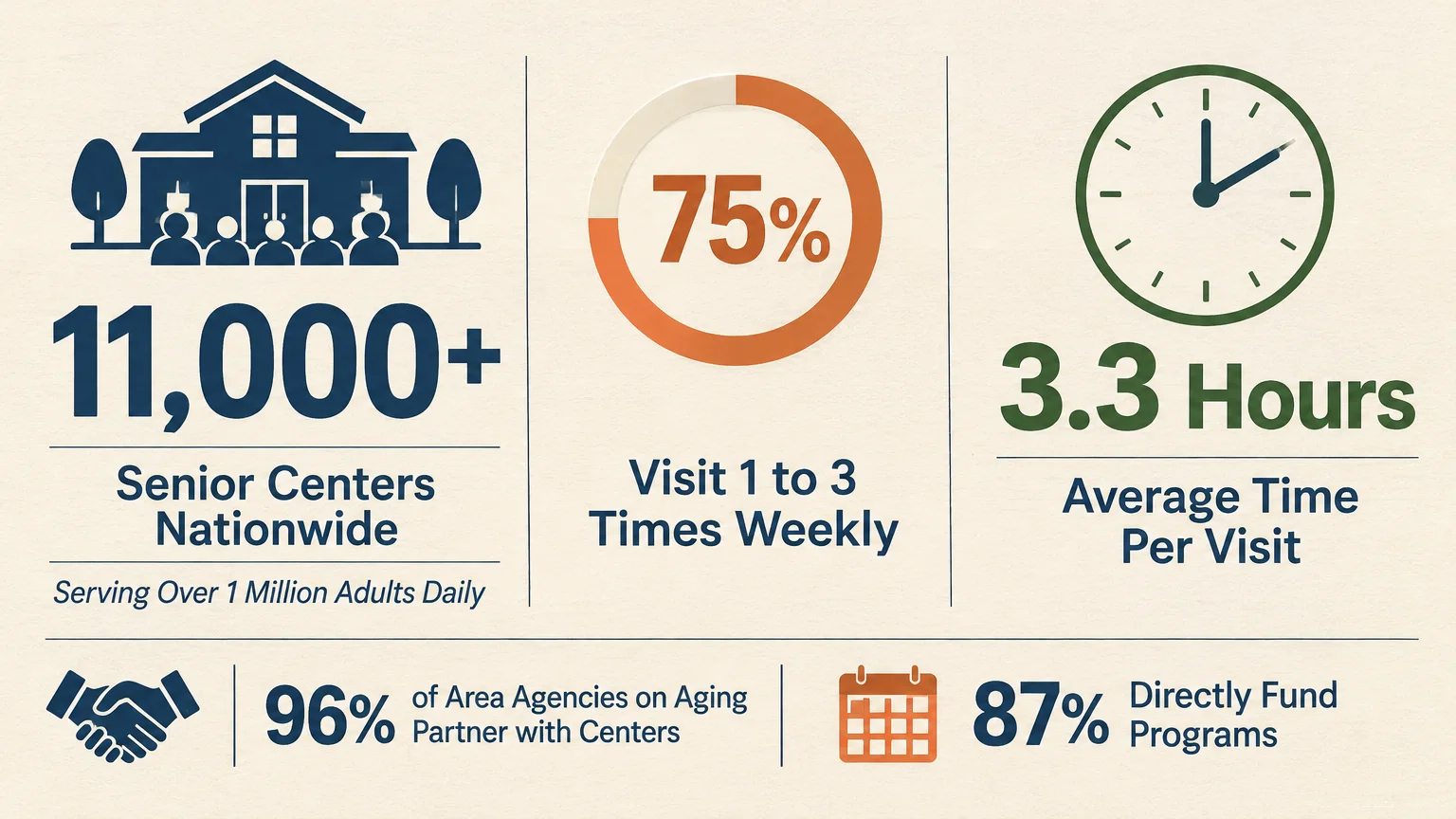
According to the National Council on Aging (NCOA), more than 11,000 senior centers serve over 1 million older adults every day. Roughly 75% of participants visit one to three times per week, spending an average of 3.3 hours per visit.
NCOA reports that senior center participants show higher health levels, increased social interaction, greater life satisfaction, and better psychological well-being than non-participants. Those measurable gains come from regular movement, shared meals, and meaningful friendships.
Changing demographics are pushing local centers to reinvent their calendars right now. NCOA notes that Baby Boomers make up over two-thirds of the 50-plus population, while the leading edge of Generation X turned 60 in 2025.
To meet those expectations, top senior community programs prioritize creative arts, technology labs, evening hours, and preventive fitness. You can find everything from slow-cooker nutrition workshops to competitive billiards under one roof.
Quality standards also guide the strongest programs across the country. From 1998 to 2024, NCOA’s National Institute of Senior Centers (NISC) accredited nearly 300 centers against nine national standards of excellence.
In October 2024, NISC transitioned that peer-reviewed process into a free self-assessment built on those same nine standards. NISC also honors standout programming annually through its Programs of Excellence Awards across categories like cross-generational ties and innovation.
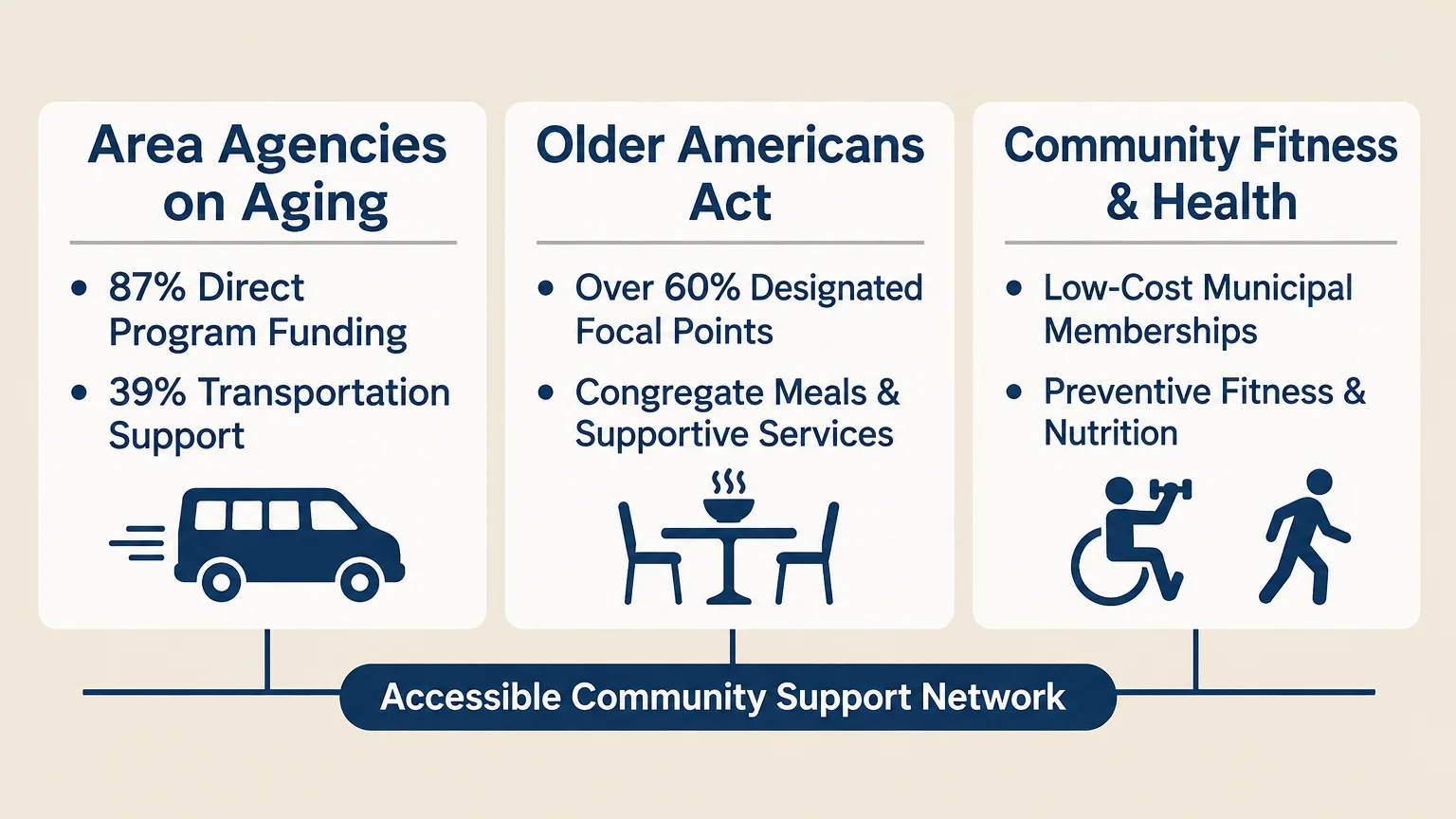
Behind the scenes, regional networks keep these local hubs accessible and affordable. A national survey by USAging, funded by the U.S. Administration for Community Living (ACL), highlights how deeply Area Agencies on Aging (AAAs) invest in senior centers.
Nearly 96% of AAAs maintain formal relationships with senior centers in their service areas, while 87% directly fund centers or programs. Furthermore, 39% provide transportation to centers, and 25% own or operate at least one facility.
Federal rules help open those doors to millions of retirees on fixed incomes. Over 60% of senior centers serve as designated focal points under the Older Americans Act (OAA), providing congregate meals and supportive services to adults age 60 and older alongside their spouses regardless of age.
Philanthropy fills vital gaps when local budgets tighten. A November 2026 IRS Form 990-PF analysis by Grantsights found that 1,417 private foundations awarded 3,181 grants directly to senior centers or older adult groups, with a median grant size of $5,000.
Still, smart planners watch federal policy closely because local funding relies on congressional budgets. KFF reports that total OAA appropriations reached $2.37 billion in FY 2024, with FY 2025 funded through continuing resolutions at those same levels across 622 AAAs.
KFF also notes that the proposed FY 2026 federal health budget outlined plans to dissolve ACL and fold OAA programs into a broader agency. Understanding how a town funds its center helps you choose a resilient community.
9 Towns With the Best Senior Centers and Community Programs
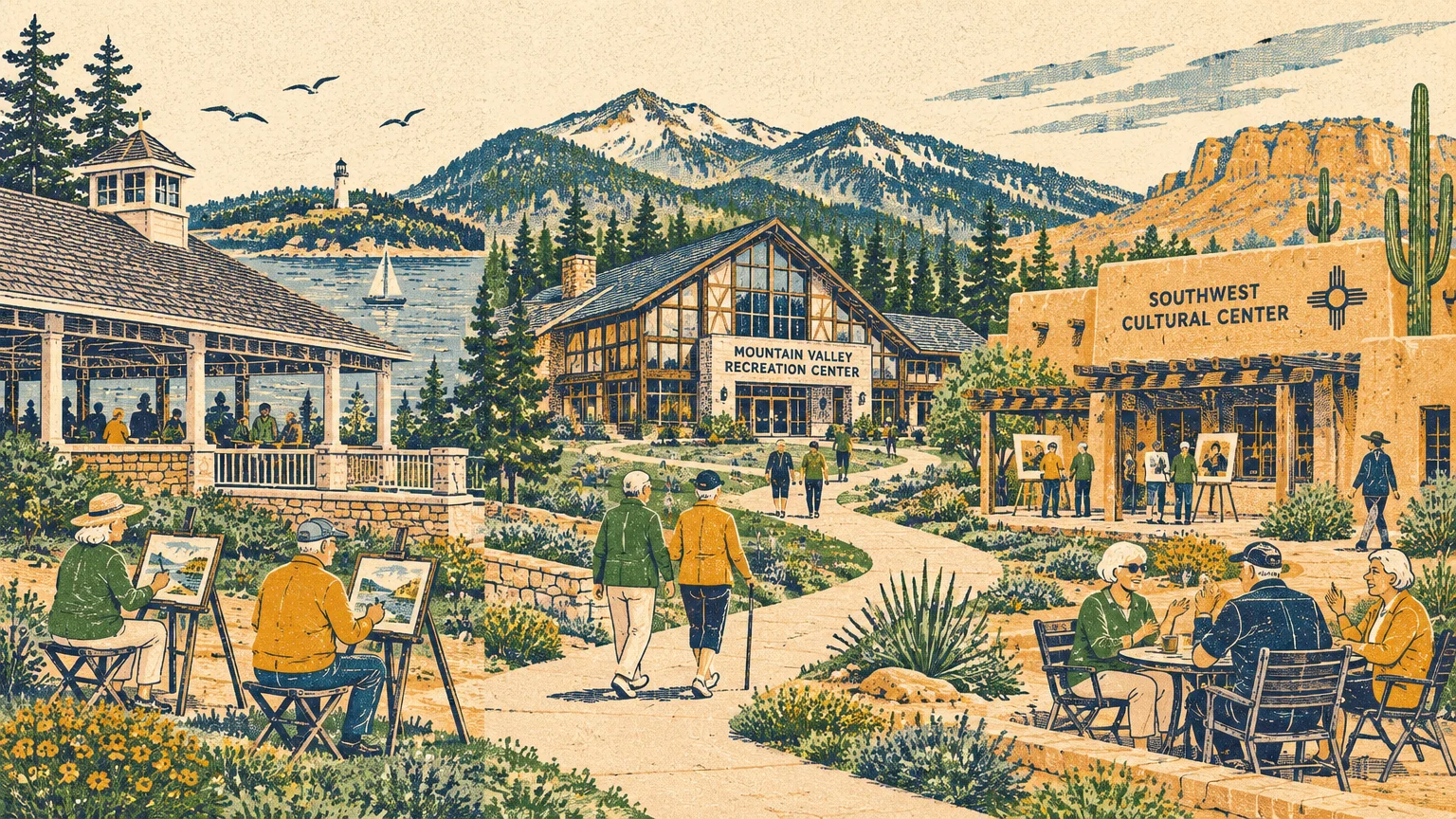
Whether you crave coastal sunshine, mountain trails, or walkable Midwest neighborhoods, these nine towns deliver exceptional retirement towns activities. Each community pairs strong local leadership with practical pricing for varied budgets and mobility levels.
1. St. Petersburg, Florida: Sunshine Senior Center
Operated by St. Petersburg Parks and Recreation, the Sunshine Senior Center is a four-time NISC Nationally Accredited multiservice hub. It welcomes adults age 50 and older, with recreational programming tailored toward ages 55 and up.
You can drop in Monday through Friday from 8:00 a.m. to 4:00 p.m., visit the fitness center between 9:00 a.m. and 3:00 p.m., or grab lunch at the Sunset Avenue Cafe from 9:00 a.m. to 1:00 p.m. Your first class is completely free, and fee waivers support residents on tight budgets.
Beyond indoor classrooms, the campus connects you directly to Mirror Lake Park and the historic Shuffleboard Club. Practical perks include congregate dining, notary services, SHINE Medicare counseling, and dedicated discussion groups for veterans and LGBTQ seniors.
2. Iowa City, Iowa: Iowa City Senior Center
Housed inside downtown Iowa City’s historic post office, this vibrant hub has served adults age 50 and older since 1981. It earned a 2026 NISC Programs of Excellence award for innovation through Parables of the Future: Black Future Fest.
Unlike traditional nine-to-five facilities, Iowa City opens seven days a week to fit active schedules. Doors open 8:00 a.m. to 7:00 p.m. Monday through Thursday, 8:00 a.m. to 5:00 p.m. Friday, 9:00 a.m. to 1:00 p.m. Saturday, and noon to 5:00 p.m. Sunday.
Annual memberships cost just $40 for Iowa City residents, plus $25 for an additional household member, or $75 for non-residents. Low-income rates drop to $10 per year or zero with a waiver, Renew Active covers membership at no cost, and travelers can buy a $5 weekly visitor pass.
3. Edina, Minnesota: Edina Senior Center
Just southwest of Minneapolis, the Edina Senior Center serves roughly 1,500 members age 55 and older regardless of whether they live inside city limits. It operates Monday through Friday from 8:00 a.m. to 4:30 p.m.
In 2026, NISC recognized Edina with a Programs of Excellence award in Social and Support Services for its Books and Brews gathering. The center focuses heavily on accessible pricing so you can sample hobbies without long-term contracts.
Drop-in strength and functional fitness classes cost $5 per session, while drop-in yoga runs $9 to $18 depending on the format. You can also join a Single Mingle Club, strum along with the ukulele club, pick from over 10 weekly card groups, and tap into citywide aging-in-place services.
4. Portsmouth, New Hampshire: Portsmouth Senior Activity Center
Coastal Portsmouth proves that smaller New England towns can deliver big community impact through smart partnerships. Its Senior Activity Center stood out as one of only seven 2025 NISC Program of Excellence Award winners nationwide, honored in the nutrition category.
Working alongside food-access nonprofit Gather and the Portsmouth Housing Authority, the center launched a foundation-funded program called Rock the Crock. The initiative removes common barriers for older adults who struggle with transportation or cooking for one.
Shared rides bring participants together for hands-on slow-cooker nutrition lessons and a warm group meal. Each senior goes home equipped with a mini crockpot, recipe book, apron, and a $25 local grocery gift card to keep healthy habits going.
5. Colchester, Connecticut: Colchester Senior Center
Located in a quiet corner of eastern Connecticut, Colchester shows how emotionally supportive programming transforms a small town. The center earned two 2026 NISC Programs of Excellence honors for visibility and holistic wellness.
Its communications campaign, Be Like Bacon, captured top recognition for engaging residents with humor and warmth. Meanwhile, its monthly life-skills and mental well-being series, Unleash Your Joy, earned an honorable mention after launching in January 2025.
NCOA reports that participants in Unleash Your Joy experienced measurable reductions in sadness, anxiety, and loneliness. Even better, many attendees gained the confidence to step forward as volunteer topic leaders themselves.
6. Kingsport, Tennessee: Kingsport Senior Center
Set in the Appalachian foothills, the Kingsport Senior Center has maintained NISC national accreditation since May 2015, placing it among just eight accredited centers across Tennessee. Membership welcomes adults age 50 and older along with their spouses.
Its main Renaissance Building campus feels like a creative arts and recreation complex. You gain access to a fitness room, computer lab, woodshop, billiards room, gymnasium, branch sites, and a pottery workshop outfitted with three kilns.
For July 2025 through June 2026, annual dues sit at $25 for Kingsport residents, $45 for Sullivan County residents, and $70 for out-of-county members. Out-of-area visitors pay $5 per week, and SilverSneakers, Renew Active, or Silver&Fit drop dues to $0; note that nearby Kingsport Aquatic Center has experienced temporary indoor pool closures for infrastructure upgrades.
7. Scottsdale, Arizona: Granite Reef and Via Linda Senior Centers
Scottsdale doubles your access by running two full-service municipal centers: Granite Reef in south Scottsdale and Via Linda serving central and north neighborhoods. Both open Monday through Thursday from 8:00 a.m. to 8:00 p.m., Friday until 5:00 p.m., and Saturday morning until noon.
Both facilities feature modern fitness rooms alongside billiards halls equipped with four nine-foot Gold Crown tables for free public drop-in play. Active residents enjoy year-round senior softball, free drop-in line dancing, and $8 semi-monthly ballroom dances.
Scottsdale also builds an impressive safety net right inside its activity centers. You receive free medical equipment loans, SHIP Medicare counseling, caregiver and Alzheimer’s support groups, and no-charge appointments with masters-level social workers for case management and home visits.
8. Boulder, Colorado: East and West Age Well Centers
Boulder welcomes adults age 60 and older plus family caregivers to its East and West Age Well Centers with zero membership fee. At the West Age Well Center, open weekdays from 9:00 a.m. to 4:00 p.m., visitors even receive free customer parking passes.
On Tuesdays and Thursdays from 10:00 a.m. to 1:30 p.m., you can meet with a case manager during free drop-in hours. Afterward, Meals on Wheels operates the Eat Well Cafe weekdays from 11:00 a.m. to 1:00 p.m., serving a two-entree lunch for $7.99 plus tax.
The East Age Well Center shares space inside the East Boulder Community Center, though an energy retrofit starting in early 2027 will prompt temporary relocation notices in late 2026. Older residents also qualify for discounted city recreation passes at $567 annually or $0 through SilverSneakers, Renew Active, One Pass, or Silver&Fit, plus $50 need-based scholarships and $80 to $95 course auditing at nearby CU Boulder for ages 55 and up.
9. Carlsbad, California: Carlsbad Senior Center
Situated near the coast at 799 Pine Avenue, the Carlsbad Senior Center anchors the city’s Age-Friendly Carlsbad initiative. It serves adults 50 and older for recreation, while extending nutrition and transit programs to residents 60 and up.
Doors open Monday through Friday from 8:00 a.m. to 5:00 p.m. and Saturdays from 9:00 a.m. to noon. Inside, you can work out in a 1,202-square-foot fitness room using daily, weekly, or monthly passes, shoot pool, or relax on the outdoor patio.
Practical community support pairs seamlessly with low-cost movement classes like Zumba Gold for $28 to $58 per monthly session and Hawaiian dance. You also gain access to daily congregate lunches, free AARP Tax-Aide, legal advice, chronic-disease screenings, and Medicare Part D or Advantage update seminars.

Your Retirement Experience Playbook: Travel, Volunteering, and Learning
Reading about great amenities is inspiring, yet turning them into daily joy takes deliberate action. Use this three-part playbook to weave travel, service, and curiosity into your routine before and after you settle down.
Test-Drive Towns Through Short Travel Stays
Never commit to a move until you experience a town’s daily rhythm outside of tourist brochures. Plan a one-week or two-week stay in your top contender and build your itinerary around its senior center calendar.
Take advantage of $5 weekly guest passes in Iowa City or Kingsport, an $11 day pass in Boulder, or St. Petersburg’s free first class. Sitting in on a morning fitness session or congregate lunch immediately reveals whether the local crowd clicks with your personality.
If you prefer structured group adventures before scouting solo, browse educational trips with organizations like Road Scholar. Combining guided regional learning with a couple of extra days visiting municipal centers stretches your travel budget cleanly.
Step Into High-Impact Volunteer Roles
Once you arrive in a new town, volunteering accelerates your friendships faster than casual small talk ever could. Helping set up chairs, greet newcomers, or coordinate a book club gives neighbors a reason to rely on you.
Look at Colchester’s model, where wellness attendees organically stepped up to lead discussion topics for peers. You can also support food-access programs like Portsmouth’s cooking classes or lend professional skills to tax-preparation clinics.
To explore nationwide service placements that fit your schedule and mobility, check opportunities through AmeriCorps Seniors. Connecting local center volunteering with broader community networks keeps your skills sharp and your calendar purposeful.
Invest in Creative Pursuits and Lifelong Learning
Retirement gives you permission to try the messy, challenging hobbies you skipped during peak career years. Centers with dedicated studios let you test expensive crafts without buying equipment for your garage.
In Kingsport, three ceramic kilns and a full woodshop let you build tactile skills alongside patient mentors for $25 to $70 a year. In Edina, $5 drop-in classes and the ukulele club lower the barrier to trying something brand new.
College towns add even more intellectual fuel to your week. If you settle near Boulder, auditing degree courses at CU Boulder for $80 to $95 per term keeps your mind engaged without homework stress or full tuition bills.
Protecting Your Health, Mobility, and Budget
The best senior centers recognize that energy levels, health insurance rules, and household finances shift over time. Building a resilient plan ensures you can keep participating even if your knees ache or your budget tightens.
Match Activities to Your Current Stamina and Mobility
Active senior living never requires running marathons or keeping up with high-impact boot camps. Look for towns that offer tiered movement options so you can dial intensity up or down whenever needed.
Carlsbad’s Zumba Gold classes, Scottsdale’s drop-in line dancing, and Edina’s functional fitness sessions emphasize joint-friendly balance and strength. Meanwhile, creative workshops, card groups, and billiards tables keep you socially engaged on low-energy days.
Transportation and adaptive gear also protect your independence if driving becomes tiring. Remember that 39% of regional AAAs coordinate center rides, while centers like Scottsdale loan out free medical equipment when temporary mobility needs arise.
Unlock Zero-Cost Memberships Through Insurance Perks
Before paying a single dollar for gym access or municipal recreation dues, inspect the fitness benefits inside your Medicare Advantage or supplemental policy. Many retirees leave hundreds of dollars in annual perks untouched simply because they never ask.
Programs like SilverSneakers, Renew Active, Silver&Fit, and One Pass frequently cover full memberships at $0 out-of-pocket cost. Municipal centers in Iowa City, Kingsport, and Boulder directly accept these plans to waive annual dues or city recreation fees.
Pair those fitness savings with free, unbiased Medicare counseling available right inside top centers. Programs like SHINE in St. Petersburg and SHIP in Scottsdale help you review Part D drug plans and Advantage updates every autumn.
Build Backup Plans for Facility and Funding Shifts
Even well-run municipal programs face construction closures and shifting federal grants. Kingsport’s temporary indoor pool upgrades and Boulder’s upcoming 2027 East Center retrofit show why flexible backup routines matter.
Ask staff during your first visit about satellite locations, seasonal schedule changes, and emergency alerts. Centers backed by strong local tax bases or private foundations—like the 1,417 foundations supporting senior groups nationwide—tend to weather federal OAA uncertainties more smoothly.
Also take note of free social work support before a family crisis hits. Knowing you can drop into Boulder’s case manager hours or book a free home visit with Scottsdale’s masters-level social workers gives you priceless peace of mind.
Frequently Asked Questions About Senior Centers and Community Programs
How do I navigate senior centers and trips as a solo retiree?
Walking into a new room alone feels intimidating at first, so target centers with built-in welcome structures. Edina’s Single Mingle Club and Colchester’s peer-led groups exist specifically to help solo adults break the ice naturally.
Start with structured activities rather than open social hours so conversation flows around a shared task. Booking a pottery session, slow-cooker class, or card table gives you immediate common ground with everyone sitting nearby.
On scouting trips, buy a $5 weekly visitor pass and ask the front desk which mornings draw the friendliest drop-in crowd. Most center coordinators happily introduce newcomers to regulars over coffee.
How can I enjoy community programs while balancing caregiving?
Look for towns that explicitly welcome caregivers into center programming rather than treating support as an afterthought. Boulder’s Age Well Centers extend free membership and drop-in case management directly to family caregivers alongside adults 60 and older.
Scottsdale goes a step further by hosting caregiver and Alzheimer’s support groups under the same roof as recreational classes. Its masters-level social workers can even visit your home at no charge to connect you with respite options.
When time away from home stays limited, choose centers with extended evening or weekend hours like Iowa City or Scottsdale. Having Saturday morning or weekday evening options makes coordinating relief care with relatives much easier.
What aging-in-place supports connect directly to these towns?
Modern senior centers act as neighborhood gateways to the exact services that help you stay comfortably in your own home longer. Rather than waiting until you need full assisted living, you can tap preventive help early.
Edina pairs its social calendar with citywide aging-in-place navigation, while Scottsdale loans free medical equipment such as walkers or shower chairs. Centers like Carlsbad bundle legal advice, tax assistance, and chronic-disease screenings into familiar weekly visits.
Congregate lunches—such as Boulder’s $7.99 Eat Well Cafe meals or OAA-funded dining—also simplify daily nutrition when cooking feels overwhelming. When you need localized rides or home-delivered meals later, your local AAA already knows your name.
How do I budget for active senior living without overspending?
Start by anchoring your routine around zero-fee and low-dues municipal hubs instead of private country clubs. Boulder lets you participate in core programs with zero annual membership fees.
Where annual dues apply—such as $25 in Kingsport or $40 in Iowa City—check whether Renew Active, SilverSneakers, Silver&Fit, or One Pass reduces your cost to $0. If your income is tight, ask quietly about $10 low-income tiers, Boulder’s $50 scholarships, or full fee waivers.
Budget a modest monthly envelope for drop-in specialty classes, such as Edina’s $5 fitness sessions or Carlsbad’s $28 to $58 Zumba Gold months. Pairing free card clubs and drop-in billiards with one or two paid classes keeps total monthly spending remarkably low.
Put One Enriching Experience on Your Calendar This Week
Great retirement towns activities do not happen by accident; they start the moment you claim a spot on a local calendar. Whether you live near one of these nine standout towns or plan to visit soon, momentum begins with one small step.
Look up the nearest municipal senior center today, check whether your insurance covers fitness access, and circle one class or lunch on next week’s schedule. Showing up once opens the door to the friendships, creativity, and energy you deserve.