
Retiring shifts your financial life from earning a single paycheck to coordinating Social Security, pensions, portfolio withdrawals, and Medicare claims. One missing form can trigger a steep tax penalty or delay your family’s estate.
Smart document organization protects both your retirement income and your identity. Knowing which financial documents to keep—and what papers to shred—simplifies tax filing and stops fraudsters from exploiting your personal data.
Use this practical retention guide to streamline your retiree paperwork, defend against costly billing or tax errors, and build a clear roadmap your loved ones can follow.
Why Paperwork Organization Protects Your Retirement Income
During your working years, a single W-2 and a handful of bank statements usually cover your annual finances. Retirement replaces that simplicity with overlapping income streams, changing tax rules, and complex healthcare billing.
Every income decision you make—from claiming Social Security to drawing down a traditional IRA—leaves a paper trail that federal agencies cross-check. If your records are incomplete, you risk overpaying taxes on money you already taxed once.
At the same time, holding onto outdated bills and pre-approved mailers turns your filing cabinet into a liability. Financial criminals actively target older Americans through stolen mail, discarded receipts, and compromised personal details.
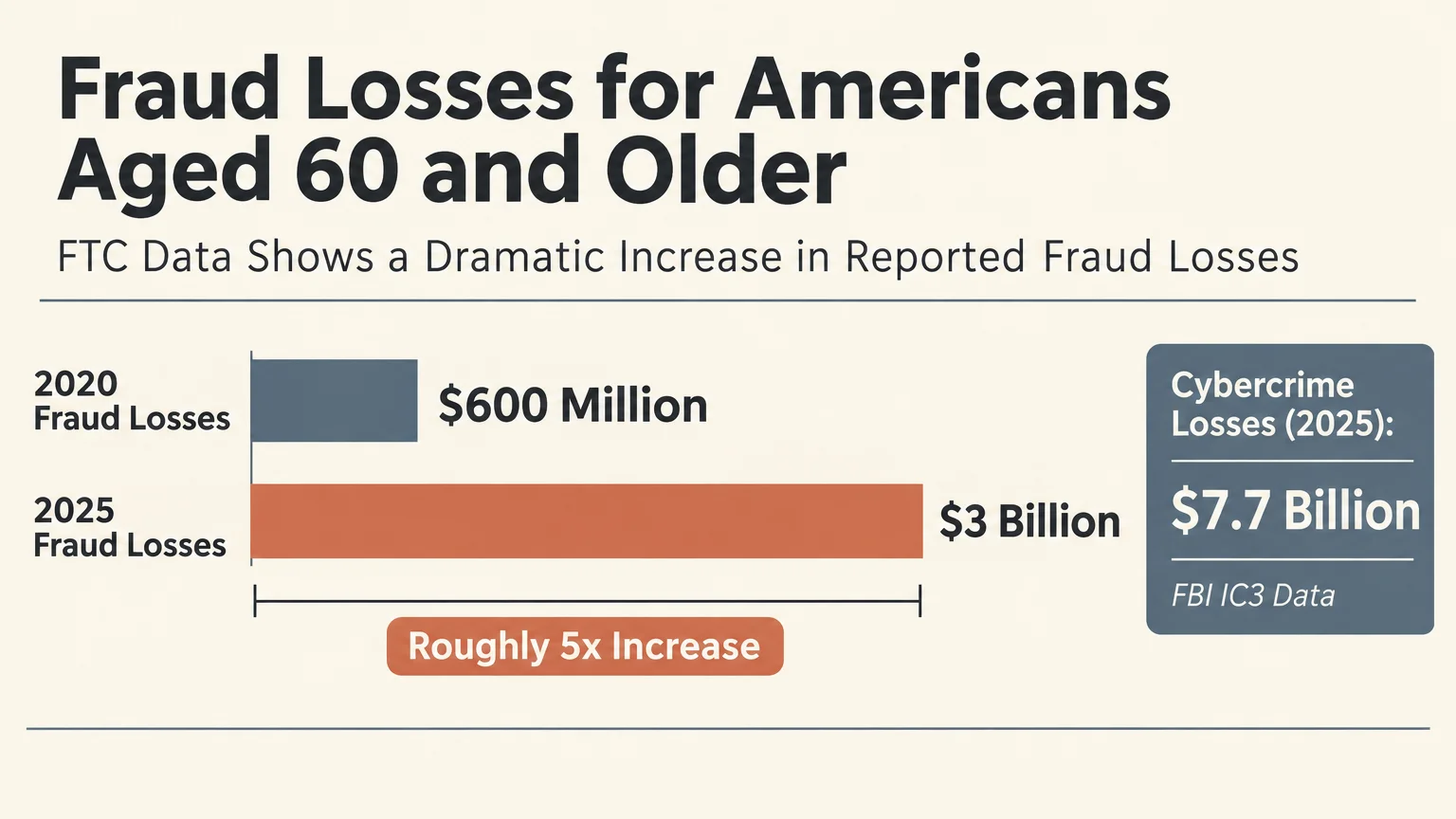
According to the Federal Trade Commission, fraud losses reported by Americans aged 60 and older surged roughly fivefold from about $600 million in 2020 to approximately $3 billion in 2025.
When accounting for unreported incidents, the FTC estimates total annual fraud costs to older adults could reach $119.5 billion. Keeping tighter control over sensitive paper trails helps close the gaps scammers exploit.
Separate data from the FBI Internet Crime Complaint Center, cited by AARP and the U.S. Senate Special Committee on Aging, shows adults aged 60 and older reported $7.7 billion in cybercrime losses in 2025.
That figure jumped nearly 60% from the $4.8 billion to $4.9 billion reported in 2024. Strong record keeping in retirement preserves proof for audits and appeals while destroying disposable papers that expose your accounts.
The 8 Financial Documents Every Retiree Should Keep
Building a reliable retirement filing system starts with separating permanent wealth records from short-term clutter. These eight core document categories safeguard your cash flow, tax accuracy, healthcare coverage, and legacy wishes.
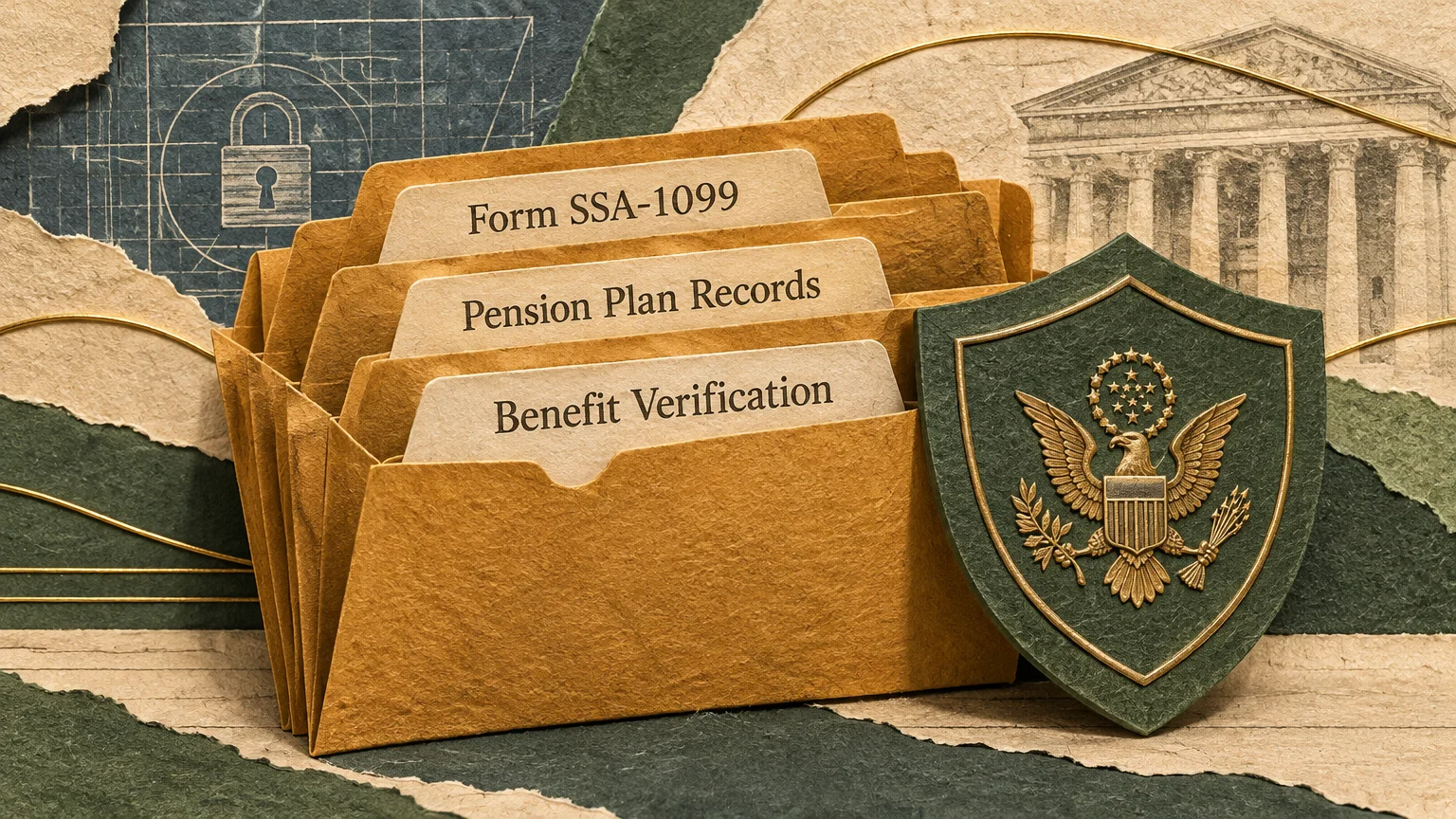
1. Social Security Statements, SSA-1099s, and Pension Plan Records
Your guaranteed lifetime income forms the foundation of your retirement budget, so keep all official benefit determinations permanently. Store your original pension plan summaries, annuity contracts, and survivor benefit elections in an accessible binder.
You should also retain your annual Form SSA-1099, cost-of-living adjustment notices, and Benefit Verification Letters. Creating an online account through the Social Security Administration lets you download these records anytime and turn off risky paper mail.
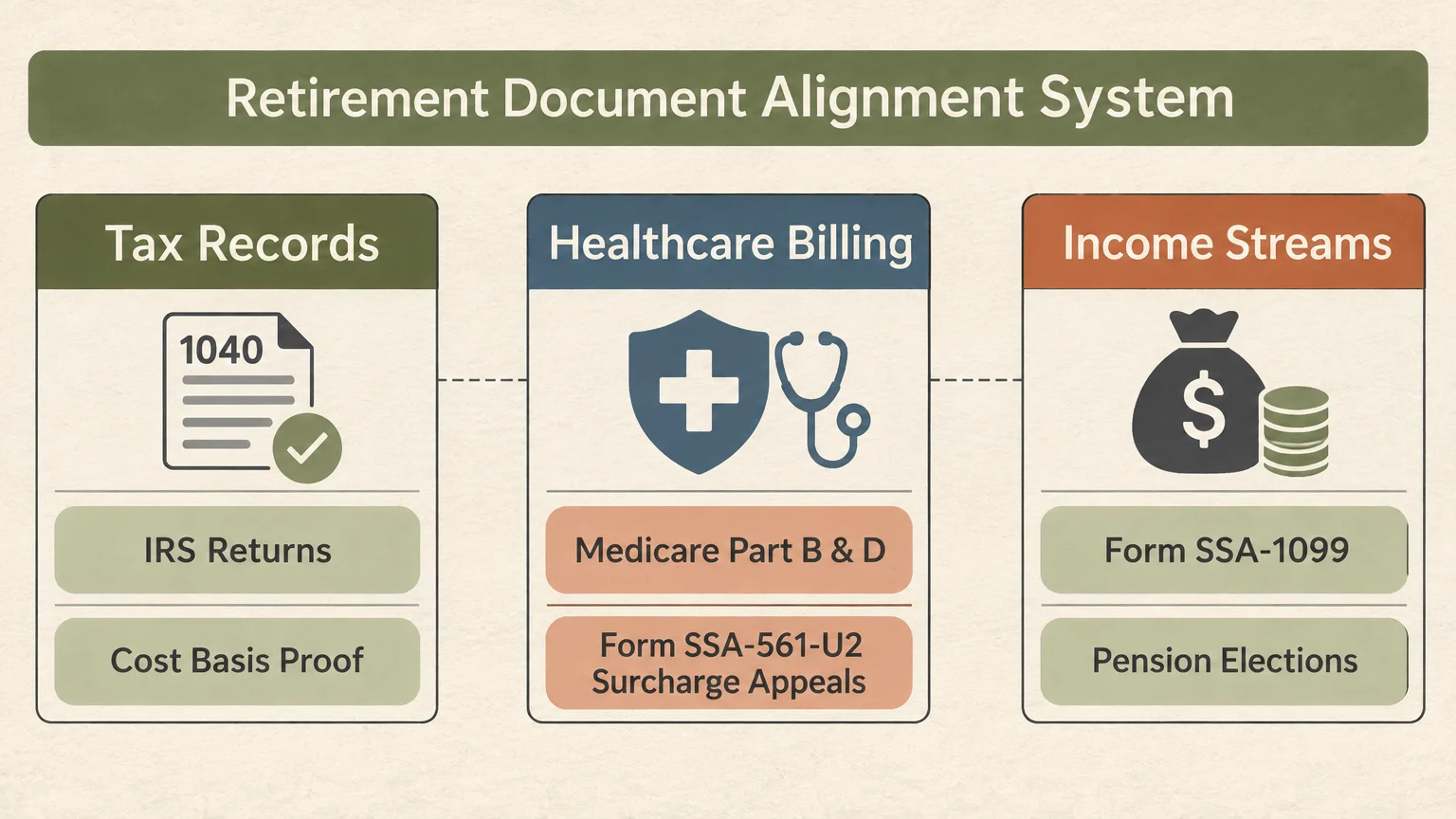
Social Security records directly affect your healthcare costs as well as your taxes. The agency uses your two-year-old—or occasionally three-year-old—Modified Adjusted Gross Income from IRS returns to calculate Medicare Part B and Part D income-related surcharges.
If your income drops due to retirement or a life-changing event, keep your proof of reduced earnings alongside your benefit letters. You will need that documentation to appeal high-income Medicare surcharges using Form SSA-561-U2.
Keep pension and retirement plan documents for life, as advised by USA.gov. A surviving spouse or executor often needs original plan terms decades after you stop working.

2. Federal and State Tax Returns and Supporting Schedules
Tax returns prove your reported income, deductions, and Social Security taxability over time. Under IRS Topic No. 305, keep tax returns and supporting records for at least three years from the filing or due date.
Several exceptions extend that timeline significantly. The IRS requires keeping records for six years if you omit income exceeding 25% of your gross income, or more than $5,000 from foreign financial assets.
You must hold records for seven years if you claim a deduction for bad debt or worthless securities. If you never file a return or file a fraudulent one, the IRS imposes no time limit on audits.
Because older returns establish long-term financial patterns, the FTC recommends keeping signed federal and state income tax returns forever. Under that same FTC guidance, hold onto tax-related receipts and canceled checks for seven years.
Keeping permanent copies of your returns also helps a tax professional spot carryforward losses or verify past income when setting up an estate. Store digital PDFs alongside paper copies so water or fire cannot erase your tax history.
3. Retirement Account Basis and Distribution Forms
Drawing money from traditional IRAs, workplace plans, and Roth accounts requires careful tracking to avoid double taxation and steep IRS penalties. Save Form 8606, Form 5498, and Form 1099-R permanently to document every contribution and distribution.
According to IRS Publication 552, Form 8606 tracks nondeductible contributions to traditional IRAs. Without old copies of Form 8606, you could pay income tax twice on after-tax dollars when you withdraw funds in retirement.
You must also track Required Minimum Distributions carefully once you reach the federal starting age. Under the SECURE 2.0 Act, RMDs from traditional, SEP, and SIMPLE IRAs and workplace plans generally start at age 73.
For individuals born in 1959 or later, that starting age rises to 75 beginning in 2034. Roth IRAs and designated Roth workplace accounts carry no RMDs during the original owner’s lifetime.
Missing an RMD triggers a 25% excise tax on the shortfall, taking a steep quarter out of the missed distribution. Correcting the shortfall within a two-year window reduces that excise tax to 10%.
If you fix a shortfall or request a waiver, keep Form 5329 with your tax files permanently. Always consult a licensed tax advisor or fiduciary planner before calculating corrective distributions or complex multi-account withdrawals.
4. Brokerage Cost-Basis Records and Trade Confirmations
Selling stocks, bonds, or mutual funds in a taxable brokerage account triggers capital gains or losses based on what you originally paid. You cannot rely solely on your brokerage firm to hold those purchase records forever.
Under SEC Rules 17a-3 and 17a-4, broker-dealers are only required to retain trade confirmations for three years and purchase and sale blotters for six years. If you bought an investment decades ago and switch firms, old cost data can vanish.
Federal rules require brokers to issue Form 1099-B by February 15 reporting cost basis for covered securities. That requirement covers stocks and exchange-traded funds acquired on or after January 1, 2011.
It also covers mutual funds and dividend reinvestment shares acquired on or after January 1, 2012, plus certain debt and options acquired on or after January 1, 2014. For earlier purchases, you must prove your cost basis yourself.
Keep original purchase confirmations and dividend reinvestment statements for as long as you hold the investment, plus at least three to seven years after selling. Review guidance on SEC Investor.gov and verify every entry before filing Form 8949.
5. Health Savings Account (HSA) Medical Receipts
If you built up a Health Savings Account before enrolling in Medicare, treat it like a specialized retirement asset. Unlike workplace retirement accounts, HSAs do not force you to take annual distributions.
Many retirees pay current out-of-pocket medical bills from checking accounts while letting their HSA balance grow tax-free. Years later, they reimburse themselves from the HSA using those saved medical expenses.
According to IRS Publication 969, you must keep receipts indefinitely until you actually take the HSA reimbursement. Your records must prove the expense was qualified, not reimbursed by insurance or another plan, and never claimed as an itemized deduction.
Taking money out of an HSA without valid receipts carries harsh tax consequences. Non-qualified distributions incur ordinary income tax plus an additional 20% tax penalty, making missing paperwork a costly mistake.
Even years into retirement, keeping clean receipts protects you from paying ordinary income tax and penalties on healthcare withdrawals. Scan fading thermal pharmacy receipts immediately and match each invoice with proof of payment.
6. Medicare Summary Notices and Healthcare Coverage Policies
Healthcare often becomes one of your largest variable expenses in retirement, so track every policy and billing summary carefully. Keep active Medigap, Medicare Advantage, Part D prescription drug, and long-term care insurance contracts as long as coverage remains in force.
If you use Original Medicare, check your Medicare Summary Notices closely. According to Medicare.gov, the program mails notices at least twice a year, every six months, or sends them monthly by email if you choose electronic delivery.
Compare every notice against your doctor bills and provider receipts to catch duplicate charges, billing coding errors, or services you never received. If Medicare denies a claim you believe qualifies for coverage, watch the calendar closely.
Your written appeal must arrive within 120 days of the date shown on the Medicare Summary Notice. Keeping notices organized alongside provider statements lets you spot discrepancies before that strict appeal window closes.
For long-term care insurance, retain your original policy, inflation rider schedules, and annual premium statements together. Family caregivers will need those terms immediately if you ever trigger a benefit claim.
7. Property Deeds, Mortgages, and Home Improvement Receipts
Your home often represents both your shelter and your largest non-portfolio store of wealth. Keep property deeds, title insurance policies, closing disclosures, and mortgage payoff letters for as long as you own the property.
Equally important are invoices and canceled checks for major capital improvements, such as a new roof, room addition, or kitchen remodel. Routine repairs do not adjust your tax basis, but permanent improvements increase your home’s cost basis.
A higher documented basis reduces taxable capital gains if you downsize or sell your house later in retirement. Under IRS Topic No. 305, USA.gov, and FTC guidance, keep home sale and basis records until the IRS limitation period expires.
In practice, that means holding property basis files for at least three years after the year you sell the home in a taxable transaction. Store digital photos of receipts alongside your closing packet so contractors’ invoices never fade.
8. Vital Records, Wills, Powers of Attorney, and Beneficiary Designations
Legal and vital documents keep your financial life running if illness or loss strikes. USA.gov advises keeping birth certificates, adoption papers, Social Security cards, valid passports, citizenship records, marriage licenses, divorce decrees, military records, and family death certificates permanently.
You must also retain original wills, living wills, healthcare directives, durable financial powers of attorney, and vital health records in a secure location. Add printed confirmations of every IRA, 401(k), pension, and annuity beneficiary designation to this master folder.
Many retirees instinctively lock these documents inside a bank safe deposit box, but federal regulators warn against putting certain originals there. According to the FDIC, safe deposit box contents—including cash, checks, and legal papers—are not covered by FDIC deposit insurance.
The FDIC specifically advises against storing passports or original powers of attorney in a bank safe deposit box because you or your agent may need them outside banking hours. Furthermore, state laws often restrict box access after an owner dies.
Consult an estate attorney about your state’s rules before placing an original will inside a bank box. A fireproof, waterproof home safe paired with copies held by your attorney and trusted executor usually provides safer access.

The 5 Papers Every Retiree Should Shred—and When to Destroy Them
Holding onto unnecessary paper creates clutter that hides critical forms and invites identity theft. The FTC logged more than 1.1 million identity theft filings in 2024 alone, showing how aggressively thieves exploit exposed personal details.
A cross-cut shredder turns sensitive junk into useless confetti before it reaches your curbside bin. Review these five categories to know exactly what papers to shred and how long to wait before destroying them.
1. Cleared Checks and Routine Bank Deposit Slips
Once a check clears your bank and appears on your statement, keeping the physical paper usually adds risk without value. USA.gov recommends shredding cleared checks just 14 days after they clear your account.
Wait longer only if a specific check proves a tax-deductible expense, charitable gift, HSA reimbursement, or home capital improvement. Otherwise, confirming the cleared amount in your checking ledger finishes its useful life.
For deposited checks and routine monthly bank statements, USA.gov and FTC guidelines suggest keeping paper copies for one year before shredding. If you already download and back up electronic statements securely, you can shred monthly paper copies even sooner.
Keeping statements for a full year gives you plenty of time to catch unauthorized transfers or bank errors. Once your annual tax return is filed and reconciled, clear out routine monthly paper statements.
2. Verified Credit Card Statements, Utility Bills, and Pay Stubs
Monthly credit card statements and utility bills stack up faster than almost any other retiree paperwork. Once you confirm your payment posted accurately and verify every charge, you rarely need the paper statement.
The FTC advises shredding credit card and utility bills right after payment confirmation, unless you need them for tax deductions or business expenses. If you prefer an extra buffer, hold them for up to one year before shredding.
If you work part-time during retirement, check each pay stub carefully against your bank deposits and tax withholdings. Once your annual Form W-2 arrives and matches your year-to-date totals, shred the individual pay stubs.
Keeping old pay stubs after verifying your W-2 simply creates duplicate copies of your Social Security number and wage details. Destroy them immediately after tax verification.
3. ATM Receipts and Unsolicited Credit or Insurance Offers
Never toss ATM receipts, bank teller slips, or pre-approved credit mailers into an open trash can or recycling bin. USA.gov and the FTC recommend shredding these items immediately.
ATM receipts often display partial account numbers and current balances, giving thieves useful clues for social engineering scams. Unsolicited credit card, loan, and Medicare supplement offers contain pre-filled personal details that fraudsters can intercept.
You can reduce this mailbox risk permanently by opting out of prescreened credit and insurance offers. Shredding every unwanted mailer right at your kitchen counter stops mail-theft identity fraud before it starts.
4. Undisputed Medical Bills and Discontinued Prescription Labels
Healthcare visits generate thick stacks of duplicate explanation-of-benefits letters, clinic invoices, and pharmacy flyers. Sort undisputed bills from open billing disputes as soon as they arrive.
Under USA.gov and FTC guidelines, keep undisputed medical bills for one year before shredding them, unless you need them for HSA reimbursements or medical tax deductions. Hold any disputed medical bill until your insurer and provider settle the balance in writing.
Pay special attention to empty pill bottles and pharmacy information sheets when you finish or discontinue a medication. USA.gov advises shredding prescription labels and medication paperwork for discontinued prescriptions immediately.
Those small stickers list your full name, address, birth date, prescribing doctor, and medical history. Removing or shredding labels protects both your financial identity and your health privacy.
5. Expired Warranties, Old Credit Reports, and Retired IDs or Cards
Appliance manuals and expired product warranties clog desk drawers long after coverage ends. Once a warranty period expires, shred the contract and recycle generic instruction booklets.
Similarly, once you review your annual credit reports from Equifax, Experian, and TransUnion for unfamiliar accounts or errors, shred the printed pages. Leaving full credit files on a desk exposes every open credit line you hold.
Destroy expired credit cards, debit cards, and outdated driver’s licenses or identification cards right away. Cut across magnetic strips, EMV chips, and printed numbers, or feed thin expired cards through a heavy-duty shredder rated for plastic.
Aligning Your Filing System With Tax, Healthcare, and Risk Management
Knowing which financial documents to keep and shred works best when paired with a repeatable monthly routine. Set aside one afternoon each quarter to sort incoming mail into three folders: permanent vault, current tax year, and shred basket.
Moving key federal notices online cuts physical clutter and speeds up access during emergencies. Activate electronic Medicare Summary Notices and your online Social Security account so scammers cannot steal paper benefit letters from your mailbox.
Digital backups protect your retirement records against floods, fires, and lost folders. Scan permanent tax returns, Form 8606 filings, HSA receipts, and home improvement invoices into encrypted cloud storage or a password-protected external drive.
Keep your original paper vital records and estate directives in a fire-resistant home safe rather than an uninsured bank box. Give your spouse, adult child, or trusted agent clear instructions on how to open the safe and contact your financial team.
Pair physical document shredding with proactive credit protection. Under FTC consumer rules, placing and lifting security freezes at Equifax, Experian, and TransUnion—as well as one-year fraud alerts—is completely free.
A credit freeze stops criminals from opening new credit cards or loans in your name even if old personal data leaks online. If you are a military veteran—a group the VA projects will be 56% over age 60 by the end of fiscal year 2026—vigilant record security is especially critical.
Veterans filed 166,921 fraud and identity theft reports totaling $419 million in 2024 alone, according to FTC Consumer Sentinel data. Guarding military discharge papers and benefit records alongside free credit freezes sharply reduces that exposure.
Schedule an annual household paperwork audit every spring right after filing your tax return. Reviewing your binders once a year keeps your filing system lean, protects your privacy, and ensures your beneficiary designations reflect your current wishes.
Frequently Asked Questions About Retiree Record Keeping
How does part-time work in retirement affect my Social Security and tax paperwork?
Part-time wages generate new Form W-2 or self-employment tax records that interact directly with your Social Security benefits and Medicare premiums. Keep your annual W-2 permanently with your tax return, and shred individual pay stubs once you verify year-end totals.
Higher earned income can increase the taxable share of your Social Security benefits and raise Medicare IRMAA premiums two years later. Save pay records and tax returns so an advisor can verify benefit recalculations or file Form SSA-561-U2 if hours later drop.
Maintaining clean wage records also simplifies quarterly estimated tax payments if your part-time employer withholds too little tax. Consult a licensed tax planner whenever new work income changes your retirement cash flow.
What records should I keep for inflation-hedging investments like TIPS, I Bonds, or equities?
Inflation-hedging assets require disciplined cost-basis and interest tracking across long holding periods. Because SEC rules only require brokers to keep trade confirmations for three years and blotters for six years, save your purchase confirmations until after you sell.
Match your records against Form 1099-B—issued by February 15—and annual Treasury or brokerage tax forms before reporting gains on Form 8949. Retain those transaction files for at least three to seven years after selling, and consult a fiduciary planner on bond placement.
Documenting original purchase prices and reinvested distributions prevents you from overpaying capital gains tax on long-held inflation hedges. Digital folders organized by account make tax preparation effortless even decades after purchase.
Are financial advisor fees deductible, and how long should I keep advisory fee statements?
Advisory fee deductibility depends on current federal tax rules and whether fees come from taxable or retirement accounts, so verify your eligibility with a licensed tax professional. Regardless of tax status, keep your signed advisory agreements, Form ADV disclosures, and fee invoices.
Comparing written fee schedules against actual account deductions ensures you pay only the agreed fiduciary rate. Hold tax-related fee invoices for three to seven years under IRS Topic No. 305, and keep your current fee contract while the advisor manages your portfolio.
Saving historical performance reports alongside fee statements also helps you evaluate whether your portfolio met your income and risk goals. Reviewing those records annually keeps your advisory relationship transparent and accountable.
Which documents does a surviving spouse need immediately after a partner passes away?
A surviving spouse needs immediate access to certified death certificates, your marriage license, original wills, healthcare directives, and durable powers of attorney. That urgency is why the FDIC warns against trapping passports or original powers of attorney inside a bank safe deposit box.
Gather Social Security benefit letters, pension and annuity survivor-election forms, life insurance policies, and IRA beneficiary confirmations in one clearly labeled binder. Providing final tax returns, Form 8606 sheets, and RMD schedules helps your family and tax advisor settle returns smoothly.
Include a simple one-page contact sheet listing your fiduciary financial planner, tax preparer, estate attorney, and primary bank accounts. Clear documentation prevents frozen accounts and missed RMD deadlines during an already difficult transition.

Next Steps to Secure Your Retirement Paperwork
You do not need an entire weekend to overhaul decades of financial clutter. Start with one drawer today, separating your eight permanent document categories from the five disposable paper types ready for the shredder.
Once your files are sorted, freeze your credit for free at all three major credit bureaus and confirm your beneficiary designations on every retirement account and insurance policy. Small organizational steps taken today protect your retirement income and spare your family unnecessary stress later.
Finally, schedule an annual review with a fee-only fiduciary financial planner, a licensed tax professional, and an estate attorney. Bringing clean, complete records to that meeting empowers your advisors to fine-tune your withdrawal strategy, minimize lifetime taxes, and protect your legacy.