
Every dollar you spend on avoidable medical bills is a dollar pulled away from your retirement portfolio. Medicare covers dozens of preventive screenings at $0, yet millions of retirees leave these benefits untouched every year.
Skipping free preventive care exposes your fixed income to uncapped outpatient coinsurance later in life. Worse, simple scheduling mistakes during a wellness visit can trigger unexpected Part B charges on your statement.
Knowing which visits cost nothing—and how to avoid surprise billing codes—keeps more cash compounding inside your retirement accounts.
The Hidden Cash-Flow Drain Inside Medicare Part B
Healthcare represents one of the fastest-growing expenses in any retirement budget. According to KFF, Medicare now covers 70 million people—20% of the entire U.S. population.
Rising program costs hit your monthly cash flow directly through higher premiums and deductibles. The Centers for Medicare & Medicaid Services (CMS) finalized the standard Medicare Part B monthly premium at $209.40 for 2027, up $6.50 or 3.2% from $202.90 in 2026.
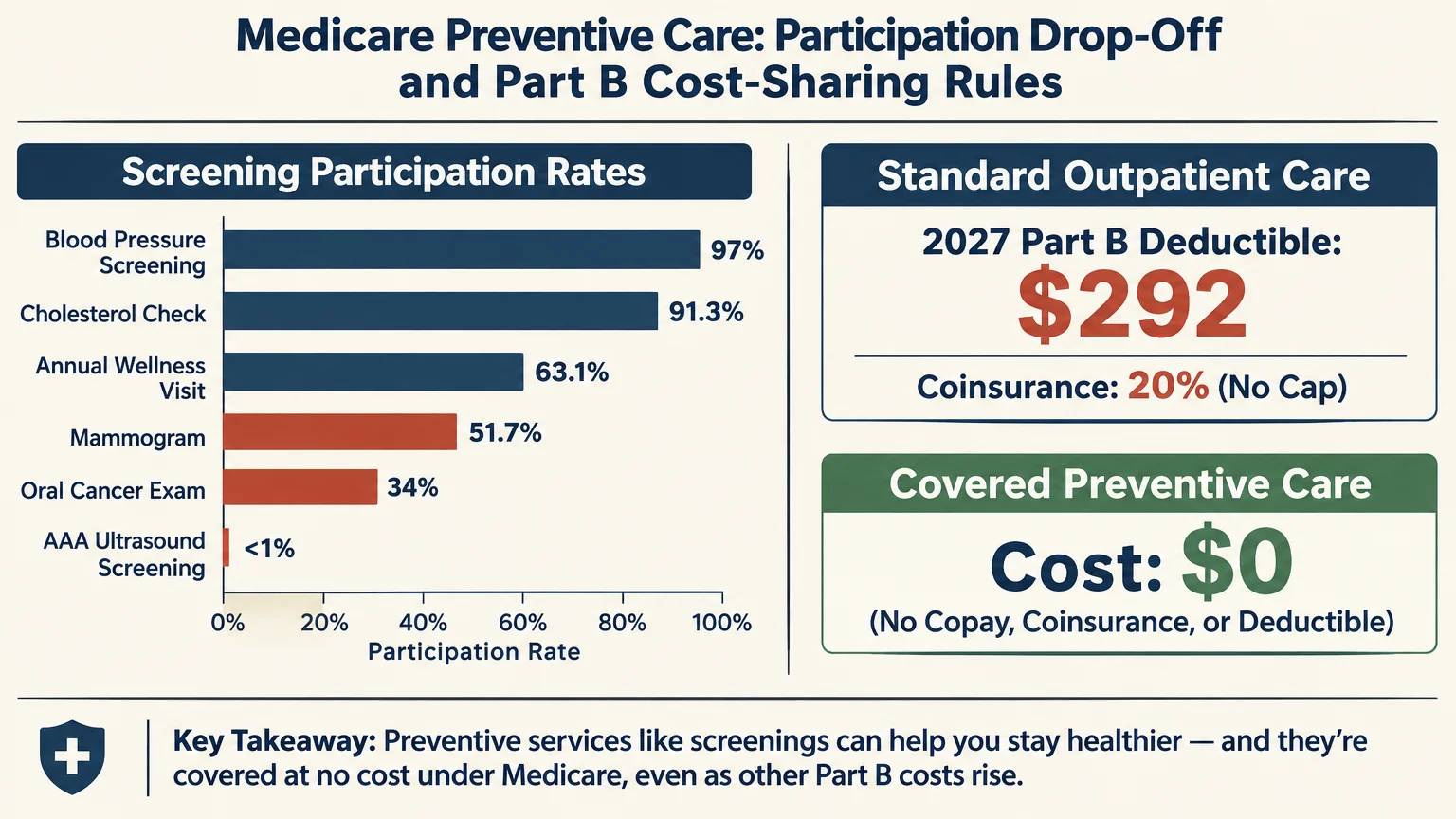
Your upfront outpatient cost-sharing climbs alongside those monthly premiums. CMS set the annual Part B deductible at $292 for 2027, a $9 increase from $283 in 2026.
Once you meet that deductible under Original Medicare, you generally owe 20% coinsurance for standard outpatient care with no annual out-of-pocket cap. That open-ended 20% liability can force sudden, tax-inefficient withdrawals from your retirement savings during a market downturn.
Preventive care flips that financial equation in your favor. Most Medicare-covered preventive services cost $0 with no copay, coinsurance, or deductible when your provider accepts Medicare assignment or follows your Medicare Advantage network rules.
Despite that $0 price tag, most retirees only scratch the surface of what they already pay for through Part B premiums. CMS survey data released in September 2025 and reported by Becker’s Payer Issues reveals a striking utilization gap.
While 97% of community-dwelling beneficiaries had a blood pressure screening and 91.3% had a cholesterol check, participation drops sharply for comprehensive exams. Only 63.1% completed an Annual Wellness Visit, leaving roughly 36.9% of eligible seniors without a personalized prevention plan.
Cancer and vascular screenings show even steeper drop-offs. Only 59.9% of eligible men received a PSA prostate blood test, 51.7% of eligible women received a mammogram, and just 34% received an oral cancer exam.
Meanwhile, digital rectal prostate exams fell to 17.9% from 21.3% in 2022. Even more alarming, a Medicare claims analysis published in NIH’s PMC found that fewer than 1% of eligible newly enrolled 65-year-olds used their once-in-a-lifetime abdominal aortic aneurysm ultrasound screening.
Consider a simple hypothetical illustration of what skipping early detection can cost your portfolio. Treating a late-stage outpatient complication totaling $5,000 in 2027 would leave you owing the $292 deductible plus $941.60 in 20% coinsurance—$1,233.60 out of pocket—compared to $0 for a timely preventive screening.
Consult a licensed Medicare specialist or fiduciary advisor to evaluate how supplemental coverage and preventive care fit your specific cash-flow picture.

Aligning Free Preventive Care With Your Retirement Income Streams
Coordinating Social Security Timing and Enrollment Windows
Smart healthcare planning starts at the exact moment you transition from paychecks to retirement income streams. Whether you delay Social Security for higher lifetime checks or bridge the gap with pensions, annuities, and portfolio withdrawals, predictable expenses protect your withdrawal rate.
When you sign up for Medicare through the Social Security Medicare enrollment portal, a strict 12-month clock begins on your first free preventive benefit. The Welcome to Medicare Preventive Visit—known formally as the Initial Preventive Physical Exam—costs $0 only during your first 12 months of Part B coverage.
If you miss that 12-month window, you forfeit the benefit permanently. Scheduling it early gives you a baseline medical and social history review, height, weight, body mass index, and blood pressure measurements at zero cost.
The visit also includes a simple vision check, depression and substance-use screening, an optional advance directives discussion, and a written preventive checklist. Treating that checklist like a financial calendar keeps healthcare surprises from disrupting your pension or annuity income floor.
The Annual Wellness Visit and 2026–2027 Enhancements
Once you have held Part B for more than 12 months, you unlock the $0 Annual Wellness Visit every 12 months. You can schedule it at least 12 months after your Welcome to Medicare visit or your previous Annual Wellness Visit.
Your provider uses this appointment to build a personalized 5-to-10-year screening schedule tailored to your health risks. The visit includes a Health Risk Assessment, cognitive impairment screening, depression review, and functional safety checks to catch fall hazards early.
Keep one vital distinction in mind before you arrive at the clinic. Neither the Welcome to Medicare visit nor the Annual Wellness Visit is a traditional head-to-toe physical exam, which Original Medicare does not cover.
New rules make your Annual Wellness Visit even more valuable for protecting your long-term independence. Effective January 1, 2026, CMS added an optional standardized Physical Activity and Nutrition Risk Assessment lasting 5 to 15 minutes.
Your doctor can perform this assessment up to every 6 months at $0 when billed on the same claim and date as your Annual Wellness Visit using modifier 33. Better mobility and nutrition directly reduce future long-term care expenses that drain investment portfolios.
Convenience has improved alongside clinical scope. Per Medicare & You 2027, Medicare extended telehealth flexibilities through December 31, 2027, allowing you to complete your Annual Wellness Visit and several counseling sessions from home.
High-Value Free Screenings and Programs Most Retirees Miss
Cardiometabolic, Diabetes, and Nutrition Benefits
Chronic metabolic conditions quietly erode both your quality of life and your retirement savings. According to the American Medical Association, nearly half of Americans age 65 and older have prediabetes, yet many remain undiagnosed or unreferred to preventive coaching.
If lab tests catch prediabetes early, Medicare funds the Medicare Diabetes Prevention Program at $0 for Part B and Medicare Advantage enrollees. Eligible participants must have no prior diabetes or end-stage renal disease diagnosis and meet specific clinical thresholds.
You qualify with a body mass index of 25 or higher—or 23 or higher if you are Asian—alongside prediabetes lab results from the past 12 months. Qualifying labs include an A1c between 5.7% and 6.4%, fasting glucose from 110 to 125 mg/dL, or a 2-hour oral glucose result from 140 to 199 mg/dL.
Medicare added coverage for nonfasting A1c screenings in 2024, covering up to two tests per year if you are at risk. The lifestyle program delivers 16 weekly core sessions over 6 months followed by 6 monthly maintenance sessions at zero cost.
Under Medicare & You 2027, access expanded dramatically through virtual-only providers, live sessions, and self-paced formats. Even better, Medicare removed limits on how many times an eligible beneficiary can participate.
If you already manage diabetes, kidney disease, or received a kidney transplant within the past 36 months, ask your doctor for a Medical Nutrition Therapy referral. Medicare covers 3 hours with a registered dietitian in your first year and 2 hours each year thereafter at $0, or more if medically necessary.
Heart health carries similar $0 support that reduces costly emergency room visits. Medicare pays in full for cardiovascular blood tests checking cholesterol, lipids, and triglycerides once every 5 years.
You also receive one $0 cardiovascular behavioral therapy visit every year with your primary care provider to review blood pressure, diet, and aspirin use. If your body mass index is 30 or higher, Medicare covers $0 obesity screening and weight-loss dietary counseling as well.
Cancer, Vascular, and Bone Screenings at Zero Cost
Catching silent vascular or oncological risks early prevents multi-year treatment cycles that strain fixed retirement distributions. Check your eligibility for an abdominal aortic aneurysm ultrasound, which Medicare covers once in a lifetime at $0 with a provider referral.
Per Medicare.gov and U.S. Preventive Services Task Force recommendations, this screening applies to men ages 65 to 75 who smoked at least 100 cigarettes in their lifetime, plus anyone age 65 or older with a family history of the condition. Pairing this referral with your next Annual Wellness Visit takes seconds and closes one of Medicare’s widest benefit gaps.
Current and former smokers ages 50 to 77 also qualify for $0 annual low-dose CT lung cancer screenings when they have no symptoms. You meet the criteria if you still smoke or quit within the past 15 years and have a 20 pack-year smoking history, following a shared decision-making counseling visit.
Colorectal cancer screening options have broadened significantly, giving you flexible, $0 choices with no minimum age requirement for colonoscopies. Average-risk beneficiaries qualify for a free screening colonoscopy every 10 years, while high-risk patients qualify every 24 months.
If you prefer noninvasive home testing, Medicare covers annual fecal occult blood tests and multi-target stool DNA tests every 3 years for average-risk adults ages 45 to 85. CMS also added Cologuard Plus effective October 3, 2024, alongside blood-based biomarker tests for ages 45 to 85 and virtual CT colonography for ages 45 and older.
Crucially, CMS policy effective January 1, 2023 eliminated a major cost barrier around home stool kits. If an at-home fecal or stool DNA screening returns a positive result, Medicare now covers your follow-up colonoscopy at $0 with no frequency limits.
Protecting your skeletal strength is equally vital because hip fractures often trigger expensive assisted-living transitions. Medicare covers bone mass measurements at $0 every 24 months—or more often if medically necessary—for eligible at-risk seniors.
Qualifying groups include estrogen-deficient women at risk for osteoporosis, long-term steroid users, individuals with osteopenia or vertebral fractures on X-rays, and patients with primary hyperparathyroidism. Reviewing the full Medicare preventive and screening services guide helps you map every qualifying test onto your calendar.
Mental Health, Substance-Use, and Vaccine Coverage
Retirement transitions bring emotional adjustments alongside financial shifts, and untreated mental health challenges often derail sound financial decision-making. Medicare covers one $0 depression screening every 12 months in a primary care office equipped for follow-up care.
Alcohol and tobacco support carry zero out-of-pocket costs too. You qualify for an annual $0 alcohol misuse screening without showing symptoms, plus up to 4 brief counseling sessions per year if misuse is identified.
Smokers receive up to 8 free tobacco cessation counseling visits within a 12-month period. Several of these behavioral sessions—including depression screening, alcohol counseling, tobacco cessation, nutrition therapy, and lung cancer counseling—remain telehealth-eligible per CMS guidance.
Infectious disease screenings and immunizations further shield your health budget from hospital stays. Medicare covers a $0 one-time Hepatitis C screening if you were born between 1945 and 1965, had a blood transfusion before 1992, or face high risk—plus annual re-testing if high risk continues.
High-risk beneficiaries also receive $0 annual Hepatitis B screenings, annual HIV and sexually transmitted infection screenings with counseling, and Part B coverage for HIV pre-exposure prophylaxis. Finally, Part B pays 100% for seasonal flu shots, COVID-19 vaccines, two distinct pneumococcal shots spaced at least 1 year apart, and Hepatitis B shots if you face medium or high risk.
If you carry low or no known risk for Hepatitis B, Part D covers that vaccine at $0 for adults age 60 and older instead of Part B. Coordinating Part B and Part D vaccine rules at your pharmacy prevents unnecessary out-of-pocket charges.
Tax Strategy, IRMAA Control, and Avoiding Surprise Billing Traps
Coordinating RMDs, HSAs, and Medicare IRMAA
Maximizing $0 preventive benefits works hand in hand with tax-efficient retirement withdrawals. High taxable income from poorly timed Required Minimum Distributions or large Roth conversions can push your Modified Adjusted Gross Income into a higher Medicare Income-Related Monthly Adjustment Amount bracket.
Crossing an IRMAA threshold adds surcharges to both your Part B and Part D monthly premiums two years later, turning a one-time tax spike into a painful recurring healthcare surcharge. Blending Roth withdrawals, taxable brokerage sales, and qualified charitable distributions helps smooth your annual income below surcharge cliffs.
Health Savings Accounts remain a powerful companion tool even after you enroll in Medicare. While you cannot contribute new funds to an HSA once enrolled in Part A or Part B, existing balances stay tax-free for qualified medical expenses.
You can tap existing HSA dollars tax-free to pay Part B premiums, Part D premiums, or uncovered coinsurance—keeping taxable IRA dollars invested and avoiding unnecessary IRMAA bumps. Review IRS guidance on Health Savings Accounts and consult a qualified CPA before timing distributions or Roth conversions.
Four Medicare Billing Traps That Convert Free Visits Into Bills
Even savvy retirees get caught by medical coding rules that turn a $0 preventive visit into a surprise bill. Knowing four specific traps keeps your outpatient spending predictable.
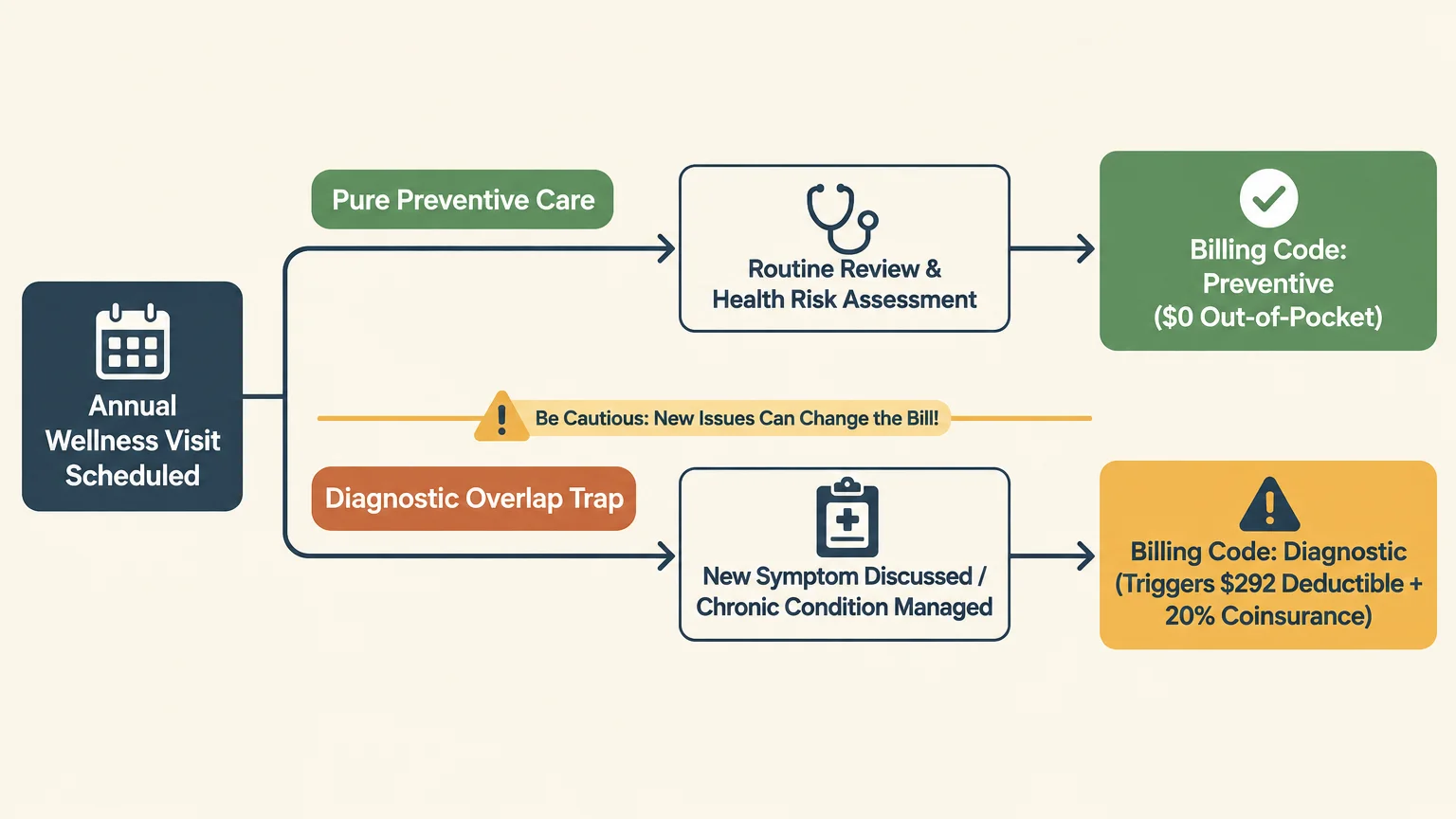
First, bringing up a new or chronic medical problem during your Annual Wellness Visit changes how the clinic bills your appointment. If your doctor evaluates a separate symptom and bills an Evaluation and Management code with modifier 25—or orders diagnostic lab work—your Part B deductible and 20% coinsurance apply to those extra services.
To prevent billing surprises, tell the scheduler you want a standalone Annual Wellness Visit and book a separate appointment for active symptoms. Separating visits clarifies your paperwork and protects your $0 wellness benefit.
Second, understand the strict boundary between screening tests and diagnostic tests. A routine screening mammogram costs $0, whereas a diagnostic mammogram ordered to investigate a lump or abnormal scan triggers your Part B deductible and 20% coinsurance.
Third, watch out for polyp removal charges during screening colonoscopies. Per Medicare & You 2027, if your doctor finds and removes a polyp or tissue during a screening colonoscopy or flexible sigmoidoscopy, Medicare waives your Part B deductible but charges 15% coinsurance for the doctor and 15% to a hospital outpatient facility.
Under current law, that 15% colonoscopy polyp coinsurance is scheduled to phase down gradually to 0% by 2030. Until then, keep a modest cash or HSA buffer ready whenever you schedule a routine colonoscopy.
Fourth, remember that not every service labeled preventive by Medicare carries a $0 cost share. Glaucoma screenings every 12 months for high-risk individuals and up to 10 initial hours of Diabetes Self-Management Training remain subject to the Part B deductible and 20% coinsurance.
Budgeting specifically for those known exceptions prevents surprise credit card balances or forced withdrawals from equity funds.

Protection, Fraud Prevention, and Legacy Planning
Early Detection as Long-Term Care Risk Management
Unplanned long-term care represents one of the steepest threats to a surviving spouse’s standard of living and your legacy goals. Preventive screenings serve as an early-warning system that buys your family precious planning time.
Annual cognitive screenings, fall-safety checks, bone density scans, and vascular tests surface subtle declines long before a crisis forces emergency assisted-living placement. Early awareness lets you evaluate home modifications, review long-term care insurance elimination periods, and coordinate family caregiving calmly.
Free Advance Care Planning and Beneficiary Reviews
Your Annual Wellness Visit also provides a $0 avenue to formalize medical wishes before a medical emergency strikes. Under CMS billing rules, optional Advance Care Planning discussions cost $0 when provided on the same day, by the same clinician, and on the same claim as your Annual Wellness Visit using modifier 33.
Completing a living will and naming a healthcare proxy ensures your family never faces agonizing guesswork in an intensive care unit. Pair that medical checkup with an annual audit of beneficiary designations across every IRA, 401(k), pension, annuity, and life insurance policy.
Remember that beneficiary forms legally override instructions written in your will. Keeping both medical directives and financial beneficiaries synchronized prevents costly probate delays for your heirs.
Guarding Against Medicare and Financial Scams
Scammers routinely exploit confusion around free Medicare screenings to steal identities and bill Medicare fraudulently. Common schemes include unsolicited phone calls or pop-up ads offering free genetic cancer kits, back braces, or urgent plan upgrades.
Never give your Medicare number, Social Security number, or banking details to unsolicited callers promising free medical supplies. Review every Medicare Summary Notice and Explanation of Benefits carefully for unfamiliar clinic names, duplicate dates, or tests you never received.
If you spot suspicious medical billing or high-pressure financial sales pitches targeting your retirement nest egg, act immediately. Bookmark FINRA investor and fraud protection resources alongside SEC resources for senior investors to verify advisor credentials and report suspected fraud.
Frequently Asked Questions on Medicare, Work, and Retirement Planning
How does part-time work in retirement affect my Medicare preventive benefits and premiums?
Earning part-time wages never disqualifies you from Medicare’s $0 preventive screenings once you are enrolled in Part B. However, wages stacked atop Social Security, pensions, and portfolio withdrawals raise your Modified Adjusted Gross Income, which can push you into higher IRMAA Part B and Part D premium tiers later.
If your part-time employer provides group health coverage, employer headcount rules dictate whether Medicare pays primary or secondary. Always verify enrollment rules with Social Security and a licensed Medicare specialist before delaying Part B to avoid lifelong late-enrollment penalties.
Can free preventive care act as an inflation hedge for my retirement budget?
Yes—capturing $0 preventive benefits functions as a practical cost-containment hedge against rising medical inflation. Standard Part B premiums jumped 3.2% from $202.90 in 2026 to $209.40 in 2027, and deductibles rose to $292, signaling steady upward cost pressure.
Using free screenings and lifestyle programs reduces your odds of facing uncapped 20% outpatient coinsurance as medical prices climb. Pair that healthcare strategy with financial inflation hedges such as inflation-indexed Social Security, Treasury Inflation-Protected Securities, or dividend-growing equities guided by a fiduciary planner.
Are financial advisor fees worth it when coordinating Medicare, taxes, and portfolio withdrawals?
A fee-only fiduciary advisor often pays for their annual fee by coordinating tax brackets, IRMAA thresholds, Social Security timing, and healthcare liquidity shocks. Avoiding a single unforced IRMAA bracket jump or panic sale during a down market can save far more than an advisory fee.
Fees vary across hourly consultants, flat-retainer planners, and asset-based managers, so compare written fee schedules carefully. Verify any advisor’s registration, disciplinary history, and fiduciary standard through SEC or FINRA tools before signing an agreement.
What should a surviving spouse check first regarding Medicare and household income?
After losing a spouse, your tax filing status shifts from married filing jointly to single in the following tax year, while your Required Minimum Distributions often remain similar. This shift frequently squeezes a surviving spouse into higher tax brackets and higher Medicare IRMAA premium tiers even as household Social Security income drops.
Start by updating every account beneficiary, reviewing Social Security survivor benefits, and checking whether your current Medicare Advantage or Part D drug plan still fits your needs alone. Schedule your $0 Annual Wellness Visit and depression screening during that transition year so your health never slips while managing estate paperwork.
Your Next Steps to Protect Health and Wealth
You already fund Medicare’s preventive safety net through monthly Part B premiums and decades of payroll taxes. Leaving $0 screenings, nutrition coaching, and wellness planning unused only leaves your retirement portfolio more vulnerable to avoidable medical shocks.
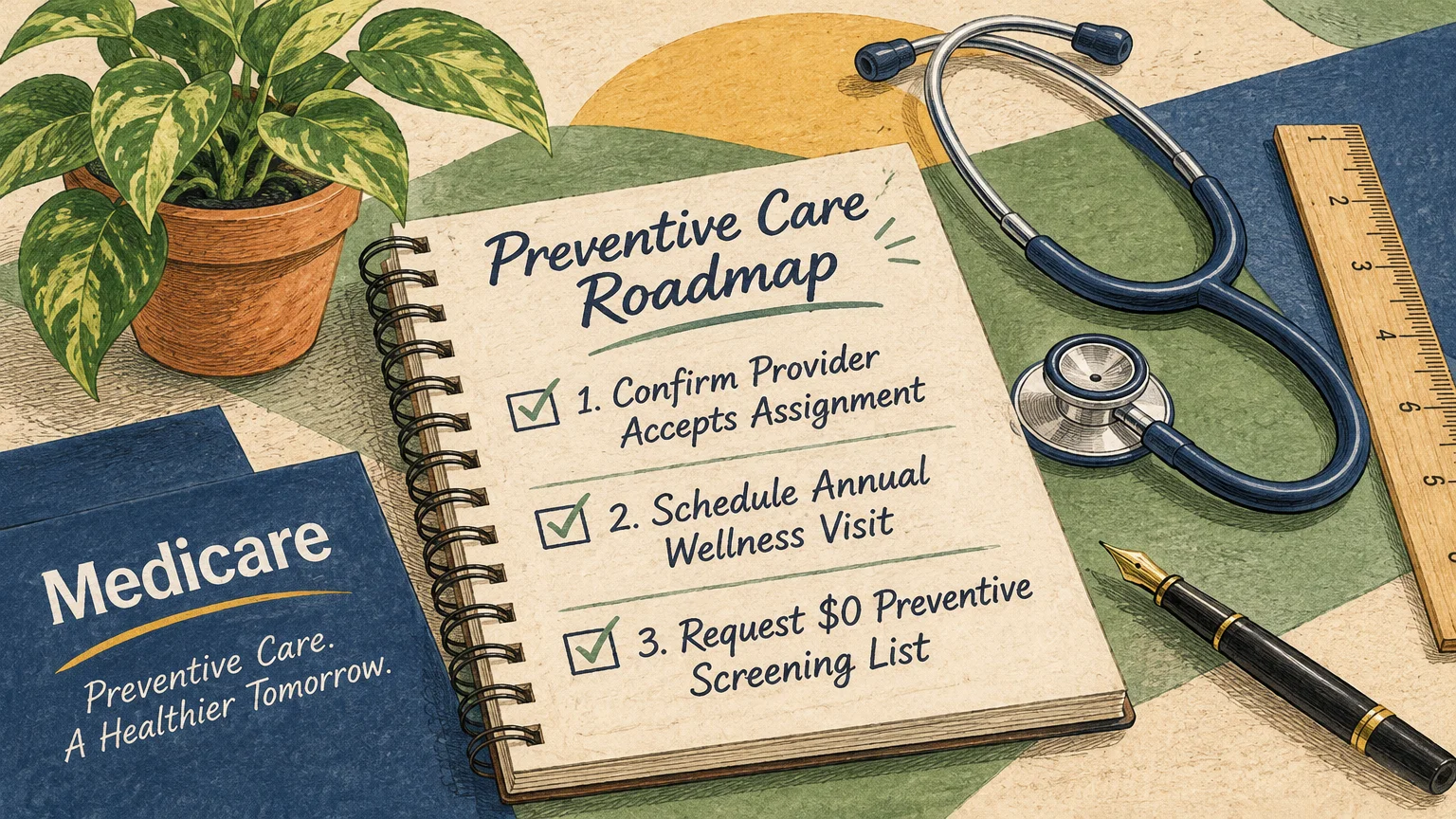
Pull your latest Medicare Summary Notice, your most recent tax return, and your retirement account statements this week. Call your primary care clinic to book a standalone Annual Wellness Visit, verify which screenings fit your age and risk profile, and confirm your provider accepts Medicare assignment.
Finally, schedule a joint check-in with your fiduciary financial planner or tax professional to align your withdrawal plan, HSA reserves, and beneficiary updates for the year ahead. Taking these simple steps today protects both your healthspan and your financial independence.