Remarrying later in life brings companionship and shared living costs, yet it can reshape your monthly retirement paycheck. Turning 60 establishes a major legal milestone for Social Security after 60, shielding survivor benefits from remarriage penalties.
However, the same wedding date can abruptly halt divorce benefits from a living former spouse or alter Supplemental Security Income eligibility. Knowing the exact timing rules helps you avoid an unexpected income drop.
From claiming strategies and pension offsets to joint tax thresholds, every piece of your financial life shifts after marriage. Walk through the exact federal rules and planning steps to protect your household income.
The Age-60 Rule and Your Social Security Income Gap
Understanding how remarry social security rules work starts with one critical distinction: whether your former spouse is living or deceased. That single detail determines whether your benefit continues uninterrupted or stops the month you wed.
Wait until the right birthday and check every marriage duration threshold before setting a ceremony date. A few months of timing can preserve tens of thousands of dollars in lifetime retirement income.
How Widow Remarriage Benefits Survive a New Marriage
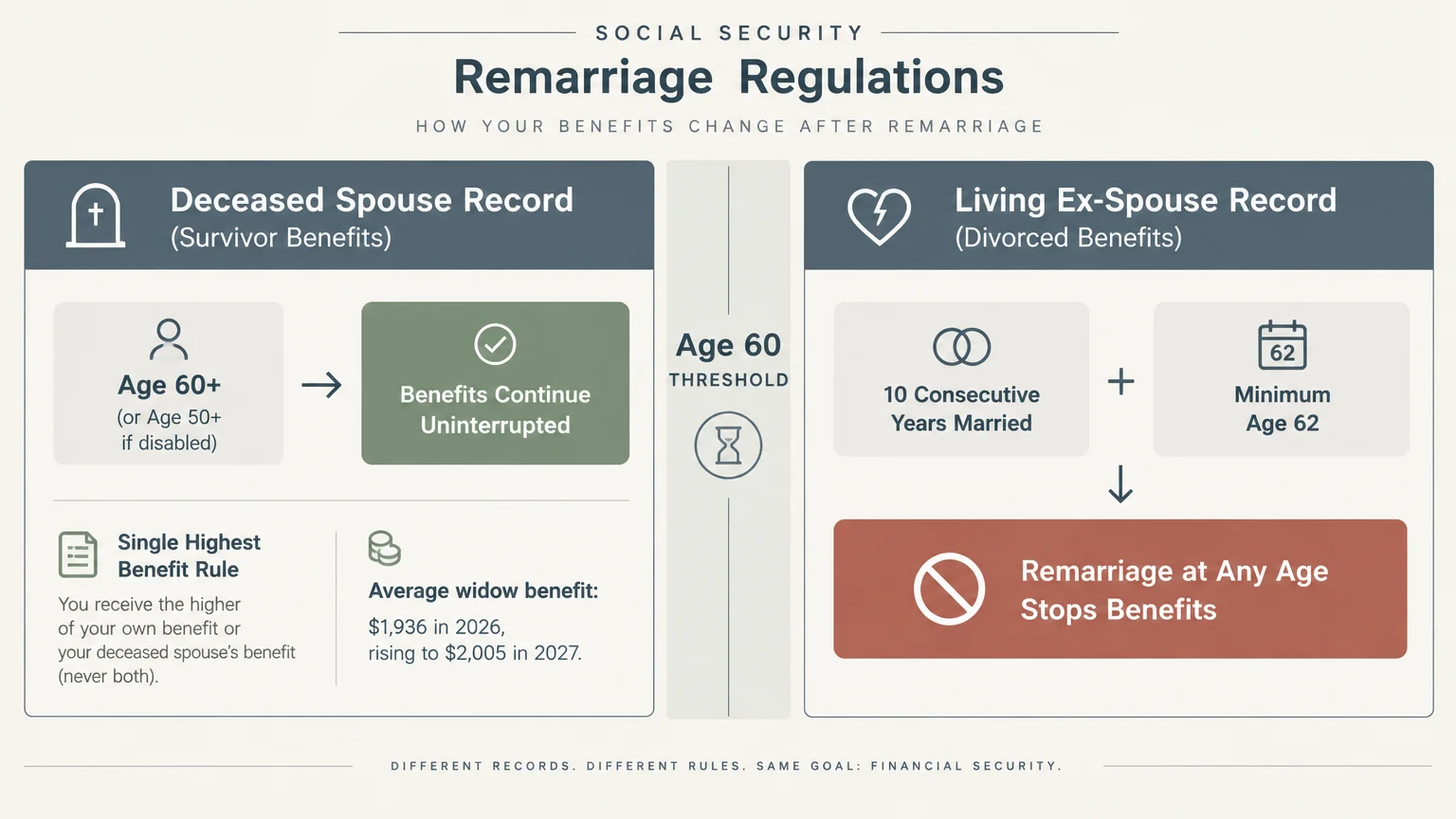
Under Social Security Administration (SSA) rules, remarrying at age 60 or older does not affect your eligibility for survivor benefits on a deceased spouse’s record. That protection also applies at age 50 or older if you have a disability and became disabled before remarrying.
If you remarry before age 60 without qualifying under the disability exception, you cannot collect widow remarriage benefits while that new marriage lasts. Eligibility can resume starting the first month the later marriage ends through death, divorce, or annulment.
Keep in mind that Social Security never pays two full benefits at the same time. If remarrying after 60 makes you eligible for a prior survivor benefit, a new spousal benefit, and your own retirement benefit, the SSA pays only the single highest amount.
Surviving spouses can also qualify for a $255 one-time lump-sum death payment when eligible. Because survivor claims cannot be submitted online, you must initiate the application by calling the SSA directly at 1-800-772-1213.
These payments form the foundation of household budgets for millions of older adults. Per SSA projections, the average monthly benefit for an aged widow or widower living alone rises from $1,936 in 2026 to $2,005 in 2027.
Why Living Ex-Spouse Divorce Benefits Stop at Any Age
Many retirees mistakenly assume the age-60 protection extends to every benefit tied to a former marriage. In reality, divorce benefits claimed on the work record of a living ex-spouse follow much stricter rules under SSA regulations and 20 C.F.R. § 404.331.
To collect on a living ex-spouse, you must be at least age 62, currently unmarried, and have stayed married to that person for at least 10 consecutive years before the divorce became final. You must also be divorced for at least two years if your ex-spouse has not yet filed.
If you remarry at any age—even at 65 or 75—benefits paid on a living ex-spouse’s record generally stop. Those payments can only restart if your subsequent marriage later ends by death, divorce, or annulment.
The rules flip immediately if your former spouse passes away. Once an ex-spouse dies, you become eligible for surviving divorced spouse benefits as long as your prior marriage lasted at least 10 years.
In that situation, remarrying after age 60—or age 50 if disabled—does not block your survivor benefit. This protection holds true even if your deceased ex-spouse had remarried someone else before passing away.
One narrow exception helps couples who divorced and later remarried the same person. The SSA counts both marriages toward the 10-year requirement if the second marriage took place no later than the calendar year immediately following the year the divorce became final.
Qualifying on Your New Spouse’s Work Record
Remarrying can also open the door to spousal benefits based on your new partner’s earnings history. Generally, the SSA requires you to be married for at least one full year before claiming living spousal benefits on a new spouse’s record.
You can qualify for a waiver of that one-year waiting period under specific conditions. The SSA waives the duration rule if you were already entitled, or potentially entitled, to certain Social Security or Railroad Retirement benefits—including widow or widower benefits—in the month before marrying.
If your new spouse passes away, a separate duration threshold governs survivor benefits remarriage claims under 20 C.F.R. § 404.335. You generally must have been married to your new spouse for at least nine months immediately before their death to collect on their record.
Limited exceptions waive the nine-month rule when death is accidental or occurs in active-duty military line of duty. A waiver can also apply if you were previously married to that same spouse for at least nine months, provided the worker was reasonably expected to live nine months at remarriage.
Income Alignment: Claiming Strategies, Pensions, and Portfolio Withdrawals
Once you confirm which benefits survive the wedding, your next priority is coordinating when to claim each income stream. Treating Social Security as a standalone decision often leaves substantial money on the table.
Aligning your claiming calendar with pensions, annuities, and investment withdrawals creates a smoother cash-flow bridge across your sixties and seventies. Review your options on the official SSA survivor benefits portal before submitting any paperwork.
Using the Deemed Filing Exemption to Maximize Lifetime Income
Since January 2, 2016, federal deemed filing rules require anyone turning 62 to claim both their own retirement benefit and any living spousal benefit at the same time. You can no longer collect a living spousal check alone while letting your own retirement benefit grow.
Crucially, the SSA exempts survivor benefits from deemed filing. Whether you remained single or remarried after age 60, you can claim a survivor benefit independently from your own retirement record and switch later.
Timing matters enormously because survivor benefits follow a separate schedule than standard retirement benefits. Claiming a survivor benefit at age 60—or between ages 50 and 59 if disabled—pays 71.5% of your deceased spouse’s benefit.
Waiting until your survivor Full Retirement Age (FRA) increases that payout gradually to 100%. Note that survivor FRA reaches age 67 for people born in 1962 or later, whereas retirement and spousal FRA reaches age 67 for people born in 1960 or later.
Living spousal benefits follow a different formula, paying up to 50% of the higher earner’s Primary Insurance Amount (PIA) at FRA. Claiming that spousal benefit early at age 62 permanently cuts it by up to 35%, leaving just 32.5% of the worker’s PIA for spouses with an FRA of 67.
Consider an illustrative example for a 62-year-old widow remarrying with a deceased spouse’s benefit worth $2,000 per month at FRA. If she claims her own reduced retirement benefit of $1,100 at 62, she can leave the survivor benefit untouched until survivor FRA and switch to the full $2,000 check.
Conversely, if her own retirement benefit would grow to $2,600 by age 70, she could collect the $1,430 survivor check at age 60—71.5% of $2,000—and switch to her larger $2,600 personal benefit at 70. Always verify your exact projections using the SSA Quick Calculator and consult a licensed retirement planner for individualized math.
How the Social Security Fairness Act Changes Pension Decisions
For decades, retirees with non-covered public pensions faced harsh benefit cuts when claiming spousal or survivor checks. The Government Pension Offset (GPO) and Windfall Elimination Provision (WEP) routinely wiped out survivor benefits for teachers, firefighters, police officers, and certain federal retirees.
That landscape changed permanently when the Social Security Fairness Act (SSFA) was signed into law on January 5, 2025. Per the SSA, the law eliminated both WEP and GPO for benefits payable for January 2024 and later.
If you receive a pension from work that did not pay into Social Security, your survivor or spousal benefits are no longer reduced by the GPO. Many older adults who skipped claiming survivor benefits before 2025—or avoided remarrying after 60 out of concern for offsets—now qualify for unreduced payments.
This legislative shift directly alters pension payout elections when you remarry. You and your new spouse should re-evaluate whether choosing a single-life pension payout or a joint-and-survivor annuity makes more sense alongside restored Social Security survivor protection.
Remember that pension survivor elections are usually irrevocable once payments begin. Work with a fiduciary advisor to stress-test what happens to household cash flow if either spouse dies first.
Coordinating Annuities, Portfolio Withdrawals, and SSI
Delaying your own Social Security retirement benefit until age 70 requires cash from another source during the gap years. Drawing systematically from taxable brokerage accounts or fixed-period annuities can bridge living costs while your guaranteed government benefit grows.
Pairing a modest fixed annuity with delayed Social Security works well for couples seeking predictable monthly checks. However, compare surrender fees, inflation riders, and issuer credit quality carefully before locking capital into an annuity contract.
One group of retirees faces a far steeper penalty upon remarriage: recipients of Supplemental Security Income (SSI). Unlike earned Social Security benefits, SSI is a strictly means-tested program funded by general revenues.
When an SSI recipient marries, the SSA counts the new spouse’s income and assets toward eligibility limits. That combined household test can sharply reduce or completely terminate monthly SSI payments.
Even when both partners receive SSI, marriage alters the payment formula. Instead of receiving two individual federal rates—$994 per month each in 2026, or $1,029 each in 2027—the couple shifts to the federal couple rate of $1,491 per month in 2026 and $1,544 per month in 2027.
Tax and Healthcare Strategy for Newlywed Retirees
Protecting your gross Social Security check is only half the battle when you remarry after 60. Filing taxes jointly can unexpectedly push more of your benefits into taxable territory and raise healthcare premiums.
Proactive tax mapping helps you keep more of every retirement dollar. Before tying the knot, model how combining two incomes changes your federal tax bracket and healthcare budget.
Navigating the Social Security Tax Marriage Penalty
Under Internal Revenue Service (IRS) Publication 554 (2026) and Publication 915, up to 85% of your Social Security benefits may face federal income tax. The IRS calculates this using combined income—often called provisional income—which equals half of your Social Security benefits plus other gross income and tax-exempt interest.
For single filers, provisional income between $25,000 and $34,000 makes up to 50% of benefits taxable, while income above $34,000 exposes up to 85% to tax. Married couples filing jointly face thresholds of $32,000 for the 50% tier and $44,000 for the 85% tier.
Notice that the joint thresholds are nowhere near double the single thresholds. That compression creates a noticeable marriage tax penalty for two middle-income retirees combining separate households.
Look at how the math unfolds in a realistic scenario. Suppose two single retirees each have $28,000 in provisional income, keeping both safely inside the lower 50% taxation tier while unmarried.
After marrying and filing jointly, their combined provisional income jumps to $56,000—well past the $44,000 ceiling. Overnight, up to 85% of their combined Social Security checks becomes subject to federal income tax.
Filing separately rarely solves the problem if you share a home. Per IRS Publication 915, the provisional income threshold drops to $0 for married couples filing separately who lived together at any point during the tax year. Review the full worksheet rules in IRS Publication 915 and verify projections with a Certified Public Accountant.
Leveraging the Senior Deduction and Tax-Efficient Withdrawals
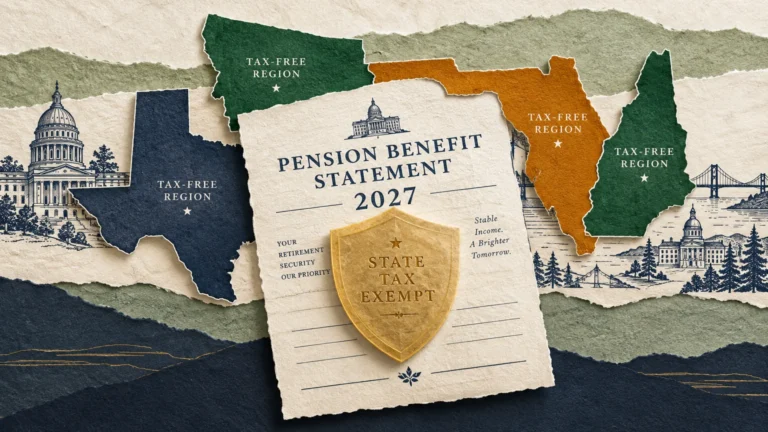
Fortunately, recent federal legislation softens part of that tax squeeze for older newlyweds. Under IRS guidance on the One Big Beautiful Bill Act, enacted July 4, 2025, seniors age 65 and older can claim an additional $6,000 deduction starting in tax year 2025, including the 2026 filing season.
Eligible taxpayers can claim this extra $6,000 deduction whether they take the standard deduction or itemize, subject to income phaseouts. When both spouses are 65 or older, double-check your combined modified adjusted gross income so extra IRA withdrawals do not phase out your deduction.
Required Minimum Distributions (RMDs) from traditional IRAs and 401(k) plans present another hurdle because every dollar withdrawn feeds directly into provisional income. Left unmanaged, large RMDs can push newlyweds into higher marginal brackets and trigger maximum Social Security taxation.
Consider executing partial Roth conversions during lower-income gap years before RMDs begin. Drawing living expenses from Roth accounts later generates tax-free cash that stays completely out of your Social Security provisional income formula.
Blending withdrawals across taxable brokerage accounts, traditional pre-tax accounts, and Roth IRAs gives you precise annual control over taxable income. A tax-savvy withdrawal sequence often saves more over retirement than chasing slightly higher investment returns.
Managing Medicare IRMAA and Health Savings Accounts
Joint tax returns also govern what you pay for Medicare Part B and Part D coverage. Higher combined modified adjusted gross income can trigger Income-Related Monthly Adjustment Amounts (IRMAA), adding steep monthly surcharges for both spouses.
Because IRMAA calculations typically look back at tax returns from two years prior, a large Roth conversion or home sale right before marriage can raise premiums later. If your income drops after retirement or following the death of a prior spouse, filing a life-changing event appeal can help restore lower premiums.
Review your joint coverage options and premium brackets through official Medicare program resources before merging household finances. Comparing employer retiree plans against individual Medicare Advantage or Medigap policies often uncovers duplicate premiums you can eliminate.
If either partner carries an existing Health Savings Account (HSA) into the marriage, treat it as a premier tax-planning tool. Qualified medical withdrawals from an HSA remain completely tax-free and do not inflate provisional income or IRMAA calculations.
Note that once you enroll in any part of Medicare, you can no longer make new contributions to an HSA. You can still spend existing HSA balances tax-free on deductibles, Medicare premiums, dental care, and qualified long-term care services.

Protection, Long-Term Care, and Legacy Planning
Emotional commitment after 60 often collides with complex family obligations, especially when each partner brings adult children or substantial separate assets into the marriage. Updating your legal and risk-management framework protects both your new spouse and your intended heirs.
Addressing tough questions early prevents painful estate disputes later. Clear legal boundaries actually strengthen new marriages by removing financial guesswork.
Updating Estate Basics and Protecting New Spouse Rights
Marriage automatically alters inheritance rights under many state laws, sometimes overriding wills drafted years earlier. Schedule a joint review with an estate planning attorney before or immediately after your wedding.
Pay close attention to the nine-month marriage requirement under 20 C.F.R. § 404.335 if one partner has serious health concerns. If a spouse passes away within nine months of natural causes, the surviving partner generally will not qualify for survivor benefits on the new spouse’s record.
A prenuptial or postnuptial agreement helps blended families clarify which assets remain separate for children from prior marriages and which accounts support the surviving spouse. Pairing a revocable living trust with clear spousal income provisions removes ambiguity.
Do not overlook beneficiary forms on IRAs, 401(k) accounts, life insurance policies, and transfer-on-death bank accounts. Beneficiary designations pass outside your will, meaning an outdated form could accidentally disinherit your new spouse or send funds to an ex-spouse.
Remember too that certain workplace retirement plans automatically designate a new spouse as the primary beneficiary unless the spouse signs a written waiver. Updating every account title and beneficiary form within weeks of the wedding keeps your estate plan aligned with your wishes.
Long-Term Care Risks and Fraud Prevention
A prolonged nursing home stay or memory-care need represents one of the biggest financial threats to late-life marriages. Even when couples keep separate bank accounts, means-tested programs like Medicaid generally evaluate combined marital resources when determining long-term care eligibility.
Evaluate whether existing savings, long-term care insurance, or hybrid life-and-care policies can absorb future care costs without impoverishing the healthy spouse. Exploring options in your early sixties usually preserves more coverage choices and lower premiums than waiting until your seventies.
Older adults navigating life transitions also face elevated risks from financial scams and benefit impersonators. Fraudsters frequently target recent widows, widowers, and newlyweds with urgent messages claiming their Social Security benefits are suspended due to marriage.
Never share your Social Security number, bank routing details, or verification codes with unexpected callers, texts, or emails. The SSA initiates survivor claims through verified calls to 1-800-772-1213 or scheduled appointments, never through high-pressure payment demands.
When reviewing annuities, rollovers, or new estate strategies with a financial professional, verify their registration and disciplinary history first. Check credentials and review unbiased investor protection tools on the federal Investor.gov portal before moving retirement assets.
Frequently Asked Questions About Remarrying After 60
Even with clear rules, real-life retirement scenarios raise practical timing questions. These four answers address the most common planning hurdles couples face before remarrying.
How does part-time work affect my benefits before Full Retirement Age?
If you claim survivor, spousal, or retirement benefits before reaching FRA while earning wages, the SSA applies the Retirement Earnings Test. In 2026, the annual limit is $24,480—or $2,040 per month—if you stay under FRA all year, rising to $65,160—or $5,430 per month—in the calendar year you reach FRA.
Those thresholds adjust upward in 2027 to $25,560 per year, or $2,130 per month, for beneficiaries under FRA all year, withholding $1 for every $2 earned above the cap. During the year you reach FRA in 2027, the limit rises to $67,920—or $5,660 per month—withholding $1 for every $3 earned over the limit before your FRA month.
Once you reach the month of your Full Retirement Age, the earnings limit disappears completely. Any benefits previously withheld under the earnings test are recalculated into higher monthly payments at FRA, though consulting a planner helps time part-time wages smoothly.
How well do Social Security survivor benefits hedge against inflation?
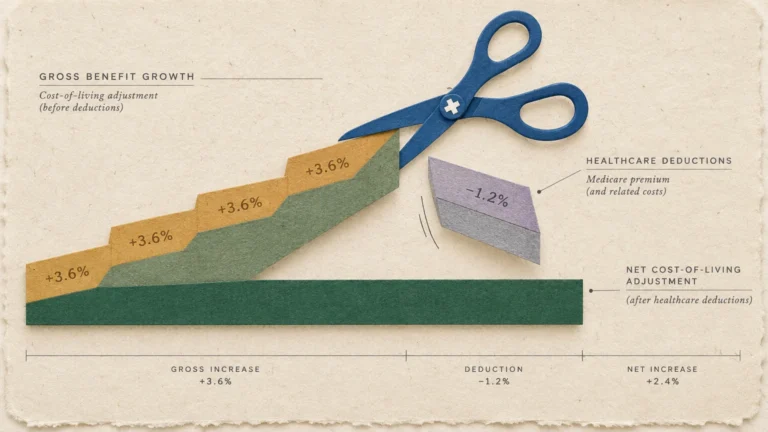
Social Security benefits carry an automatic annual Cost-of-Living Adjustment (COLA) that protects purchasing power over decades. Following a 2.8% COLA in 2026, the SSA announced a 3.6% COLA on October 14, 2026, taking effect in January 2027 for nearly 72 million Social Security beneficiaries and December 31, 2026 for roughly 7.3 million SSI recipients.
Under that 2027 adjustment, average monthly benefits for all retired workers climb from $2,095 to $2,170, an increase of about $75 per month, while aged widow and widower benefits rise from $1,936 to $2,005. Because healthcare and housing costs can outpace general inflation, pair your COLA-adjusted benefits with diversified equities or Treasury Inflation-Protected Securities.
How do advisor fees work when hiring help for remarriage planning?
Retirement planners generally charge through hourly rates, flat project fees, a percentage of assets under management, or product commissions. For focused decisions like Social Security claiming math, tax modeling, and pension analysis, an hourly or flat-fee fiduciary planner often avoids conflicts of interest.
Before signing an engagement letter, ask for a written fiduciary commitment and review the advisor’s fee schedule in plain dollars. Knowing exactly how your advisor gets paid ensures recommendations reflect your household balance sheet rather than product sales quotas.
What is the single most important step for surviving spouse planning before a wedding?
Verify your exact age against the age-60 survivor rule and confirm how remarriage affects every benefit stream you currently receive or plan to claim. If you are collecting living ex-spouse benefits, calculate whether your new spouse’s record or your own delayed retirement benefit offsets the lost check.
Once benefit eligibility is clear, run a mock joint tax return alongside your partner to spot provisional income spikes, IRMAA thresholds, and estate-planning gaps. Taking a few weeks to run those numbers before finalizing your wedding date gives both of you lasting financial clarity.
Your Next Steps Before Walking Down the Aisle
Remarrying after 60 does not have to jeopardize the survivor income you or your late spouse worked decades to earn. Knowing the difference between survivor protections and living ex-spouse rules puts you firmly in control.
Start this week by downloading updated Social Security earnings statements for both you and your partner. Check whether the Social Security Fairness Act unlocks previously offset pension-related spousal or survivor benefits for either household.
Next, schedule a joint strategy session with a fee-only fiduciary planner, a tax professional, and an estate attorney. Reviewing benefit timing, joint tax brackets, beneficiary designations, and healthcare coverage together ensures your next chapter begins on solid financial ground.