
Understanding where your liquid cash stands compared to your peers provides immediate clarity over your overall financial health. Most retirees wonder whether their checking and savings balances are dangerously low or unnecessarily large.
The typical American retiree maintains far less cash in the bank than conventional rules of thumb recommend. Data shows that many households manage everyday retirement life on surprisingly lean liquid buffers.
Comparing your liquid reserves against verified national benchmarks helps you balance peace of mind with effective wealth preservation. This evaluation reveals whether your money is truly working for you.
The Real Numbers: How Much Cash Retirees Hold Today
The primary source for measuring American wealth is the Federal Reserve Survey of Consumer Finances. The central bank released its latest triennial survey on October 9, 2026, evaluating complete household finance figures from 2025.
To measure cash in the bank, the Federal Reserve evaluates what it terms transaction accounts. These accounts include everyday checking, traditional savings, money market deposit accounts, brokerage call accounts, and prepaid debit cards.
Certificates of deposit and tax-advantaged retirement accounts remain separate from this category. Across the United States, 98.7% of all households own at least one transaction account.
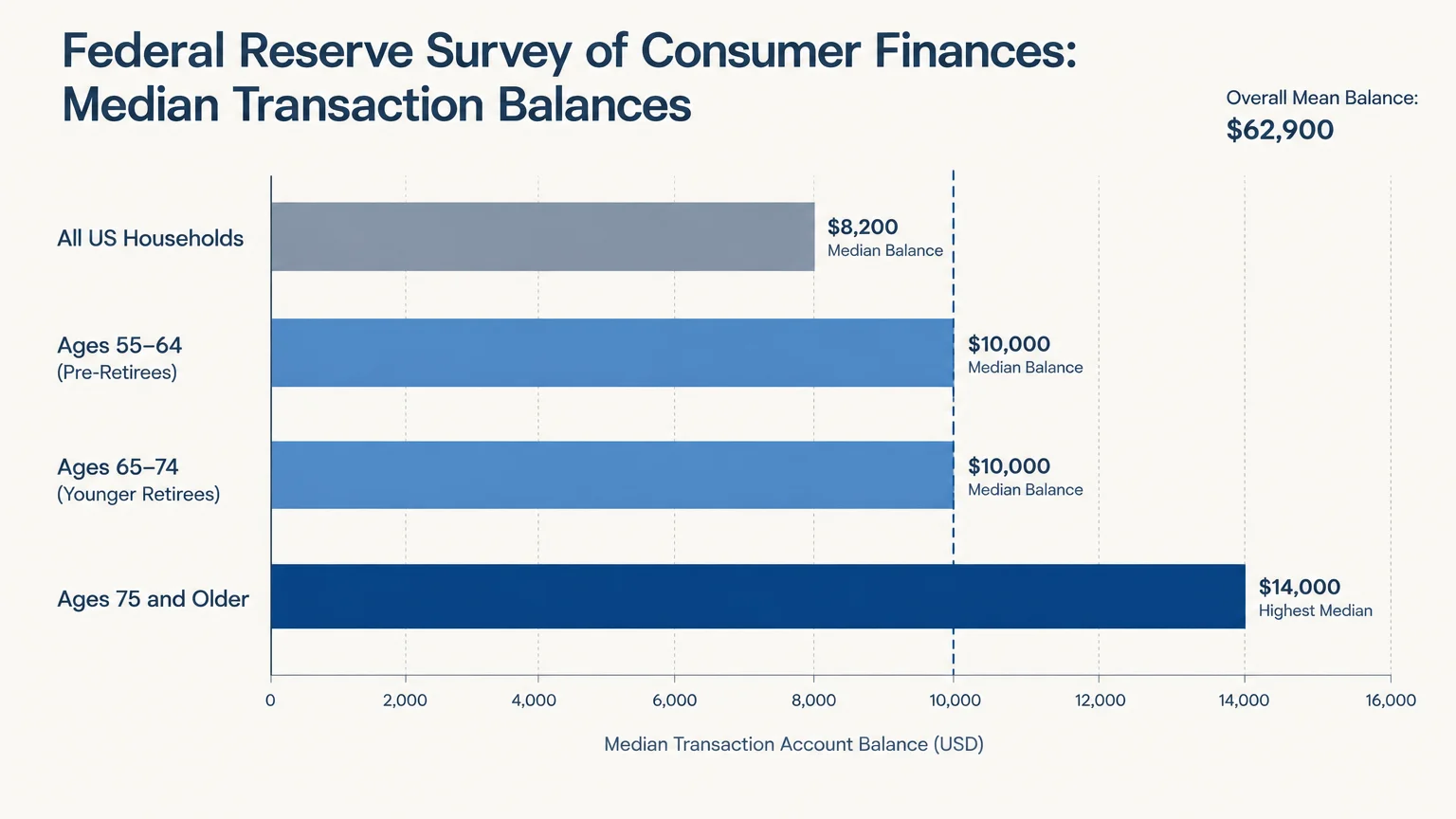
Across the entire nation, the median transaction balance stands at $8,200. That figure dropped 6% from the inflation-adjusted 2022 median of roughly $8,760 to $8,800.
Meanwhile, the average transaction balance across all American households sits at $62,900. That overall mean balance declined 8% compared to the inflation-adjusted 2022 benchmark.
Liquid cash balances shift dramatically as individuals transition from work into retirement. Pre-retirees between ages 55 and 64 maintain a median transaction balance of $10,000.
Retirees between ages 65 and 74 maintain that exact same median balance of $10,000. Their liquid cushion reflects careful spending alongside regular disbursements from pensions or personal savings.
Older retirees present a very different financial picture. Households aged 75 and older hold a median transaction account balance of $14,000.
This $14,000 figure represents the highest median cash balance of any age bracket in America. Older seniors intentionally hold larger cash buffers to manage unpredictable late-life needs.
The Median Versus the Mean: Unpacking the Distortions
When you read about average savings, the numbers often look unrealistically high. Comparing median numbers to mathematical averages illustrates how wealth concentration skews public perception.
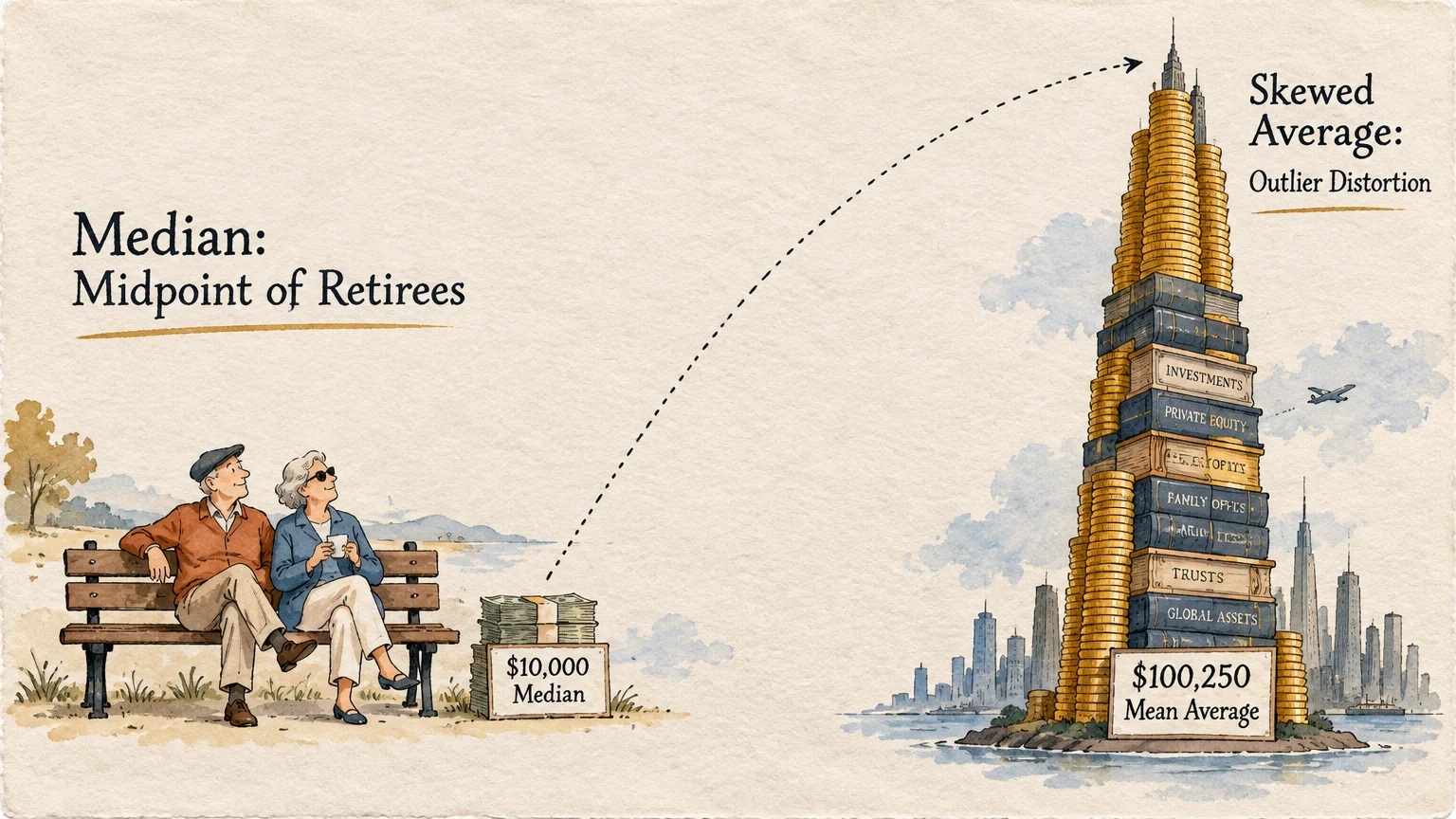
The median represents the exact midpoint where half of households hold more and half hold less. For retirees aged 65 to 74, that midpoint remains steady at $10,000.
In contrast, the mathematical mean for the same demographic reaches far higher levels. High-net-worth households with hundreds of thousands of dollars in liquid accounts pull the average upward.
Looking back at the historical 2022 benchmark highlights this divergence clearly. In 2022, the median cash balance for ages 65 to 74 was $13,400, while the average reached $100,250.
For those aged 75 and older in 2022, the median stood at $10,000, while the average hit $82,800. These wide gaps prove why relying on averages distorts personal benchmarking.
Focusing on the median prevents unnecessary financial anxiety. If you hold $10,000 to $15,000 in liquid reserves, you align closely with the typical American retiree.

Checking Account Balances: Day-to-Day Cash Realities
Transaction accounts bundle multiple tools together, but day-to-day operations take place inside checking accounts. Federal Reserve microdata outlines how much retirees keep in checking alone.
Retirees aged 65 to 74 keep a median checking account balance of $4,000. Their average checking balance reaches $17,100, heavily influenced by affluent depositors.
Retirees aged 75 and older maintain a median checking account balance of $5,000. Their average checking balance rises to $29,700.
These checking account numbers illustrate how older Americans handle monthly living expenses. Most retirees prefer holding a practical monthly float rather than keeping excessive funds in non-earning accounts.
A checking balance between $4,000 and $5,000 covers typical recurring obligations smoothly. It provides sufficient room for housing costs, utilities, groceries, and leisure without risking overdraft fees.
Surplus cash beyond that immediate operational float generally resides in secondary savings or fixed-income instruments. This separation shields daily spending accounts from unnecessary exposure.

The Longevity Shift: Why Older Seniors Hold the Most Liquidity
Many observers assume that younger retirees maintain the largest cash cushions. Yet the data shows that Americans aged 75 and older hold the highest median cash reserves.
Total net worth figures explain this phenomenon. Households aged 75 and older recently overtook the 65-to-74 demographic to become the wealthiest age group in the United States.
The median net worth for households aged 75 and older surged 37% since 2022 to reach $504,900. Their average net worth now stands at $1.96 million.
By comparison, households aged 65 to 74 hold a median net worth of $431,300. Older seniors have benefited from long-term real estate appreciation and disciplined capital preservation.
Annual household income also supports solid liquidity in late retirement. Median annual income reaches $69,400 for ages 65 to 74 and $66,800 for households aged 75 and older.
Older retirees often spend less on discretionary categories like international travel, major home renovations, or new vehicles. Their reduced spending naturally builds cash reserves inside standard bank accounts.
Health considerations also motivate older seniors to hold larger cash positions. Facing potential long-term care needs, many seniors view accessible cash as an emotional safety net.
The Revival of Certificates of Deposit
When interest rates climbed, bank customers rediscovered the appeal of certificates of deposit. The Federal Reserve tracks these holdings separately from liquid transaction accounts.
The share of American families holding certificates of deposit rose from 6.5% in 2022 to 10.7% in 2025. Retirees drove much of this expansion to capture higher guaranteed yields.
Among households that own certificates of deposit, the conditional median balance stands at $35,000. This sizable reserve demonstrates a strong appetite for principal protection.
Certificates of deposit allow retirees to lock in predictable returns without equity market volatility. For households living on fixed incomes, this certainty provides meaningful peace of mind.
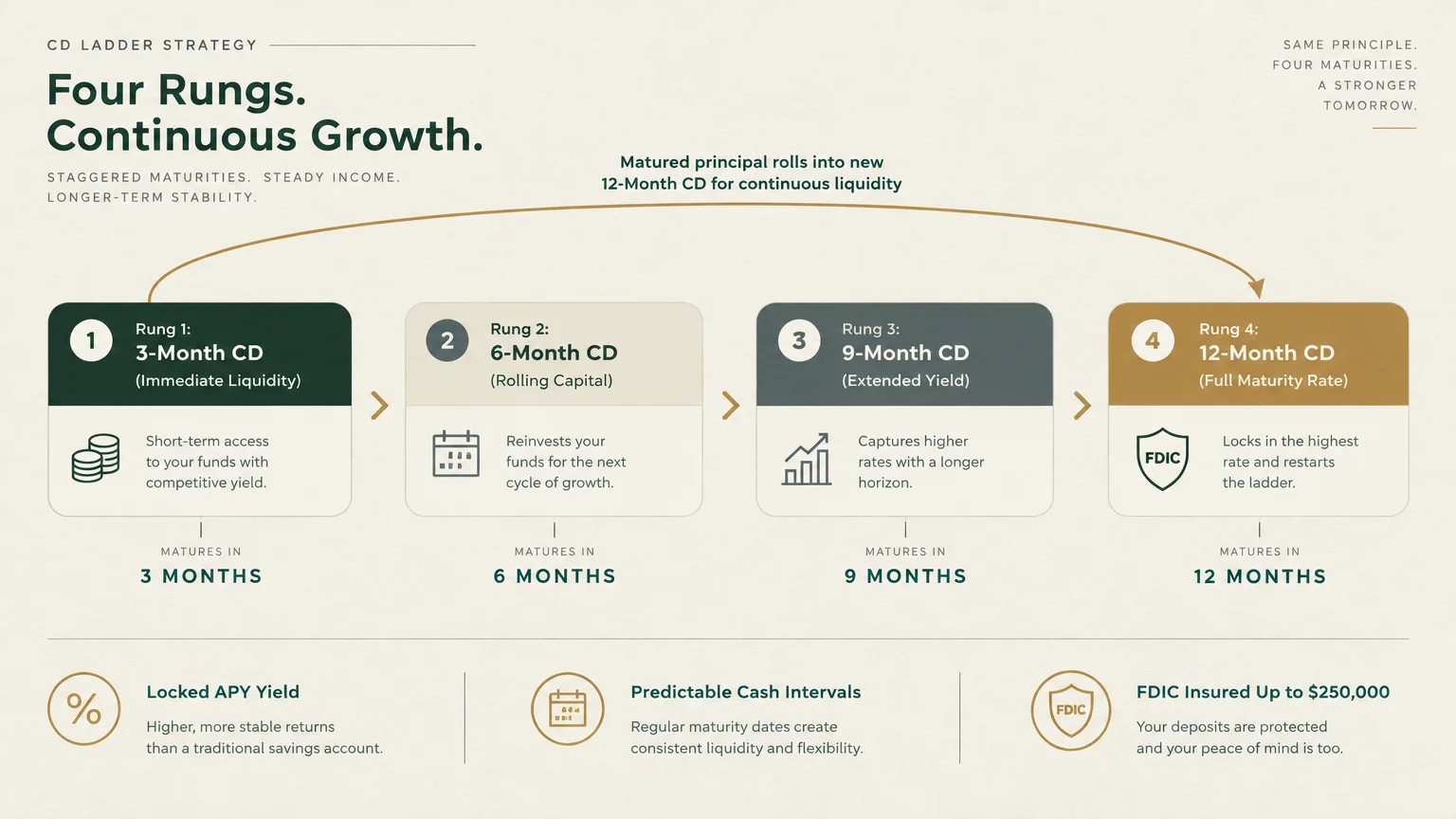
A popular approach involves setting up a certificate ladder with staggered maturity dates. This strategy ensures regular access to capital while capturing higher rates on longer terms.
However, certificates of deposit lack complete liquidity. Withdrawing principal before the agreed maturity date triggers early withdrawal penalties that erode interest earnings.

The Hidden Threat of Cash Drag in Low-Yield Accounts
Holding substantial cash provides psychological comfort, but idle money carries a real cost. Cash drag occurs when money earns less than the prevailing rate of inflation.
Traditional brick-and-mortar financial institutions offer shockingly low interest rates on basic savings accounts. The national average savings rate tracked by the Federal Deposit Insurance Corporation is just 0.38% APY.
Leaving $10,000 in an account paying 0.38% generates a meager $38 in annual earnings. Over several years, everyday consumer inflation steadily destroys the purchasing power of that money.
Fortunately, competitive online banking alternatives offer substantially better yields. Top high-yield savings accounts currently deliver returns between 4.20% and 5.00% APY.
Depositing that same $10,000 into a high-yield account paying 4.50% generates $450 in annual interest. That extra return requires no investment risk and remains completely liquid.
Failing to move emergency funds into high-yield accounts costs retirees hundreds of dollars every year. Optimizing liquid accounts is one of the easiest financial upgrades available.
Strategy Pillar One: Building an Efficient Three-Bucket Cash Plan
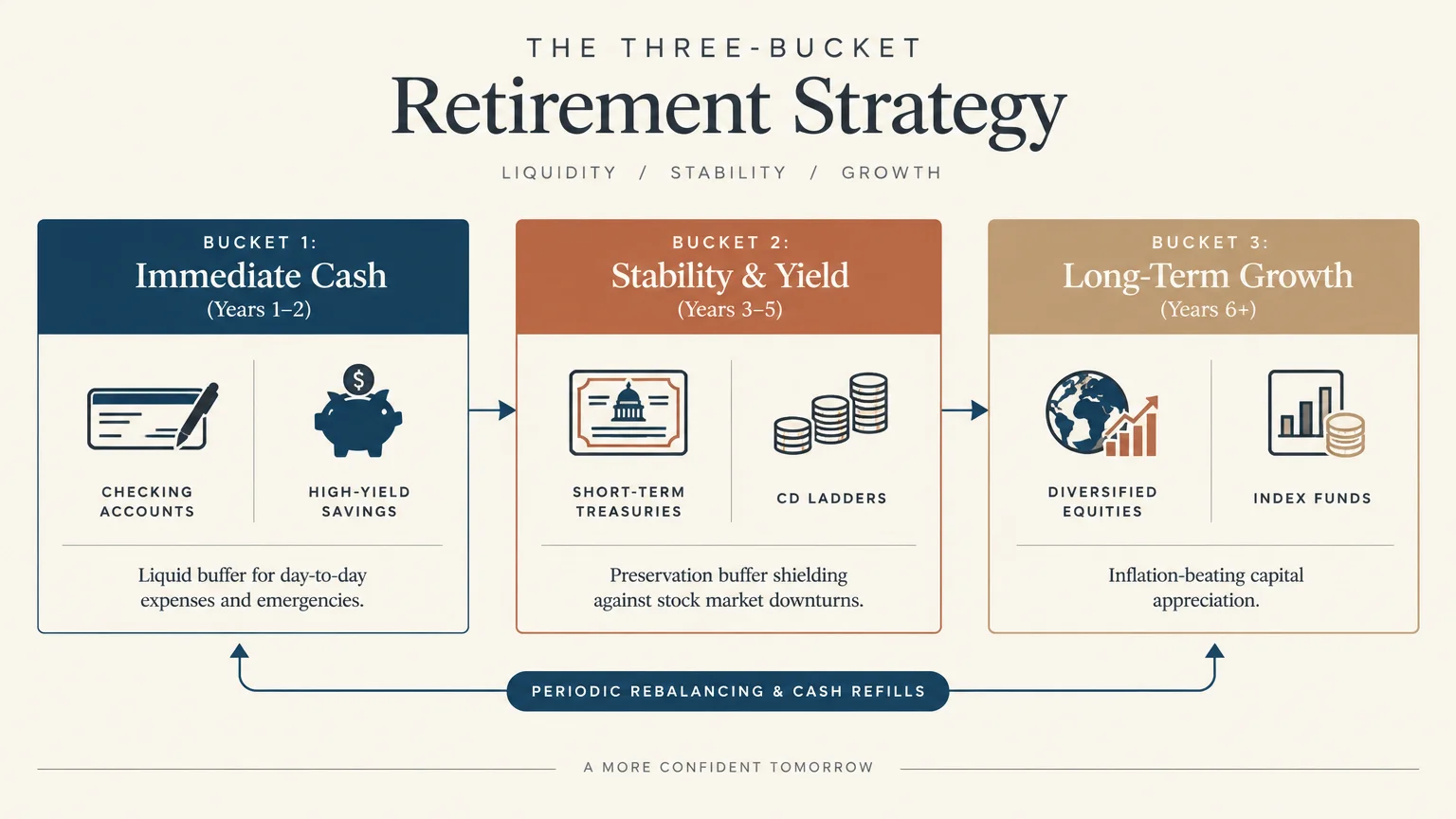
Relying on arbitrary cash balances creates unnecessary risk. Structuring your assets into a disciplined three-bucket framework matches your liquidity directly to real-world expenses.
The first bucket covers immediate operational spending. Keep one to two months of living expenses inside your primary checking account to handle standard monthly bills.
For most retirees, this operational balance ranges between $3,000 and $6,000. It absorbs utility bills, insurance premiums, and daily groceries without stress.
The second bucket serves as your short-term liquid emergency reserve. Position this money in a high-yield savings account or a liquid money market fund.
Aim to maintain six to twelve months of non-discretionary expenses in this intermediate cash bucket. This pool funds major home repairs, automotive replacements, or unexpected out-of-pocket medical bills.
Coordinate this cash buffer alongside your guaranteed benefits from the Social Security Administration. Stable monthly benefit checks reduce the amount of standing cash you need to hold.
The third bucket contains long-term investment assets designed to outpace inflation. Among retirees who own retirement accounts, the median balance for ages 65 to 74 is $257,000.
For households aged 75 and older, that median retirement account balance remains identical at $257,000. These funds generate income across a multi-decade retirement horizon.

Strategy Pillar Two: Aligning Cash Flow with Retirement Lifestyle
Your need for liquid bank balances changes as you progress through distinct retirement chapters. Early active years demand different cash resources than later, slower phases.
During early retirement, often called the go-go years, spending on leisure and recreation tends to peak. Retirees frequently finance extended travel, purchase recreational equipment, or remodel living spaces.
Funding major lifestyle aspirations requires planned liquidity. Setting aside targeted cash reserves in dedicated savings accounts prevents you from liquidating long-term investments during market corrections.
Selling equities during a market downturn locks in paper losses permanently. A robust cash cushion lets you ride out market downturns without altering your daily lifestyle.
As you transition into the slow-go years, discretionary travel spending naturally declines. Retirees often spend more time at home, simplifying routines and lowering overall consumption.
Adjusting your liquid reserves to mirror these lifestyle phases optimizes portfolio performance. Review your planned activities annually and rebalance your liquid cash reserves accordingly.
Strategy Pillar Three: Health Care Reserves and Unexpected Medical Bills
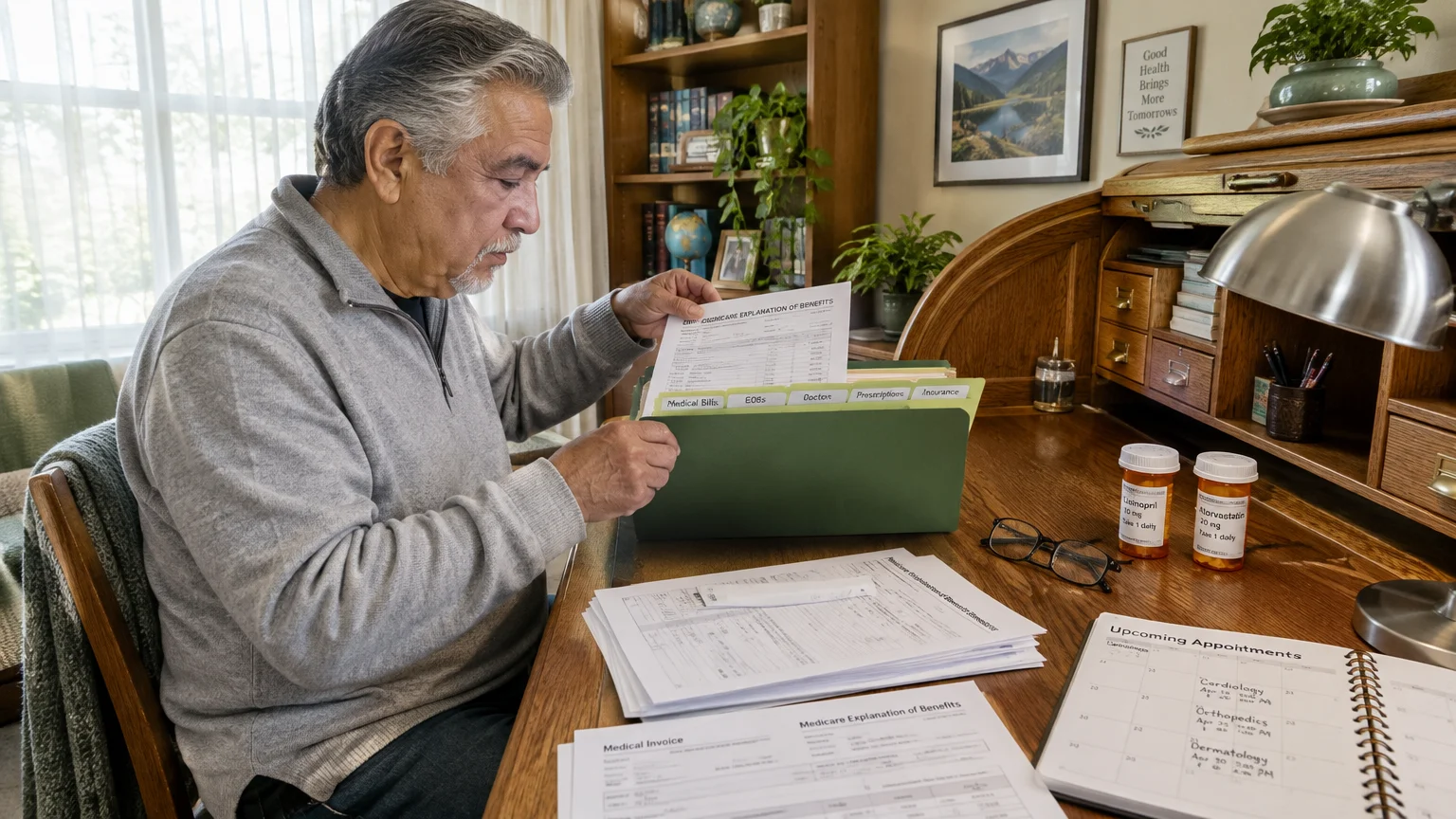
Healthcare expenses represent one of the largest financial uncertainties facing American retirees. Medical emergencies can disrupt household budgets without warning.
Standard coverage through the federal Medicare program leaves significant coverage gaps. Deductibles, copayments, dental care, and vision services require personal out-of-pocket funding.
Maintaining a dedicated health emergency reserve shields your everyday cash flow from medical volatility. Many retirees allocate $5,000 to $10,000 specifically for unexpected healthcare costs.
This medical reserve should remain accessible in a liquid, interest-bearing account. Easy access ensures you can settle medical bills promptly without relying on high-interest credit cards.
Long-term custodial care presents an even larger financial hurdle. Traditional medical insurance programs do not cover non-skilled daily assistance, such as bathing or meal preparation.
Whether you rely on private long-term care insurance or self-funding, liquid cash provides a vital bridge. Cash reserves fund immediate care modifications while you organize broader financial resources.

Expert Perspectives: What Financial Planners and Gerontologists Recommend
Certified financial planners often debate the ideal quantity of cash reserves for retirees. Most advisors caution against keeping excessive cash balances in standard checking accounts.
Holding too much cash produces substantial opportunity costs over a thirty-year retirement. Every dollar sitting idle loses ground to inflation and misses out on compound investment growth.
Financial planners generally recommend keeping one to two years of portfolio withdrawals in liquid assets. This insulation protects retirees from the sequence-of-returns risk during poor market years.
Gerontologists and behavioral economists offer another valuable perspective on cash holdings. They note that liquid cash provides significant emotional comfort and psychological well-being to aging adults.
Seeing a healthy balance in a local bank account reduces stress and promotes feelings of autonomy. For many seniors, that sense of security outweighs the mathematical benefit of full investment.
The optimal cash balance strikes a balance between numerical efficiency and emotional peace. You should hold enough cash to sleep soundly without severely limiting long-term portfolio growth.
Crucial Safeguards: FDIC Protection, Fraud Defenses, and Benefit Thresholds
Managing cash balances safely requires an understanding of institutional protections and fraud prevention. Keeping cash secure involves more than just picking a strong password.
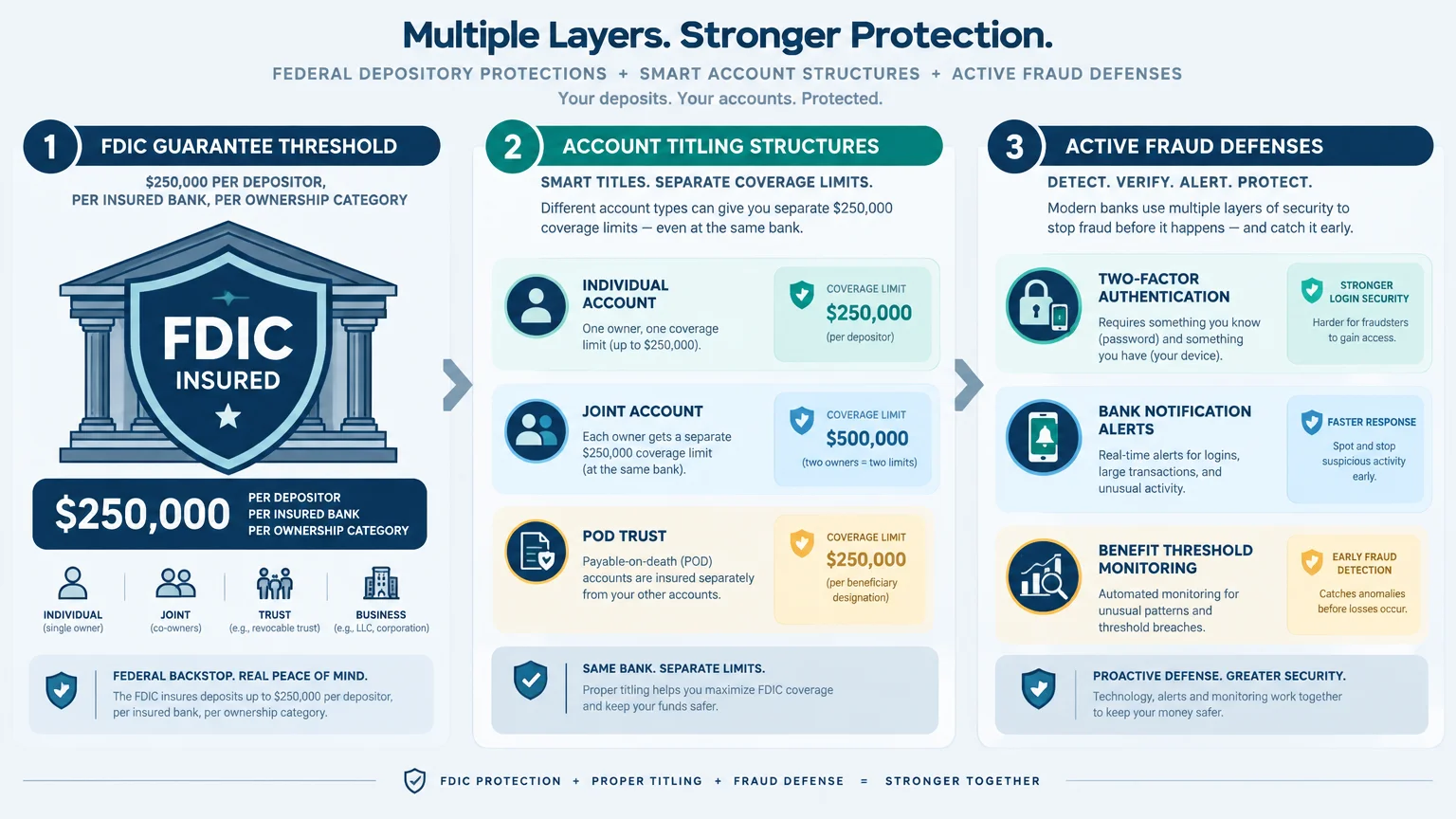
Federal deposit insurance guarantees the safety of your bank balances up to legal thresholds. Standard coverage insures up to $250,000 per depositor, per insured institution, for each ownership category.
A married couple holding a joint account receives up to $500,000 in total deposit insurance at a single bank. This protection applies automatically without any special paperwork.
Deposit coverage expands further when using trust structures. Trust accounts receive $250,000 per eligible beneficiary, capped at a maximum of $1,250,000 for five or more beneficiaries per owner.
Retirees must also guard their liquid balances against aggressive scams and identity theft. Consumer protection guidance from AARP emphasizes that older adults remain prime targets for digital fraud.
Criminals frequently use wire transfer schemes, imposter calls, and online account takeovers to drain savings. Setting up automated bank alerts and dual-factor authentication provides vital security against unauthorized withdrawals.
Finally, low-income seniors must monitor asset limits associated with public assistance programs. Holding excessive cash balances can jeopardize eligibility for Supplemental Security Income or Medicaid benefits.
For means-tested programs, liquid assets often cannot exceed strict statutory caps. Understanding these rules ensures that emergency savings do not inadvertently trigger painful benefit reductions.
Frequently Asked Questions About Retiree Cash Reserves
Is keeping $10,000 in savings enough for an average retiree?
For many retirees, a $10,000 cash balance provides an adequate emergency buffer. It matches the national median balance for households aged 65 to 74.
However, whether $10,000 is enough depends on your fixed monthly expenses and guaranteed income sources. If your non-discretionary costs are high, you may need a larger cash reserve.
How much money should I leave in my everyday checking account?
Most retirees should keep between one and two months of living expenses in checking. The national median checking balance sits at $4,000 for ages 65 to 74.
Holding this level provides a comfortable operational buffer for recurring monthly bills. Transferring any excess cash into a high-yield account prevents earnings drag.
Are certificates of deposit better than high-yield savings accounts today?
Certificates of deposit work best when you want to lock in an attractive yield and do not need immediate liquidity. They protect your yield against future interest rate cuts.
High-yield savings accounts provide superior flexibility for unexpected emergency expenses. Balancing both tools gives you flexibility alongside dependable interest income.
Does holding too much cash in the bank put my estate at risk?
Excessive cash balances in standard bank accounts will not compromise your estate if they stay within insurance limits. However, uninvested cash steadily loses purchasing power to inflation over long periods.
To streamline estate transfers, designate a payable-on-death beneficiary on every bank account. This simple paperwork ensures funds transfer directly to your heirs without navigating probate court.
Your 48-Hour Liquidity Action Plan
Evaluating your cash balances against national benchmarks is only useful if you take practical action. You can optimize your liquid reserves within the next two days.
Start by auditing your primary checking and savings statements from the past three months. Calculate your exact monthly baseline expenses, including utilities, groceries, and insurance.
Next, determine whether your checking account balance exceeds two months of normal living expenses. If you hold excess operational cash, move that surplus to a dedicated savings vehicle.
Check the interest rate on your current savings account today. If your bank pays near the national average of 0.38%, open a competitive high-yield account paying over 4.00%.
Moving $15,000 from a low-yield account into a competitive account generates hundreds of dollars in risk-free annual income. That simple change strengthens your retirement budget immediately.
Finally, confirm that your total balances at every financial institution sit comfortably within federal insurance caps. Adjust account registrations or add beneficiaries if your deposits exceed $250,000.
Managing cash balances effectively requires balancing safety, accessibility, and yield. Taking these simple steps ensures your cash reserves support a confident and secure retirement.