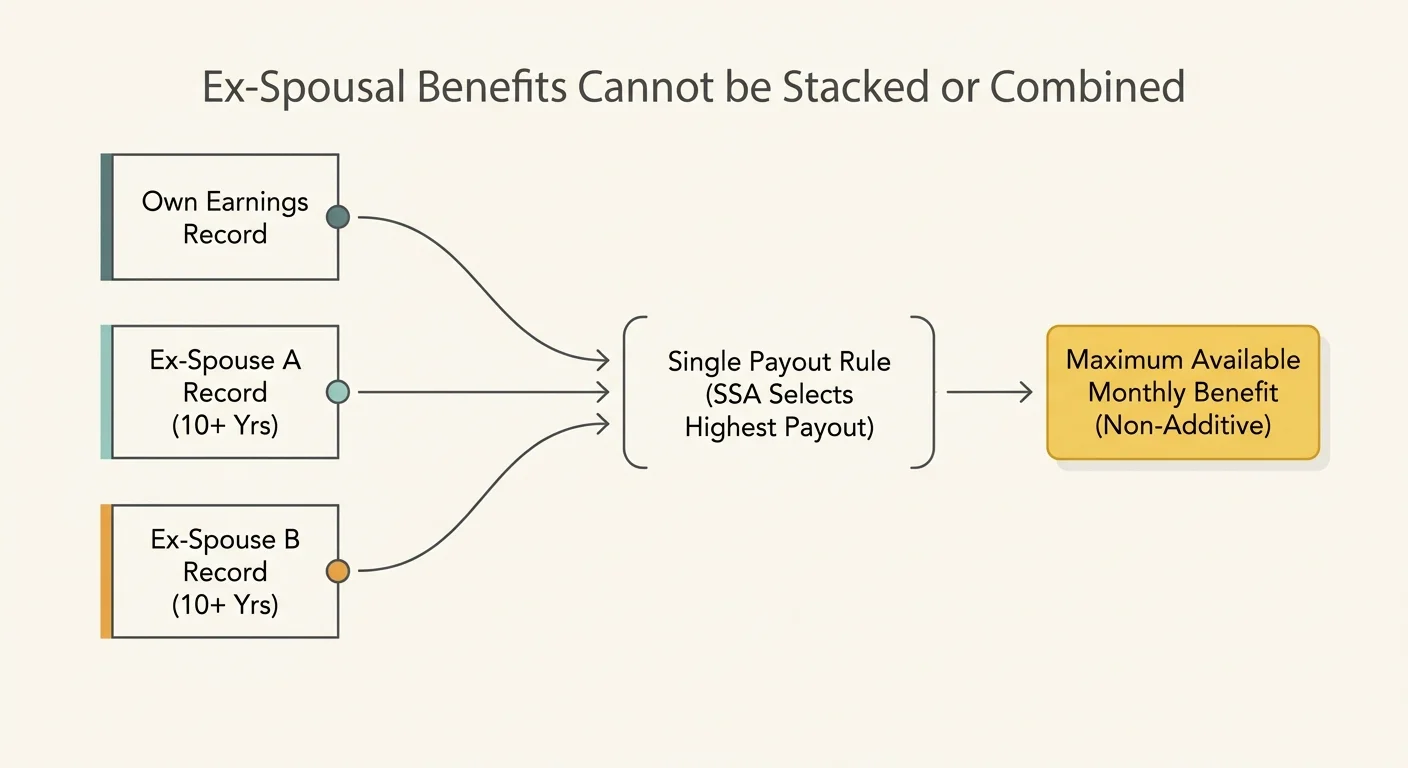
The Single Payout Rule and Maximizing Benefits
If you were married multiple times and each marriage lasted at least 10 consecutive years, federal rules allow you to choose benefits based on whichever ex-spouse’s record offers the highest payout. However, federal law strictly prohibits combining or stacking benefits from multiple exes; you must select a single record. During application processing, agency representatives evaluate all qualifying work records linked to your social security number and automatically assign you the highest monthly yield available.
Financial planners emphasize verifying earnings records prior to filing paperwork. Small differences in a former spouse’s lifetime earnings compound into tens of thousands of dollars across retirement. Evaluating each candidate record guarantees you maximize guaranteed monthly income.






Yes, I have been married multiple times but my first marriage was of 23 years and then my second one is a 15 years and my first marriage. She’s already collecting Social Security and I will be 62 in October but they said I cannot collect on my first marriage. Thought I would have to be divorced from my second husband to collect off of my first husband, even though my husband now is 63 and he will not collect Social Security until he is 65 but I should be able to collect I think in my own mind from my first husband at 62 because he is 66 and he’s already collecting.
I am not an expert on Social Security just from life experiences and what I read, but I think once you marry after divorce you lose the ability to collect on that person, that is what I think is true. What about collection on your own Soc. Sec. until your husband retires, then it will be half of his, and then you will lose yours if his is more.
You can collect on a previous spouse ssn if you wait to remarry after 60. Then you can start collecting on your previous spouse’s ssn at 60 with no penalties. But you have to wait to remarry after 60 years of age.
I received this info from my financial advisor at Fidelity while auditing my financial health & if I’m on a right path to retire at 62 years old.