1. Claiming Retirement Benefits Before Your Full Retirement Age
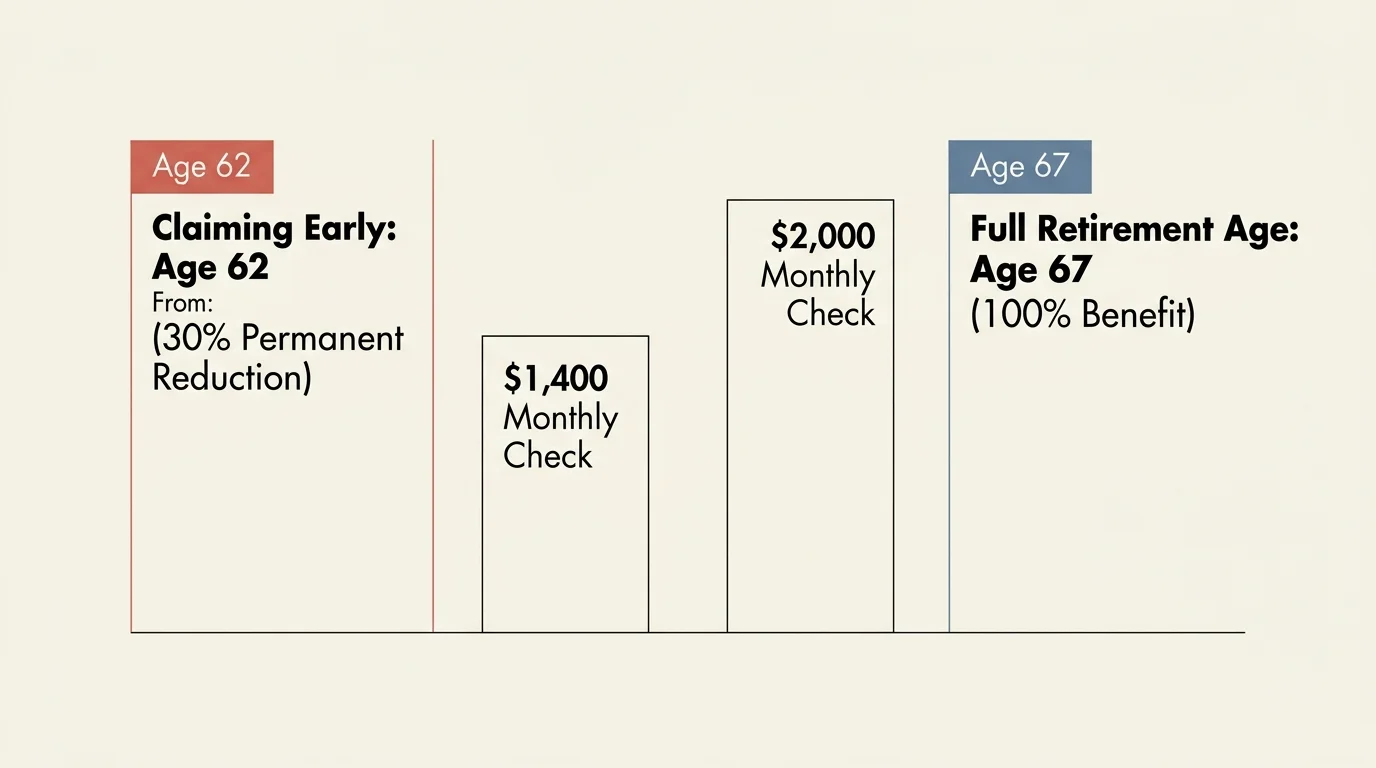
Filing for Social Security retirement benefits at age 62—the earliest eligible age—permanently cuts your monthly payout. For individuals born in 1960 or later, Full Retirement Age (FRA) is 67. Claiming five years early at age 62 triggers a full 30% permanent reduction in your Primary Insurance Amount (PIA). The formula applies a reduction rate of 5/9 of 1% for each of the first 36 months before FRA, plus 5/12 of 1% for each additional month. If your full monthly benefit at age 67 equals $2,000, claiming at age 62 permanently locks in a reduced check of just $1,400 per month for the rest of your life.
This early filing reduction never expires, even after you reach age 67. The Social Security Administration calculates this reduction to distribute equal lifetime benefits based on average life expectancies, but living past your break-even age means you forfeit substantial cumulative income. Choosing to claim early trades guaranteed monthly purchasing power in your later years for immediate liquidity today. If you possess alternative assets or plan to work longer, delaying your claim preserves your baseline inflation-adjusted income.