4. Accumulating Fewer Than 35 Years in the Formal Workforce
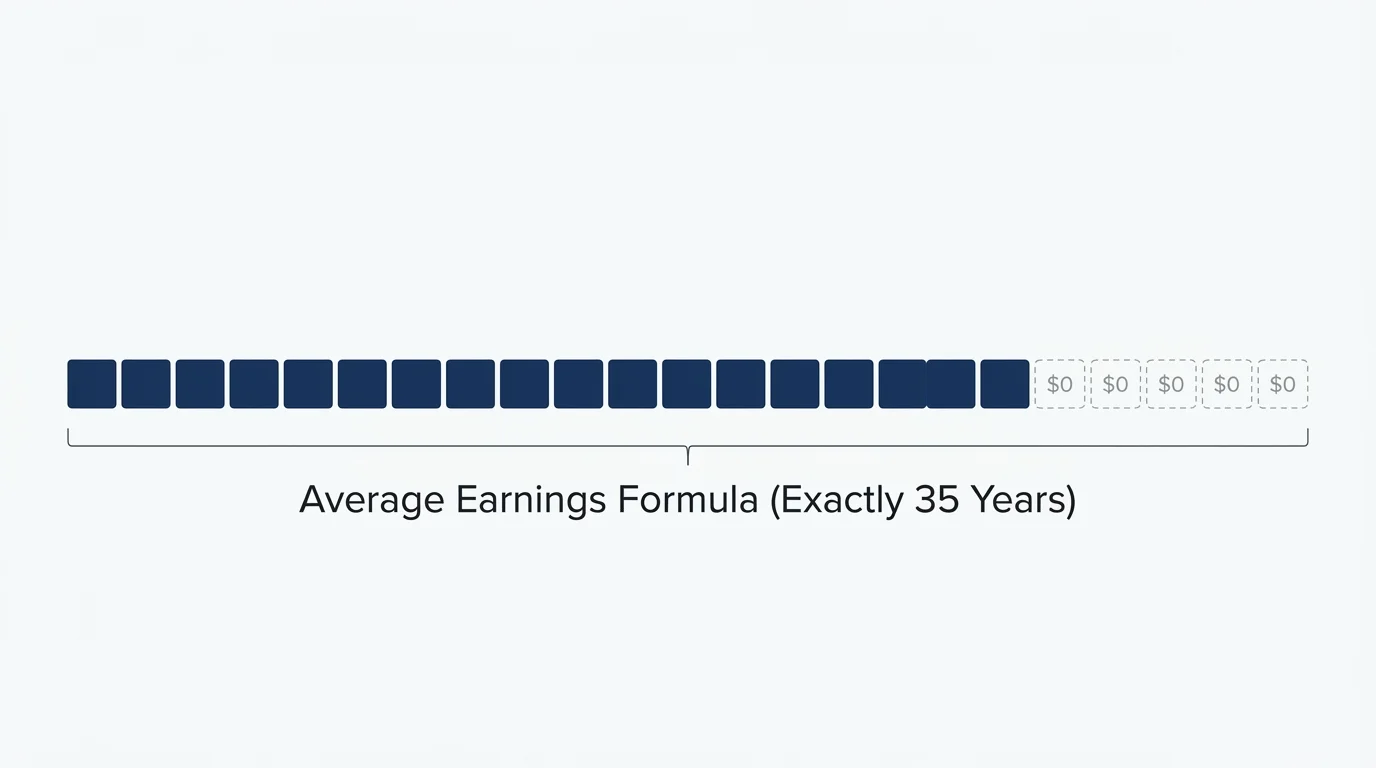
The core Social Security benefit formula relies on your top 35 years of earnings, adjusted for national wage inflation. If you worked fewer than 35 years in jobs that paid into Social Security, the system inputs $0 into the calculation for every missing year. Having five missing years means five zeros enter your 35-year average, which permanently drags down your Average Indexed Monthly Earnings (AIME) and lowers your baseline monthly check for life.
Data from the Bureau of Labor Statistics shows that career gaps from caregiving, higher education, or early retirement frequently leave workers short of the 35-year mark. Working even part-time to replace zero-earning years with positive income figures provides an immediate boost to your primary insurance amount. Before locking in your claim, review your complete earning history to verify whether adding one or two additional working years will permanently raise your monthly benefit base.