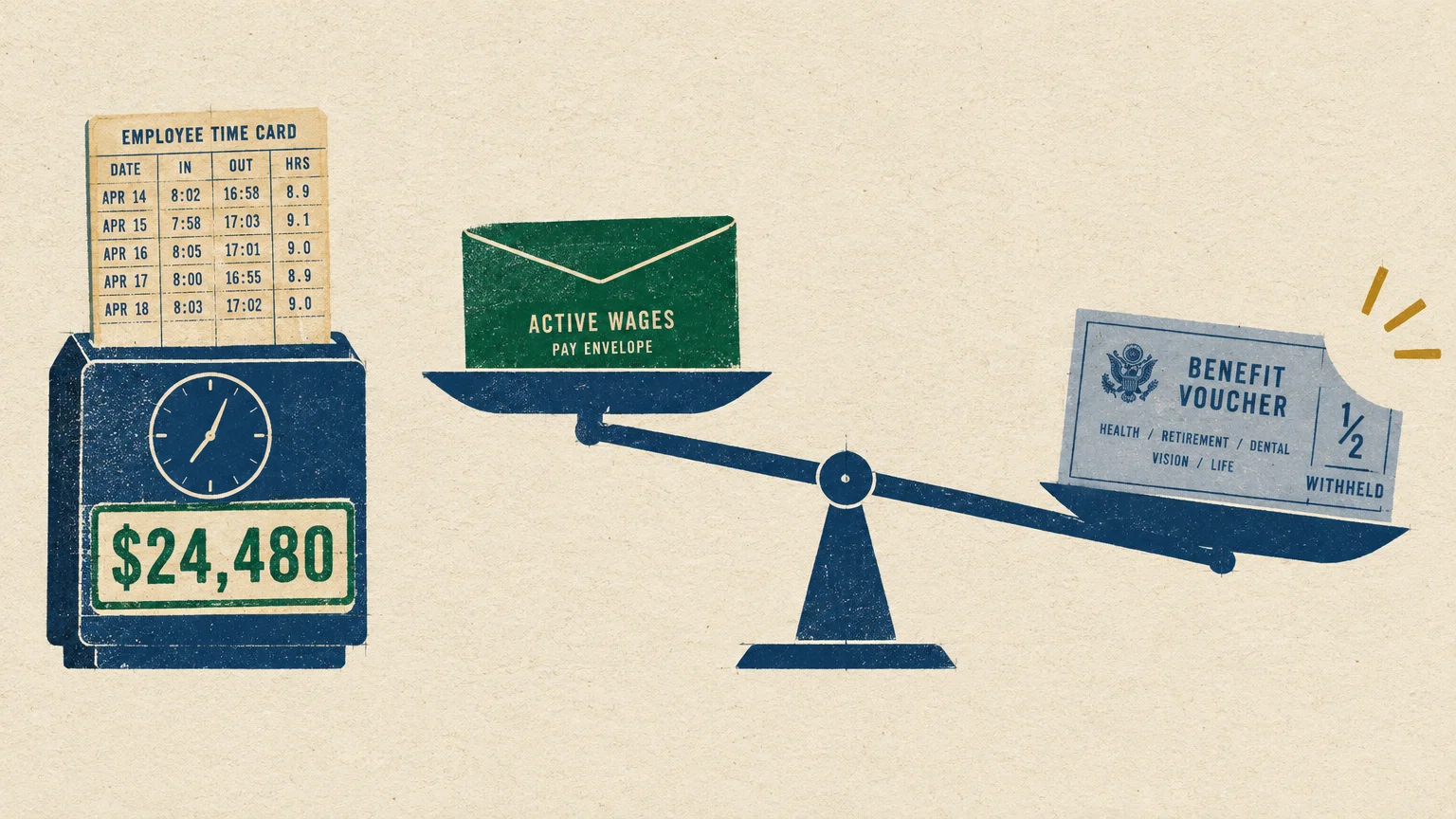
If you collect early Social Security benefits while holding down a paying job, a crucial annual threshold demands your immediate attention. Crossing it triggers sudden reductions in your monthly income.
Earning more than $24,480 in 2026 prompts the government to withhold one dollar in benefits for every two dollars you earn above that mark. Knowing this limit keeps you in control.
Fortunately, these withheld funds do not vanish permanently into the system. Mastering these official regulations helps you protect your immediate cash flow while steadily optimizing your lifetime retirement wealth.
Understanding the Retirement Earnings Test Mechanics
The federal government uses the Retirement Earnings Test to discourage early benefit claims among individuals who still earn substantial wages. This rule impacts anyone claiming benefits prior to reaching their full retirement age.
For individuals born on January 2, 1960, or later, federal law establishes full retirement age at 67. You can claim benefits as early as age 62, but doing so brings rigid wage restrictions.
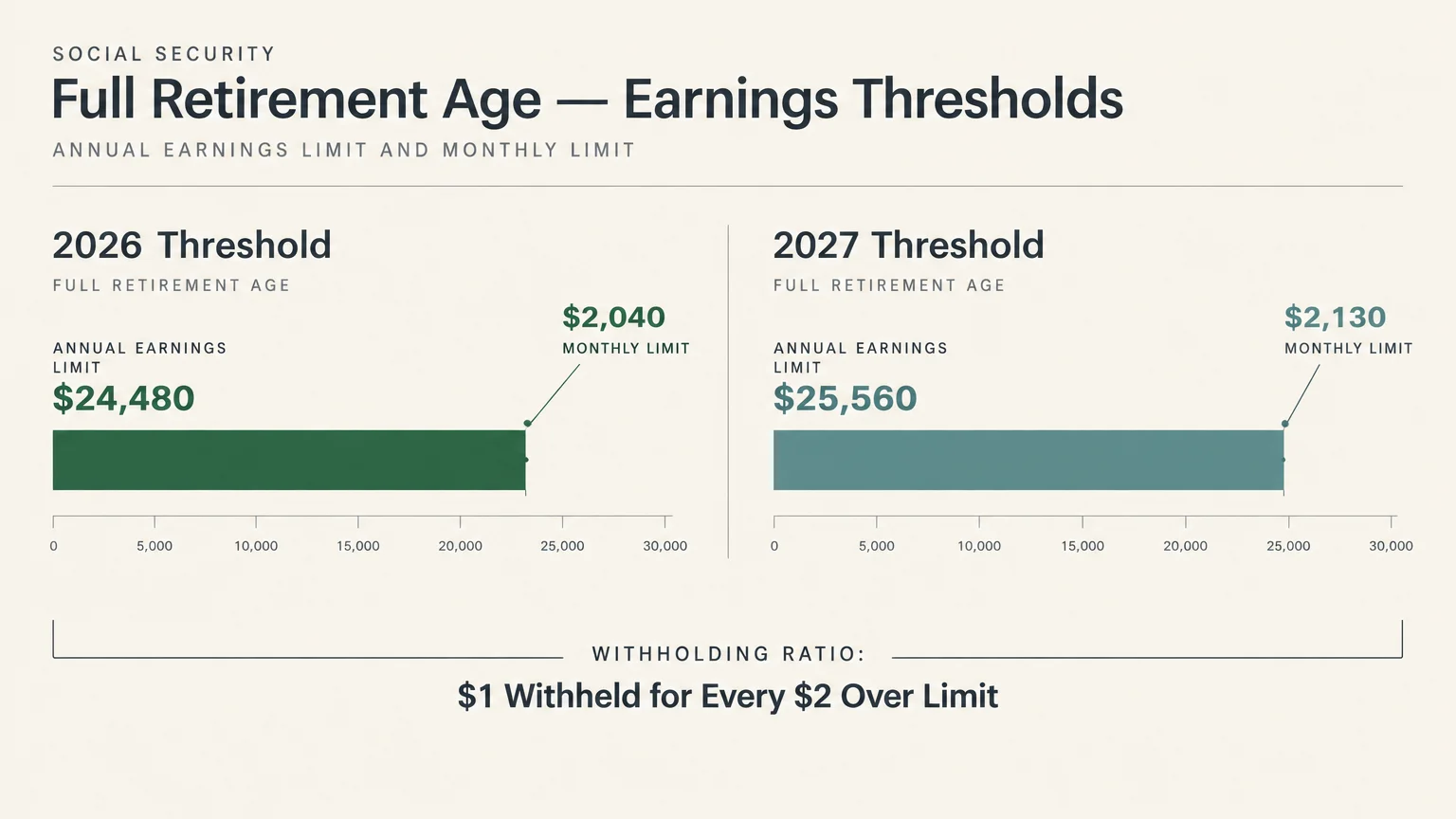
During 2026, the baseline annual earnings threshold stands at exactly $24,480. If you remain under full retirement age throughout the entire year, the government closely monitors every dollar you earn.
When your gross job earnings exceed $24,480, the Social Security Administration withholds $1 in benefits for every $2 earned above that mark. This calculation applies exclusively to your earned wages.
Looking ahead, inflation adjustments will raise this baseline ceiling. Federal authorities announced that the annual earnings limit will increase to $25,560 for the 2027 calendar year.
That upcoming 2027 increase translates to a monthly limit of $2,130, up from the $2,040 monthly allowance permitted throughout 2026. Tracking these annual shifts prevents unexpected financial shortfalls.
The Year You Reach Full Retirement Age Brings Welcome Relief
The rules become significantly more generous during the specific calendar year in which you attain full retirement age. Lawmakers designed this transition period to ease workers into complete benefit eligibility.
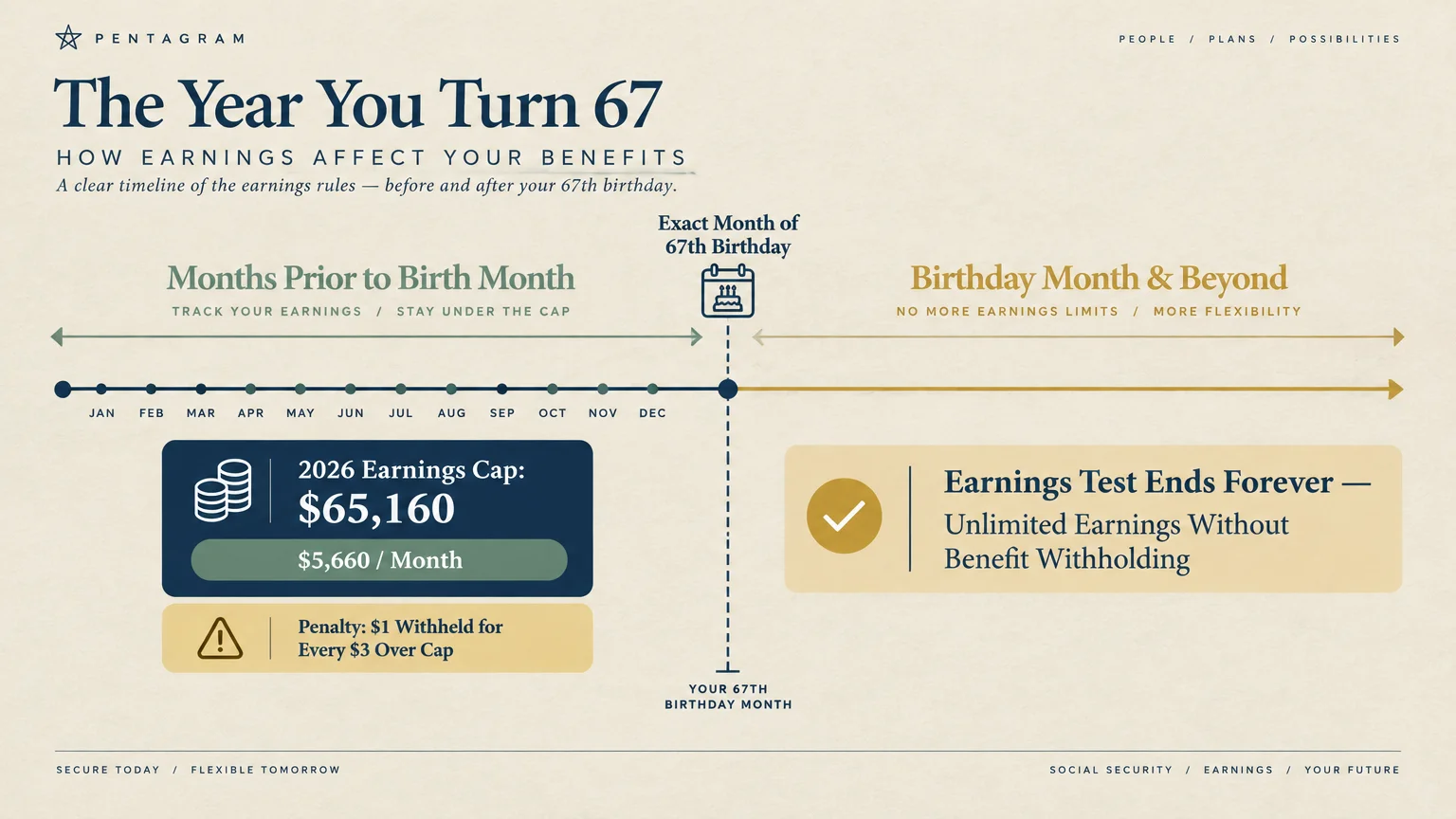
In the calendar year you turn 67, your annual earnings ceiling jumps to $65,160 for 2026. Furthermore, the penalty rate drops substantially.
The government withholds only $1 in benefits for every $3 you earn above the $65,160 cap. This reduced rate provides immediate breathing room for senior professionals.
Crucially, officials only tally the earnings you generate during the months prior to your birth month. Any money earned starting in the exact month of your birthday remains exempt.
For those reaching full retirement age in 2027, the pre-birthday earnings cap climbs to $67,920. That equals an allowable monthly earning rate of $5,660 without triggering benefit withholdings.
Once you reach the exact month of your 67th birthday, the earnings test vanishes forever. You can earn millions of dollars annually from that day forward without sacrificing a single penny.
What Counts as Earnings Versus What Stays Exempt
Many pre-retirees mistakenly believe that all incoming cash triggers the retirement earnings test. In reality, the legal definition of earnings remains strictly confined to active labor.
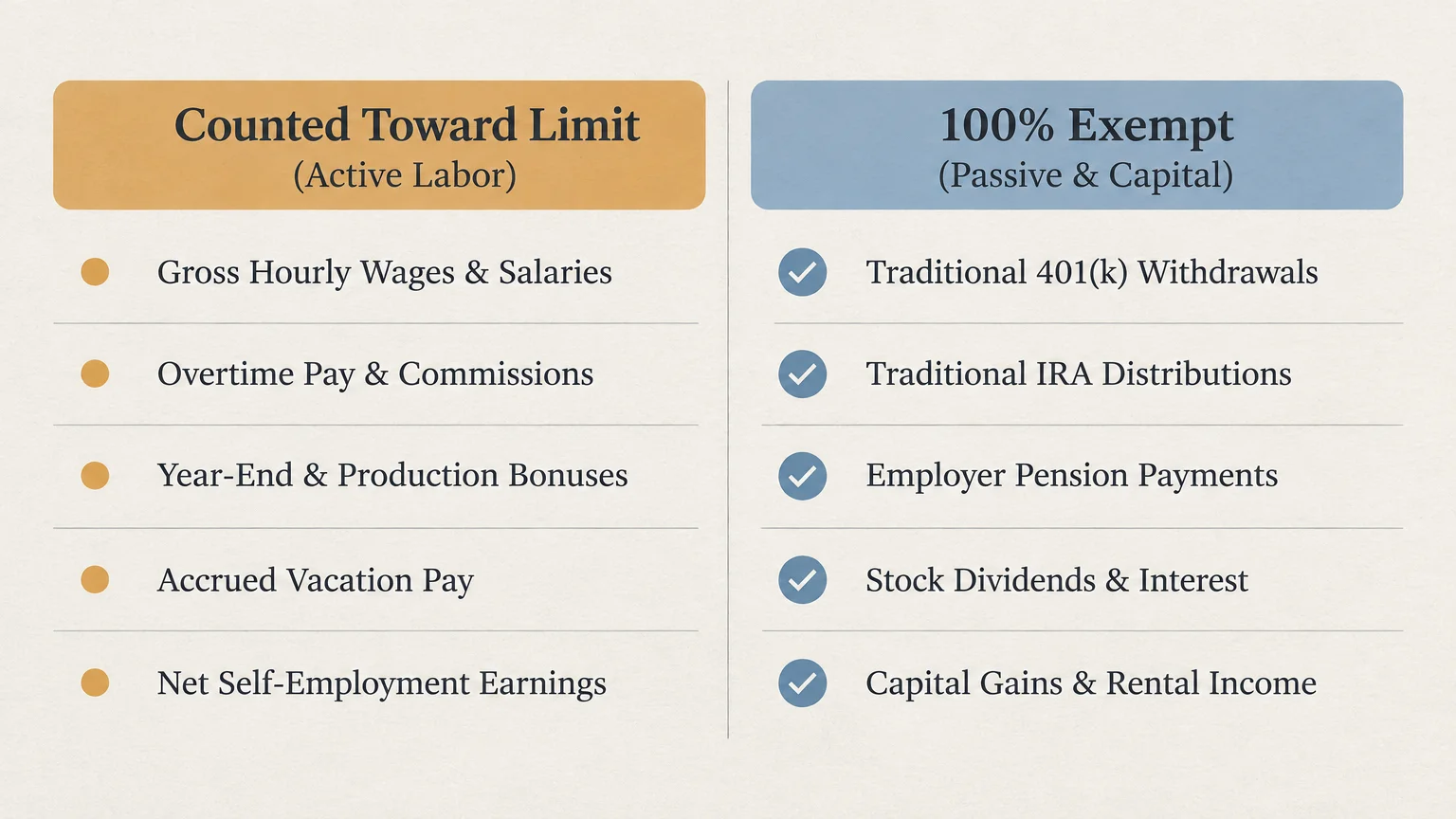
The system counts all gross wages paid by an employer, including standard hourly pay, salaries, overtime, bonuses, commissions, and accrued vacation pay. Net earnings from independent self-employment also count toward your cap.
Passive income streams never reduce your monthly checks. According to the Internal Revenue Service, unearned income receives entirely separate tax treatment under federal statutes.
You can withdraw unlimited sums from traditional 401(k) accounts, standard IRAs, and employer-sponsored pensions without triggering the earnings test. These distributions represent deferred income rather than active wages.
Investment dividends, corporate bond interest, capital gains, and rental property profits remain completely exempt from the earnings calculation. Life insurance proceeds and standard annuities also pass through without penalty.
Government pensions, military retirement annuities, and veterans disability benefits do not count against your annual cap. Your spouse’s earned income also has zero impact on your personal calculation.
The Mechanics of Withholding: Why Checks Stop Entirely
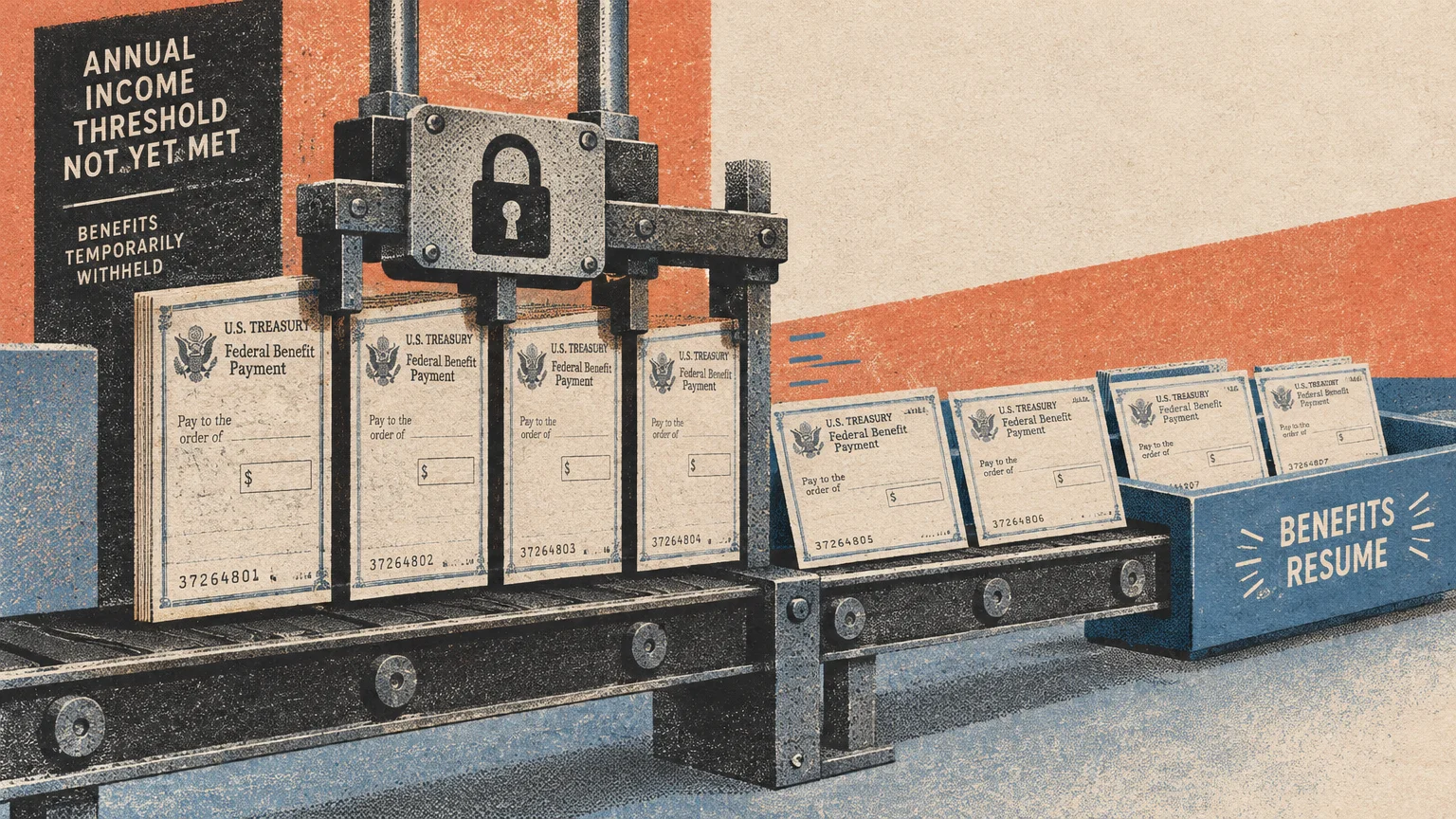
A widespread misconception assumes that the government deducts a tiny percentage from each monthly check throughout the year. The actual administrative mechanism operates far more aggressively.
The Social Security Administration withholds entire monthly benefit checks until your total required withholding balance reaches zero. They never shave off partial fractions across twelve consecutive payments.
Consider an early retiree who earns $34,480 at work during 2026 while receiving a scheduled monthly benefit of $1,500. This individual exceeds the annual earnings cap by exactly $10,000.
Under the standard $1-for-$2 formula, the agency must withhold $5,000 from this worker’s annual benefits. To collect that sum, the agency halts four full consecutive checks totaling $6,000.
Because four checks equal $6,000, the agency holds $1,000 more than the required $5,000 withholding balance. They refund that remaining $1,000 difference early in the following calendar year.
This withholding procedure can destabilize an unprepared household budget. If your checks stop flowing from January through April, you must possess cash reserves to bridge that gap.
Where Does the Withheld Money Actually Go?
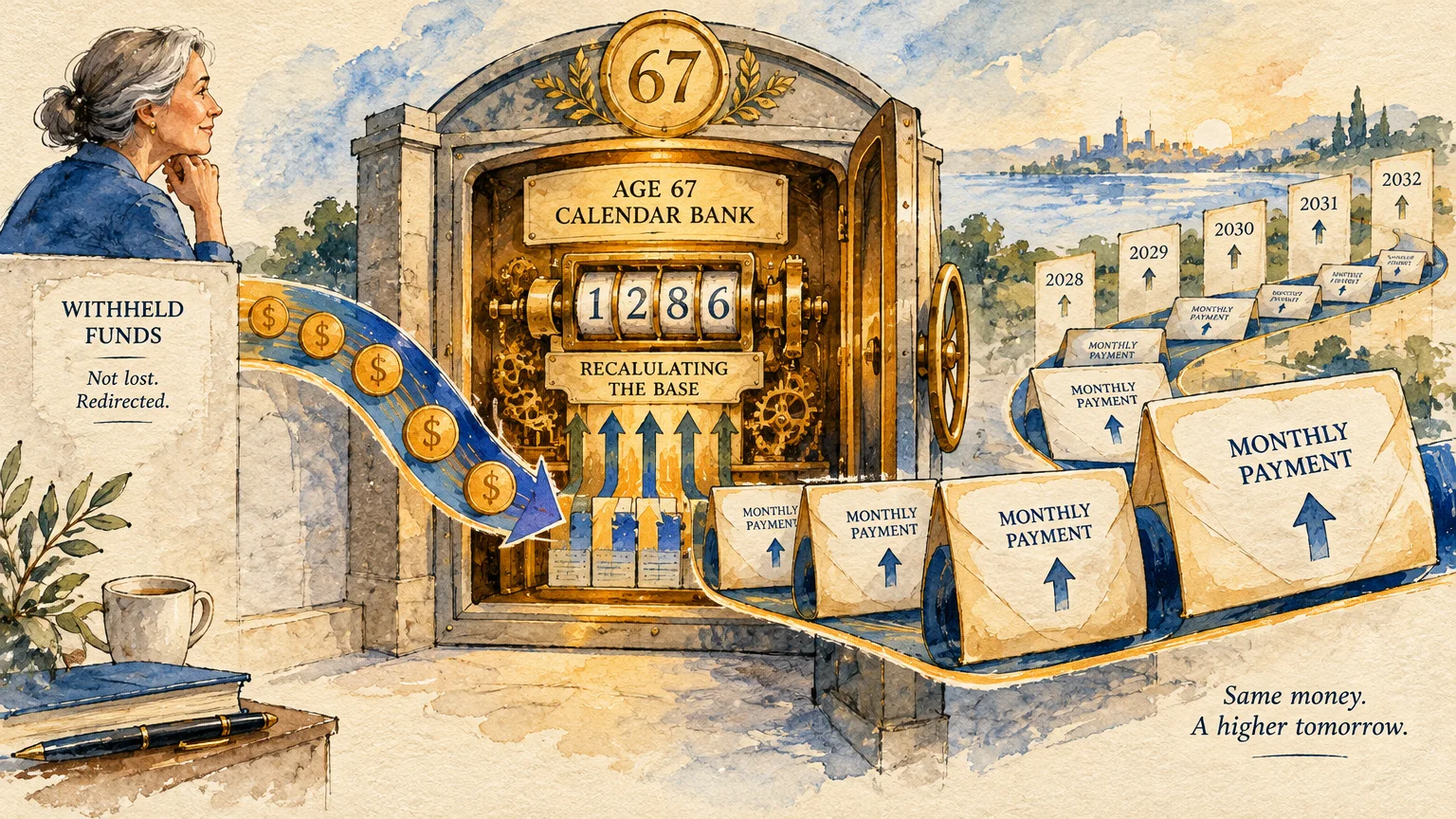
Withheld Social Security benefits do not disappear into a bureaucratic black hole. The earnings test acts as a temporary forced savings mechanism rather than a permanent monetary penalty.
When the government holds back your benefits, it keeps track of every single month you forfeited. When you reach full retirement age, the agency automatically recalculates your lifetime benefit formula.
Early claiming normally slashes your baseline benefit permanently; claiming at age 62 reduces your monthly payment by 30 percent compared to waiting until age 67. Withholding partially reverses that permanent reduction.
If the agency withheld twelve full monthly checks between ages 62 and 67, your record adjusts at full retirement age. Officials recalculate your benefit as if you originally claimed twelve months later.
This upward adjustment raises your monthly payment permanently for the remainder of your life. The longer you live past full retirement age, the more withheld money you effectively recoup.
Working also gives you a second path toward higher benefits. If your current annual earnings rank among your highest 35 career years, the agency automatically boosts your foundational benefit payment.
The Special First-Year Monthly Rule for Mid-Year Retirees
Leaving a full-time career mid-year often creates a severe mathematical trap under standard annual rules. Fortunately, federal regulations provide a special grace-year exemption for recent retirees.
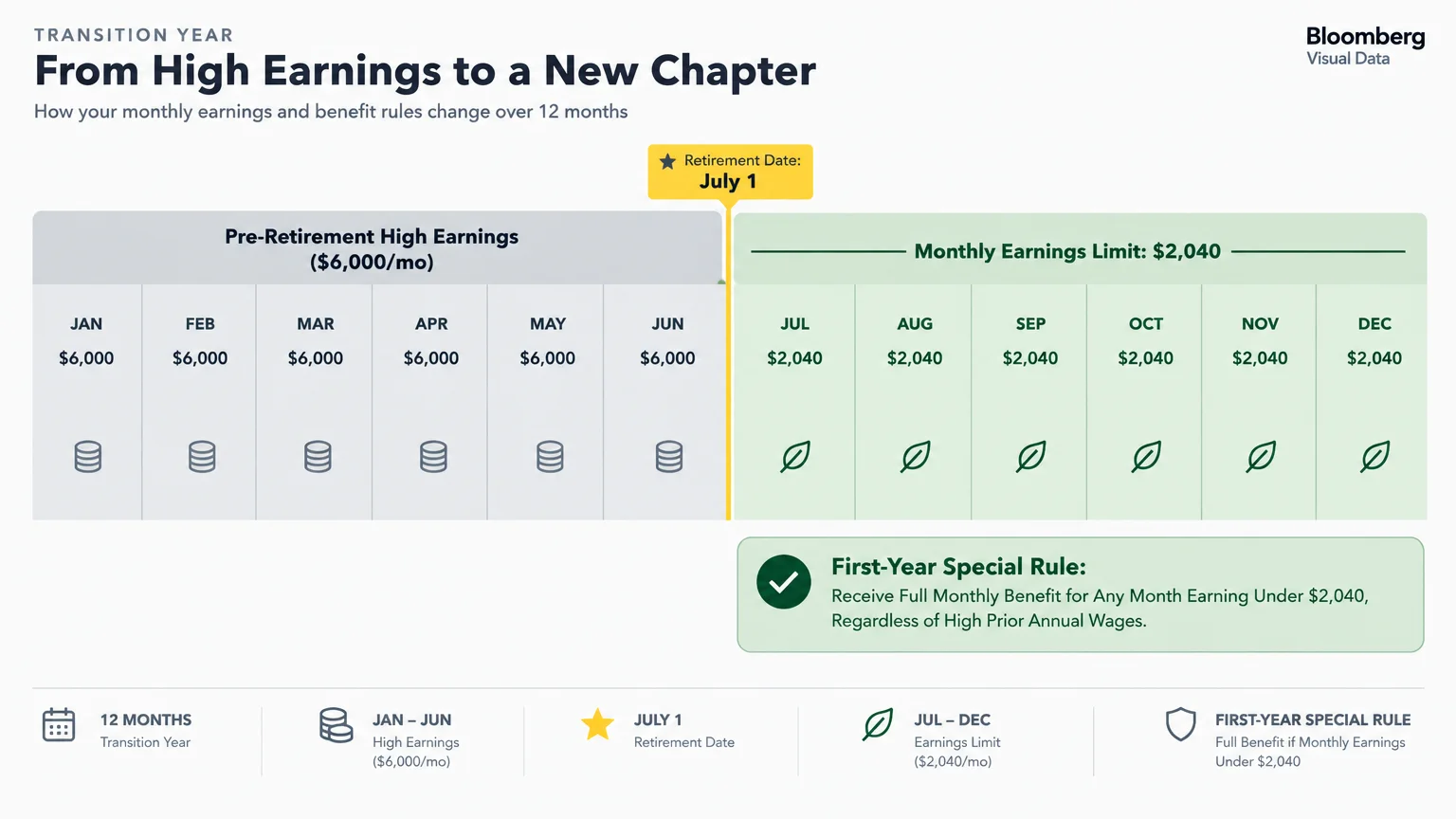
Suppose you retire from an executive position on June 30 after earning $75,000 during the first six months of 2026. Under strict annual calculations, your high salary would instantly wipe out your remaining benefits.
The special monthly rule overrides the annual limit during your first calendar year of retirement. Under this rule, the agency ignores your past earnings from earlier in the year.
During 2026, you can receive your full monthly check for any month in which your wages remain at or below $2,040. In 2027, that monthly threshold climbs to $2,130.
Self-employed professionals face an additional test regarding their working hours under this monthly framework. You cannot perform substantial services within your independent trade during those claiming months.
Federal guidelines define substantial services as devoting more than 45 hours per month to your commercial enterprise. For highly skilled occupations, providing between 15 and 45 hours of labor can trigger disqualification.

Strategy Pillar One: Proactive Income and Tax Planning
Managing your work hours requires deliberate financial coordination between your paycheck and your federal benefits. Many workers deliberately cap their gross annual wages at $24,480 to avoid withholdings entirely.
Staying under the threshold preserves continuous monthly cash flow. This strategy proves particularly beneficial for individuals transitioning into flexible consulting roles or part-time community positions.
Be aware that employer retirement plans do not lower your wage calculation for the earnings test. While pre-tax 401(k) contributions reduce taxable income on Form 1040, the agency evaluates gross Medicare wages.
Combining active paychecks with Social Security benefits also increases overall tax exposure. Benefit income becomes partially taxable once your combined income crosses modest statutory thresholds.
According to data tracked by the Bureau of Labor Statistics, millions of seniors balance labor participation with supplemental income. Strategic tax withholding adjustments prevent unpleasant surprises during filing season.
A Certified Financial Planner™ can model your combined tax liabilities across several earning tiers. Proper planning ensures that extra hours at work actually translate into higher net household income.

Strategy Pillar Two: Designing Work for Fulfillment and Flexibility
Modern retirement planning extends far beyond raw monetary calculations. Continuing to work during your early sixties offers documented psychological, cognitive, and social dividends.
Gerontological research consistently links purposeful workplace engagement with reduced rates of cognitive decline and depression. Meaningful labor provides routine, mental challenges, and strong social networks.
Rather than grinding through stressful careers, many seniors design phased retirements. You can trade managerial burdens for specialized mentoring or non-profit advisory roles.
Part-time work schedules help you honor physical limits while maintaining financial momentum. Flexible arrangements allow for seasonal travel, caregiving obligations, and personal creative pursuits.
Seniors from diverse cultural backgrounds often leverage consulting to support extended family members. Clear earning boundaries allow you to provide familial support without exceeding the statutory earnings limit.
Focusing on high-value, lower-hour engagements maximizes your hourly wage. This approach keeps your gross earnings beneath the withholding threshold while leaving adequate time for rest and wellness.

Strategy Pillar Three: Managing Health, Medicare, and Wellness
Working past age 62 requires careful coordination between your employer health coverage and federal healthcare programs. Mistakes in this arena trigger permanent financial penalties.
Turning 65 while actively working introduces critical choices regarding Medicare enrollment. If your employer employs 20 or more workers, their group policy remains primary over Medicare.
You can safely delay Medicare Part B without penalty if you hold creditable employer coverage. However, claiming Social Security automatically triggers mandatory enrollment in Medicare Part A.
Enrolling in Medicare Part A permanently terminates your eligibility to contribute toward a Health Savings Account. You must halt HSA contributions at least six months before claiming early Social Security.
Physical longevity also demands workplace ergonomics and intentional stress reduction. Chronic job stress elevates cardiovascular risks, offsetting the positive psychological benefits of continued employment.
Adjust your work environment to accommodate your changing physical stamina. Prioritizing routine medical screenings and physical therapy keeps you capable of productive work on your own terms.
Key Safeguards: Avoiding Scams, Traps, and Benefit Cliffs
Working seniors represent prime targets for sophisticated financial predators. Scammers frequently exploit confusion surrounding the earnings test to steal sensitive identity credentials.
Criminals impersonate government agents through deceptive phone calls and fabricated text alerts. They falsely claim your benefits face immediate suspension due to wage discrepancies, demanding instant wire payments.
The Social Security Administration never threatens citizens with arrest or demands immediate payment via gift cards or wire transfers. Official business always originates through verified postal correspondence.
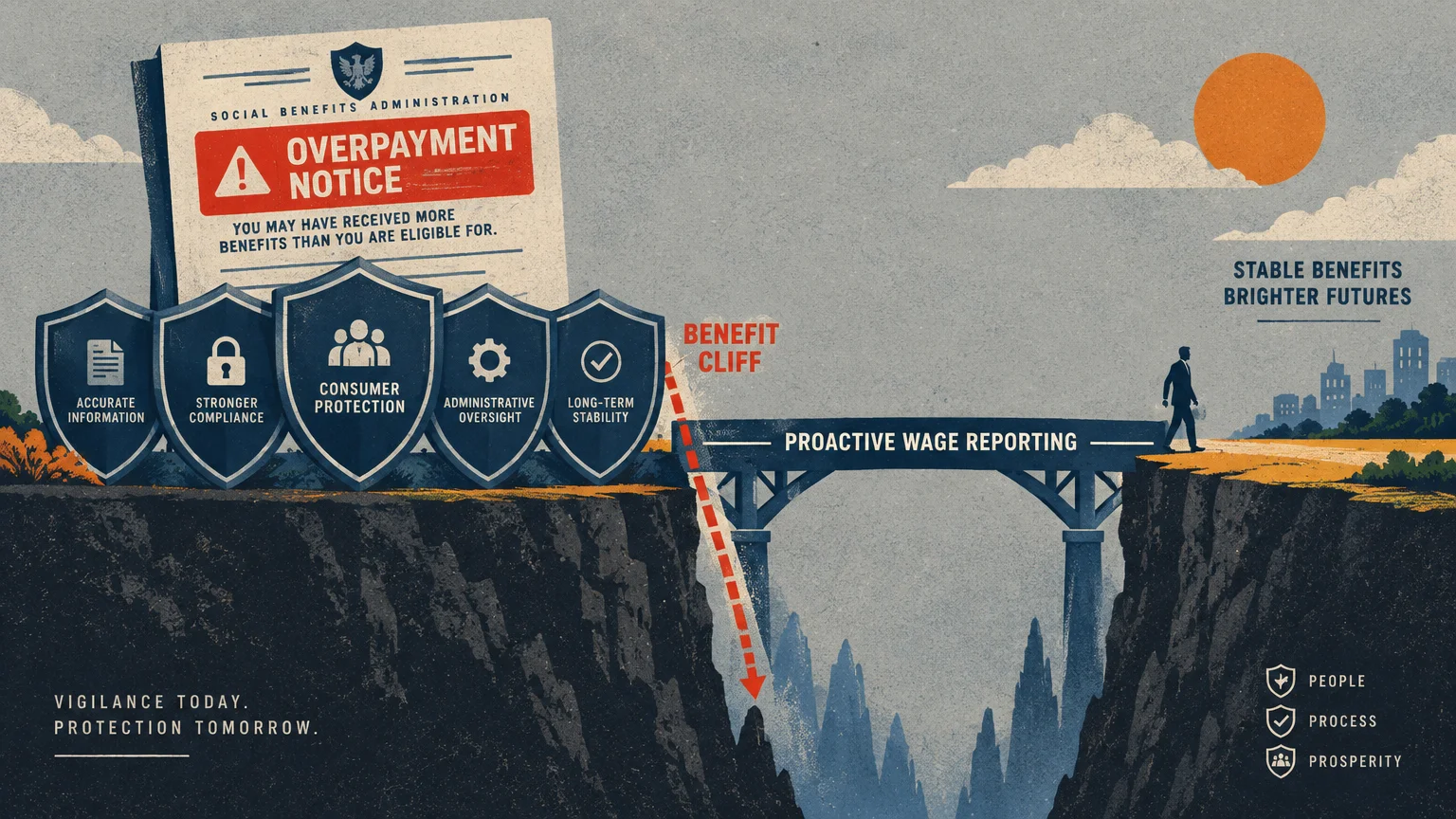
Another major trap involves government overpayment notices resulting from delayed wage reporting. If you fail to notify the agency about wage increases, they may pay benefits you did not earn.
Months later, the agency will demand full, immediate repayment of those unearned funds. Update your earnings estimates inside your personal online account whenever your compensation shifts.
Watch out for localized benefit cliffs if you receive state-administered assistance programs. Earning slightly above regional thresholds can jeopardize low-income heating grants, property tax credits, or specialized transit subsidies.
Recognizing Phony Overpayment Communications
Fraudulent letters often mimic official government letterhead to solicit private banking details. Always cross-check unexpected correspondence by contacting your local federal field office directly.
Never call telephone numbers provided on suspicious printed notices or electronic messages. Use verified public directories to verify any alleged account discrepancies before disclosing personal records.
Frequently Asked Questions About Working While Claiming Early
Will working early permanently reduce my monthly benefit forever?
No, benefit withholdings do not cause permanent financial losses. The government tracks all withheld checks and permanently recalculates your monthly benefit upward once you achieve full retirement age.
This automatic adjustment increases your monthly payments for life. It credits you for the specific months during which your checks were withheld due to your employment income.
Does my spouse’s salary count against my individual earnings limit?
Your spouse’s earned income has no bearing on your personal earnings test calculation. The government evaluates your wages and self-employment figures on a strictly individual basis.
Even if your spouse earns a substantial six-figure executive salary, your benefits remain unaffected. Only your own W-2 wages and net business profits determine your withholding status.
How does the Social Security Administration know what I earn each year?
The agency monitors your earnings by matching records with the Internal Revenue Service. Employers submit annual W-2 wage reports, and independent contractors submit Schedule SE tax filings.
Relying solely on end-of-year tax data can delay withholding calculations and generate massive overpayment demands. You should proactively inform the agency whenever your expected annual income changes.
Can I stop or suspend my benefits if I return to full-time work?
If you claimed benefits within the past twelve months, you can file a formal withdrawal of application using Form SSA-521. This reset requires repaying all received benefits in full.
If you have received benefits for more than twelve months, you cannot withdraw your claim. However, once you attain full retirement age, you can temporarily suspend payments to earn delayed retirement credits.
Your 48-Hour Action Plan
Take charge of your retirement trajectory by auditing your numbers over the next two days. Clear, decisive actions today protect your hard-earned money and eliminate unexpected income interruptions.
First, log into your personal account through the federal portal to examine your latest lifetime earnings statement. Verify that your recent work history displays accurate wage figures across all prior years.
Second, project your anticipated gross earned income for the current calendar year. Compare that total against the 2026 earnings threshold of $24,480 to identify any withholding exposure.
Third, consult educational resources from trusted advocacy groups like AARP to explore local work options. Practical planning keeps you confident, engaged, and financially secure throughout your golden years.